Argon Welding (TIG) Service
As NOVA Fabrication, we offer a wide range of custom (bespoke) metal services.
Request A Quote
We offer a wide range of custom (bespoke) steel fabrication metal services in Turkey.
Argon welding and using argon gas, is commonly used to join or repair metal parts. Argon gas is an inert gas used during welding. Inert gases do not react with oxygen or other reactive gases, which prevents unwanted chemical reactions from occurring during welding.
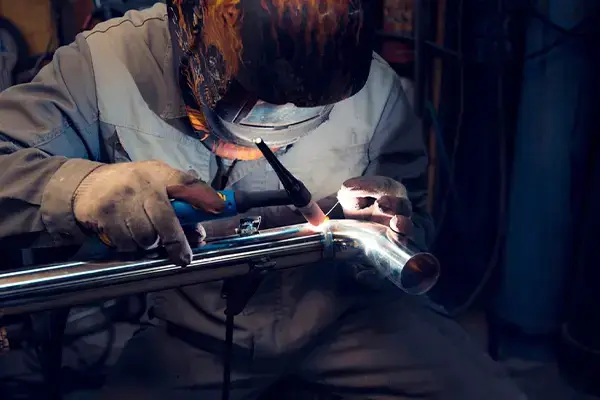
Argon welding is a type of welding used to join metal parts at high temperatures. This process delivers argon gas to the weld zone through a welding gun and tube. Argon welding, also known as arc welding or TIG (Tungsten Inert Gas) welding, is preferred to achieve a high-quality and clean joint during welding.
Argon welding is particularly effective when used on thin and delicate metal parts. This method is widely preferred for welding metals such as aluminum, titanium, and stainless steel. When delicate structures and aesthetically important parts need to be joined or repaired, argon welding is preferred because it can provide less deformation and a cleaner joint.
When performing argon welding, there are some important factors that welders should pay attention to. Keeping the weld area clean and oxygen-free helps prevent unwanted welding reactions. In addition, the correct setting of parameters, such as the correct current, voltage, and welding speed, is also essential for a quality argon weld.



What is Argon?
Argon welding is a welding process used as a welding method and utilizes argon gas. Argon gas is an inert gas used during welding. Inert gases do not react chemically with oxygen or other reactive gases. This prevents unwanted oxidation or reactions of metals during welding.
Argon welding is also commonly known as TIG (Tungsten Inert Gas). This welding method is used to join pieces of metal at high temperatures. The welder delivers argon gas through a welding gun or tube to the weld area, where an electric arc joins the metal parts.
What Does Argon Welding Do?
Argon welding is a slow system compared to other welding methods. Since it is slow, the heat input is low. Welding with low heat input and precision workmanship makes argon welding stand out in the welding of thin sheets. In the argon welding method, alternating current, in which correct polarity and reverse polarity are used together, ensures problem-free processing of aluminum welding.
TIG welding is not an economical welding method. However, advances in the power supply industry, mechanical and automatic applications make TIG welding suitable for large-scale production. TIG welding method has always been the first choice in the range of applications requiring high standards.
TIG Welding Areas and Advantages
In the welding process known as TIG (Tungsten Inert Gas) or argon welding, argon gas is used with a tungsten electrode. It is a versatile welding method that can be used for all materials and applications. The main application area is stainless steel, aluminum and nickel alloys. The concentrated and stable arc ensures high quality welded metal without slag and burrs.
Why Use Argon Gas?
Argon is used for welding due to its low cost, shielding gas capabilities, and stability.
In addition to not reacting with other elements, it doesn’t burst into flames when exposed to the extreme temperatures involved in welding.
Its natural abundance in the Earth’s atmosphere also makes it an affordable gas option for welders.
Pure Argon for TIG Welding
When looking for TIG welding gas, you will require a pure argon gas, which produces a clean weld with no oxidisation. It can significantly increase your welding execution for many reasons;
- It’s heavier than air quality and offers complete protection of your weld.
- Prevents any burning through of thinner materials.
- Offers a consistent, reliable and narrow arc for a more precise weld.
- It requires less power and voltage during TIG welding and is more affordable than other options.
The only disadvantage to using pure argon versus other inert gasses is that it cannot operate at high voltage, which may mean longer welding times. However, with the excellent quality of argon, it may be worth taking the extra time for a more accurate weld.