
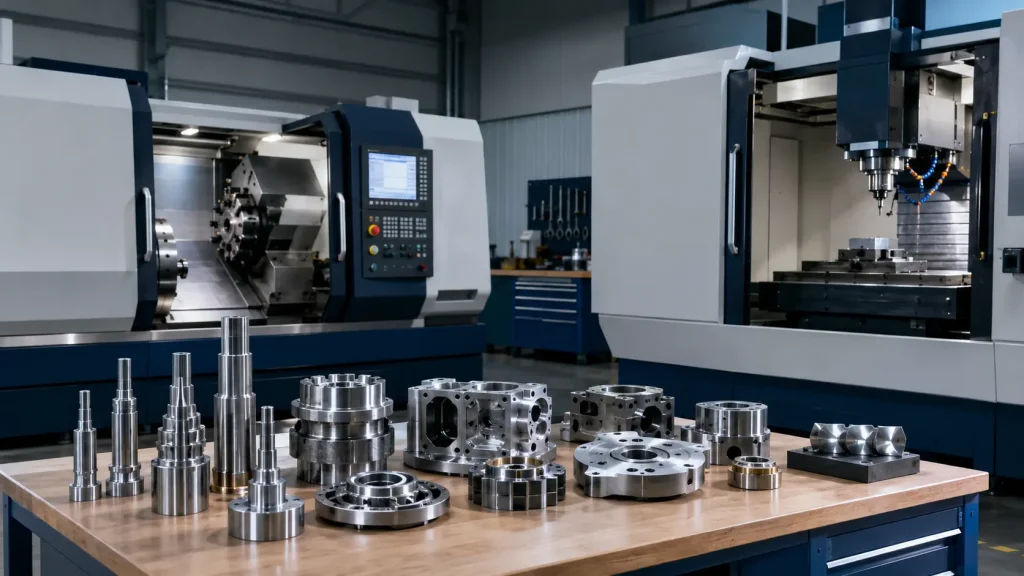
In custom manufacturing, some parts require more than cutting, bending or welding. When a component needs tight dimensional accuracy, smooth surfaces, precise holes, threads, grooves or complex geometries, CNC machining becomes one of the most important production methods.
CNC turning and CNC milling are two of the most widely used machining processes for producing precise metal and plastic components. Although they are both controlled by computer programs, they are used for different types of parts. Choosing the right method can improve product quality, reduce production errors and make the manufacturing process more efficient.
For buyers, understanding the difference between CNC turning and CNC milling helps when preparing technical drawings, selecting materials and requesting a quotation. The better the project details are defined at the beginning, the easier it becomes to achieve accurate and repeatable results.
What Is CNC Turning?
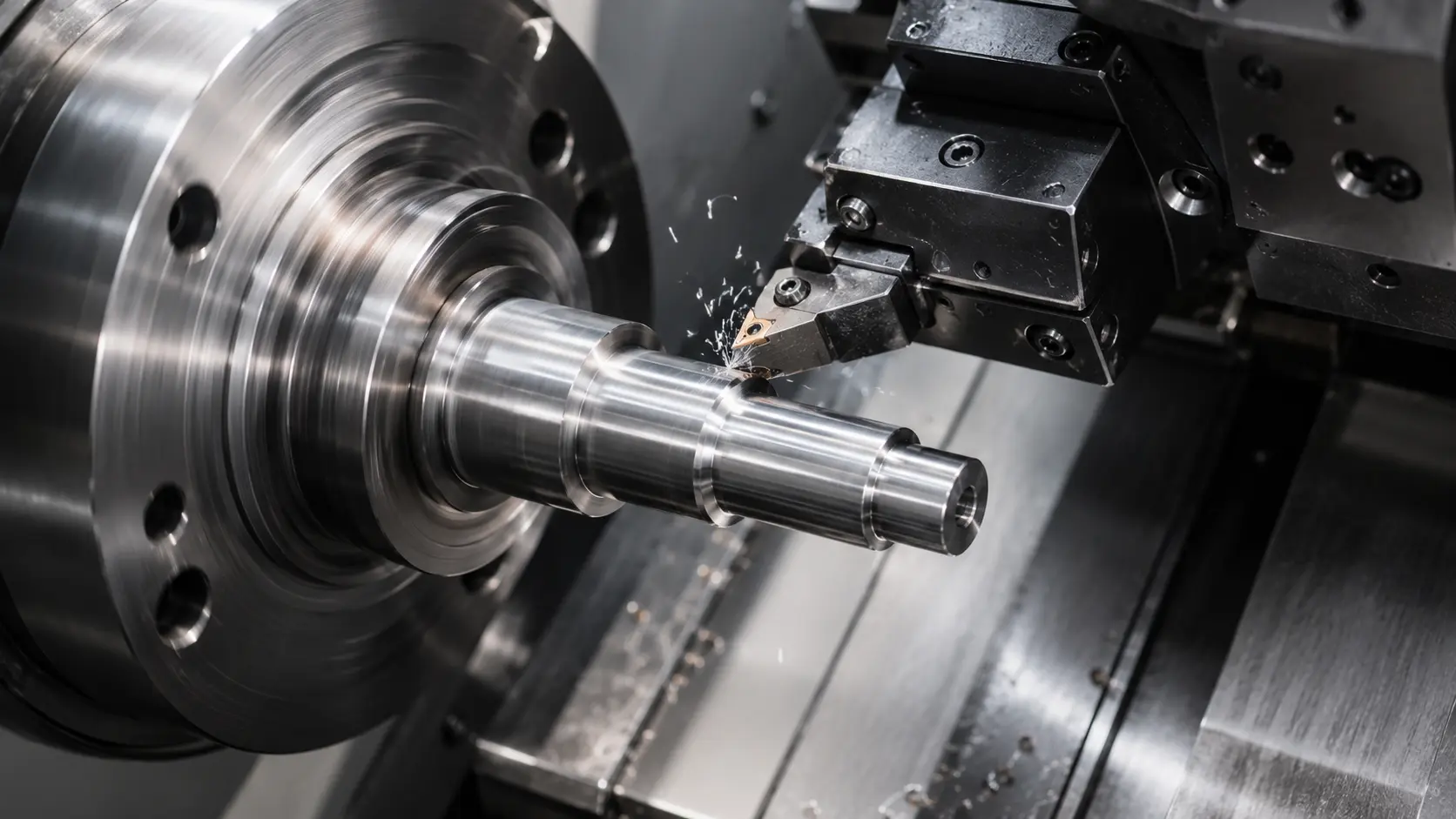
CNC turning is a machining process where the workpiece rotates while a cutting tool removes material from its surface. This method is commonly used for round, cylindrical or symmetrical parts.
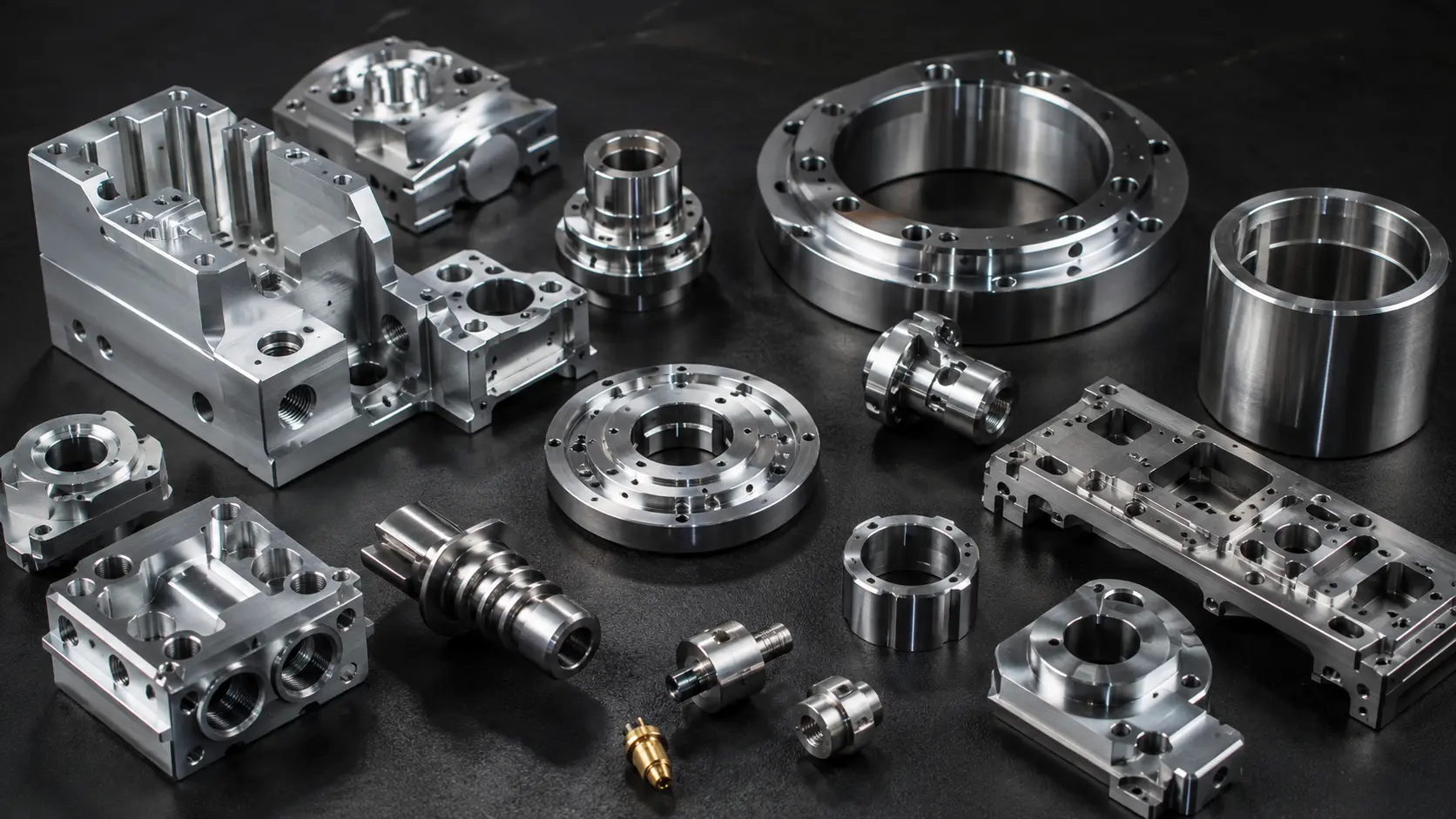
It is especially suitable for components such as shafts, bushings, pins, rollers, threaded parts, fittings and round connection elements. Because the part rotates during the process, CNC turning can produce accurate diameters, smooth circular surfaces and consistent cylindrical shapes.
CNC turning is often preferred when the part has rotational geometry. If the design is mainly round and requires features such as external diameters, internal holes, threads or grooves, turning is usually the most efficient machining method.
What Is CNC Milling?
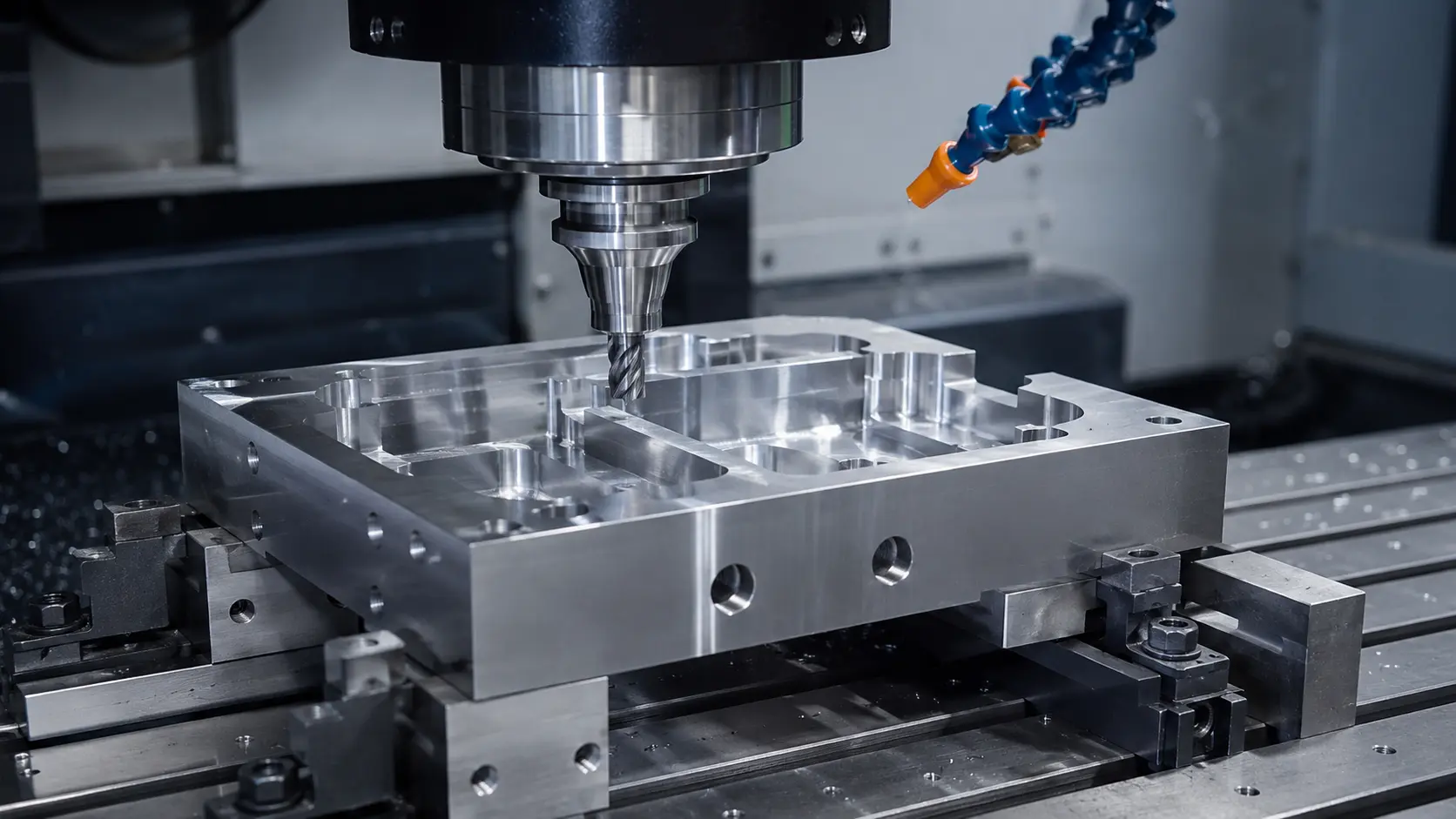
CNC milling is a machining process where rotating cutting tools remove material from a fixed workpiece. Unlike turning, the part usually stays fixed while the cutting tool moves across different axes to create the required shape.
This method is suitable for flat surfaces, pockets, slots, holes, contours and more complex geometries. CNC milling is commonly used for brackets, plates, machine components, molds, housings, connection blocks and custom technical parts.
Milling is especially useful when a part has multiple surfaces, irregular shapes or features that cannot be produced efficiently by turning alone. In many custom manufacturing projects, CNC milling is used after cutting or casting to achieve the final dimensions and functional surfaces.
CNC Turning vs CNC Milling: Main Differences
Both turning and milling are precision machining processes, but they are not used for the same purpose. The main difference is the movement of the workpiece and cutting tool. In turning, the workpiece rotates. In milling, the cutting tool rotates.
Feature | CNC Turning | CNC Milling |
Main Movement | Workpiece rotates | Cutting tool rotates |
Best For | Cylindrical and round parts | Flat, complex and multi-surface parts |
Common Parts | Shafts, bushings, pins, fittings, rollers | Brackets, plates, blocks, housings, molds |
Surface Type | Circular and symmetrical surfaces | Flat, angled, pocketed and contoured surfaces |
Typical Strength | Efficient for round geometry | Flexible for complex geometry |
Secondary Operations | Threading, grooving, boring | Drilling, slotting, pocketing, contouring |
In some projects, both processes may be used together. A part can be turned first to create its cylindrical form and then milled to add flat surfaces, holes, slots or connection details. This is common in technical components where both round geometry and complex features are required.
When Precision Matters Most
Precision becomes critical when a part must fit into an assembly, move with another component, carry mechanical load or maintain a specific function over time. In these cases, even a small dimensional error can create problems during installation or use.
CNC turning and milling are often preferred for projects that require controlled tolerances and repeatable production. This is especially important for machine parts, automotive components, industrial equipment, custom fasteners, connection elements and technical assemblies.
For example, a shaft that is slightly too large may not fit into a bearing. A hole that is slightly misaligned may prevent assembly. A surface that is not flat enough may affect sealing, contact or mechanical movement. These are the types of details where CNC machining creates real value.
Materials Used in CNC Turning and Milling
CNC machining can be applied to many different materials. The correct material should be selected according to strength, corrosion resistance, weight, machinability and final application.
Common materials include steel, stainless steel, aluminum, brass, copper, engineering plastics and special alloys. Steel is often preferred for strong mechanical parts, while stainless steel is useful when corrosion resistance and clean appearance are important. Aluminum is a good option for lightweight components, and brass or copper may be selected for specific electrical, thermal or mechanical properties.
Material choice also affects machining time and cost. Some materials are easier to machine, while others require slower cutting speeds, special tools or more controlled machining conditions. For this reason, material selection should be evaluated before production begins, not after the design is finalized.
Tolerances and Technical Drawings
A good CNC machining project starts with a clear technical drawing. The drawing should show the required dimensions, tolerances, material type, surface finish expectations and any critical features.
Not every dimension needs the tightest possible tolerance. In fact, applying very tight tolerances to every feature can increase cost and production time unnecessarily. Critical dimensions should be clearly defined, while non-critical areas can use standard tolerances.
A practical drawing should clarify:
- Material type and grade
- Critical dimensions and tolerances
- Hole diameters and thread details
- Surface finish requirements
- Quantity and production expectations
- Any assembly or functional requirements
This level of detail helps the manufacturer choose the correct machining method, estimate cost more accurately and reduce the risk of misunderstanding during production.
Surface Finish and Functional Quality
Surface finish is another important factor in CNC turning and milling. Some parts only need basic dimensional accuracy, while others require smoother surfaces for movement, sealing, appearance or reduced friction.
Turned parts can achieve smooth circular surfaces, which is useful for shafts, pins and bushings. Milled parts can achieve controlled flatness, pocket surfaces and machined edges. If the final product will be visible, assembled tightly or used in a moving system, surface quality should be discussed before production begins.
In some cases, machining may be followed by additional finishing processes such as polishing, coating, anodizing or passivation. These processes can improve appearance, corrosion resistance and long-term durability.
Cost Factors in CNC Machining
The cost of CNC turning and milling depends on the part design and production requirements. A simple cylindrical part may be produced faster than a complex milled component with multiple setups, tight tolerances and several surface features.
Important cost factors include part geometry, material type, tolerance requirements, machining time, tool changes, setup time, quantity and surface finish expectations. If the part requires both turning and milling, the number of operations can also affect cost.
Buyers can reduce unnecessary cost by designing parts with realistic tolerances, avoiding overly complex features when they are not needed and sharing complete technical drawings before quotation.
What Buyers Should Prepare Before Ordering
Before requesting CNC turning or milling services, buyers should prepare as much technical information as possible. A 2D drawing is usually important for dimensions and tolerances, while a 3D model can help the manufacturer understand geometry more clearly.
If the part will be assembled with other components, this should also be mentioned. Functional information helps the manufacturer understand which dimensions are critical and which surfaces require more attention.
For projects that involve both machining and fabrication, it can also be useful to evaluate related processes such as laser cutting, bending, welding and coating. You can explore broader production options through the Manufacturing Services page.
CNC Machining in Custom Manufacturing
CNC turning and milling are often part of a wider custom manufacturing process. A project may begin with raw material preparation, continue with machining and then move into welding, assembly or surface finishing.
This integrated approach is especially useful for industrial parts, machine components, special connection elements and custom metal assemblies. When machining is planned together with the full production process, the final product becomes more accurate, consistent and suitable for its intended use.