
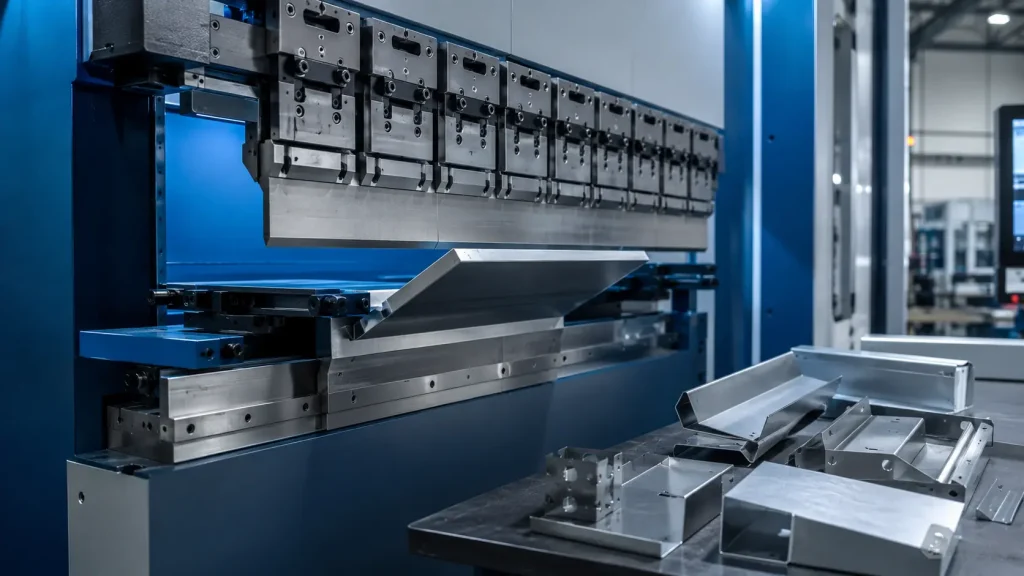
Press brake bending is one of the most important processes in sheet metal fabrication. It allows flat metal sheets to be formed into precise angles, profiles, brackets, panels, enclosures and custom components.
When designed correctly, press brake bending helps create strong, accurate and repeatable metal parts. However, the final quality depends on several factors, including material type, sheet thickness, bend radius, tooling, tolerances and design details.
At Nova Fabrication, we provide professional press brake bending solutions for custom metal fabrication projects. From simple sheet metal parts to more complex industrial components, our team supports projects with accurate forming, production planning and quality control.
What Is Press Brake Bending?
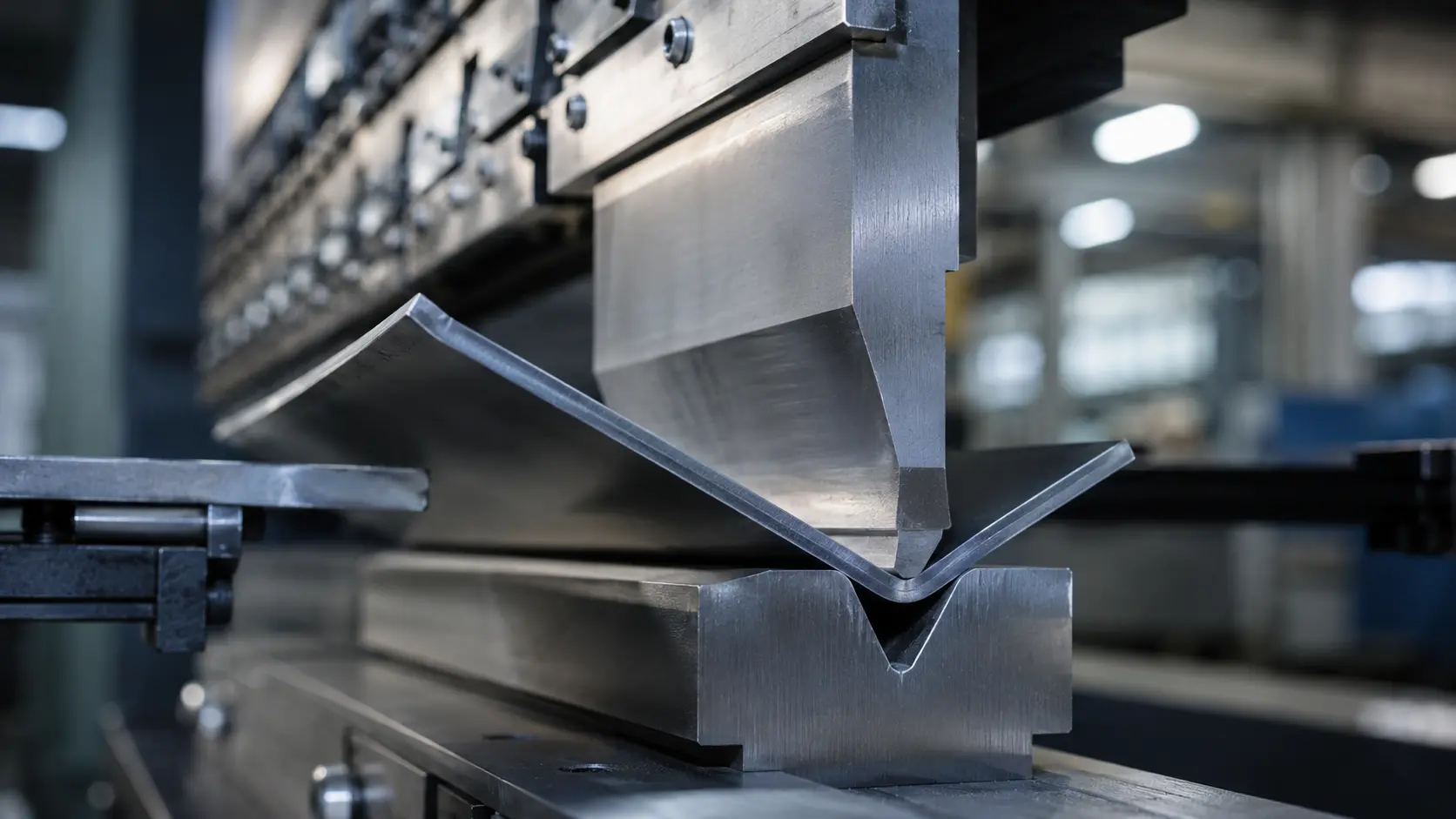
Press brake bending is a metal forming process where a sheet metal part is pressed between a punch and die to create a specific angle or shape. CNC press brakes make this process more accurate and repeatable, especially for batch production and custom parts.
This method is commonly used for:
- Sheet metal brackets
- Metal panels
- Cabinets and enclosures
- Machine covers
- Frames and structural parts
- Retail and industrial components
- Custom metal assemblies
Why Tolerances Matter in Press Brake Bending
Tolerances define how much variation is acceptable in the final part. In bending, even small differences in angle, material thickness or bend position can affect assembly and product performance.
Common tolerance factors include:
- Bend angle accuracy
- Part length and width
- Hole positions
- Bend-to-bend distance
- Material thickness variation
- Springback after bending
- Tooling condition
For most sheet metal projects, realistic tolerances should be discussed before production starts. Very tight tolerances may require additional planning, special tooling or extra quality control.
If the part will be assembled with other components, tolerance planning becomes even more important. A small error in one bend can create alignment problems during final assembly.
Choosing the Right Material for Bending
Different metals behave differently during bending. Some materials bend easily, while others may crack, spring back or require a larger bend radius.
Common materials used in press brake bending include:
- Mild steel
- Stainless steel
- Aluminum
- Galvanized sheet metal
- Carbon steel
- Special alloys
Mild steel is widely used because it is strong, cost-effective and easy to form. Stainless steel offers better corrosion resistance but may require more force during bending. Aluminum is lightweight and suitable for many applications, but it needs careful radius planning to prevent cracking.
The correct material should be selected according to the product’s strength, weight, corrosion resistance, appearance and application environment.
Bend Radius and Material Thickness
Bend radius is one of the most important design details in sheet metal bending. If the bend radius is too small, the material may crack or deform. If it is too large, the part may not match the intended design.
As a general design rule, the inside bend radius should usually be equal to or greater than the material thickness. For example, if the sheet thickness is 2 mm, the inside bend radius should generally be at least 2 mm.
Using the same bend radius across a part can also make production easier and more consistent. This reduces tooling changes and helps improve repeatability.
Design Tips for Better Press Brake Bending
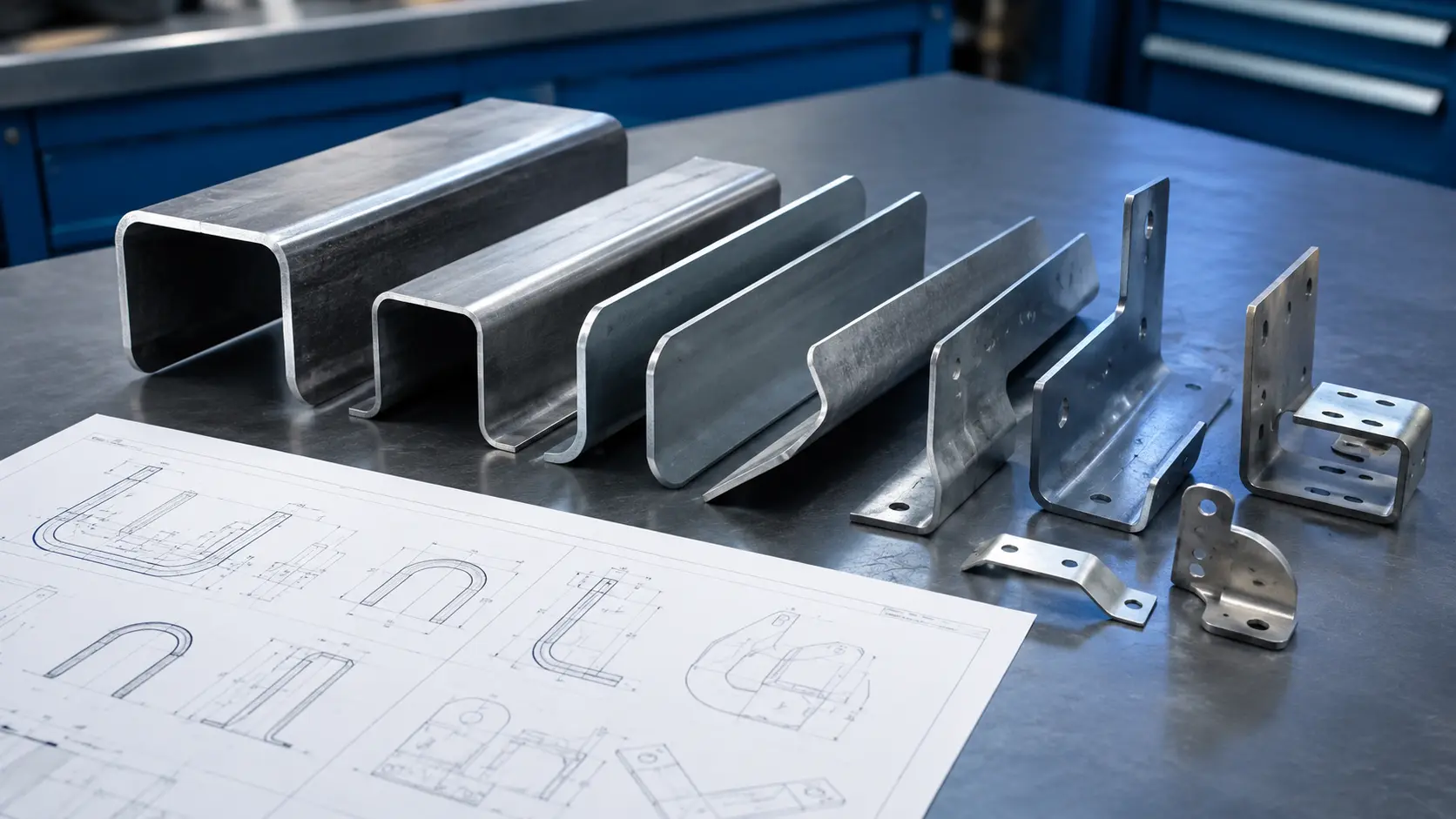
Good design makes bending faster, cleaner and more cost-effective. Before sending a part for production, it is useful to check whether the design is suitable for press brake bending.
Here are some practical design tips:
- Keep bend radii consistent where possible
- Avoid placing holes too close to bend lines
- Use realistic angle and dimensional tolerances
- Consider material springback during design
- Keep flange lengths suitable for bending tools
- Avoid very complex bends unless necessary
- Share complete technical drawings before production
- Specify material type, thickness and surface finish clearly
These details help reduce production errors, improve part accuracy and control manufacturing costs.
Surface Finish After Bending
After bending, metal parts may require surface finishing or coating depending on the final application. Surface treatment can improve corrosion resistance, appearance and long-term durability.
Common finishing options include:
- Powder coating
- Wet painting
- Galvanizing
- Brushing
- Polishing
- Anodizing
- PVD coating
For outdoor products, corrosion resistance is usually the priority. For retail, architectural or visible components, appearance may be equally important. Nova Fabrication also provides coating services for metal products that require additional protection or a specific visual finish.
Why Work with Nova Fabrication?
Press brake bending requires the right combination of technical knowledge, machine capability, tooling and production experience. A well-planned bending process helps reduce waste, improve accuracy and create reliable metal parts.
Nova Fabrication supports custom metal fabrication projects with:
- CNC press brake bending
- Sheet metal forming
- Material and thickness evaluation
- Technical drawing review
- Welding and assembly support
- Surface coating options
- Quality control before delivery
You can also explore our wider manufacturing services for laser cutting, bending, welding, machining and coating solutions.