
Speed and Repeatability: The Impact of Robotic Welding Services on Cost and Quality in Mass Production
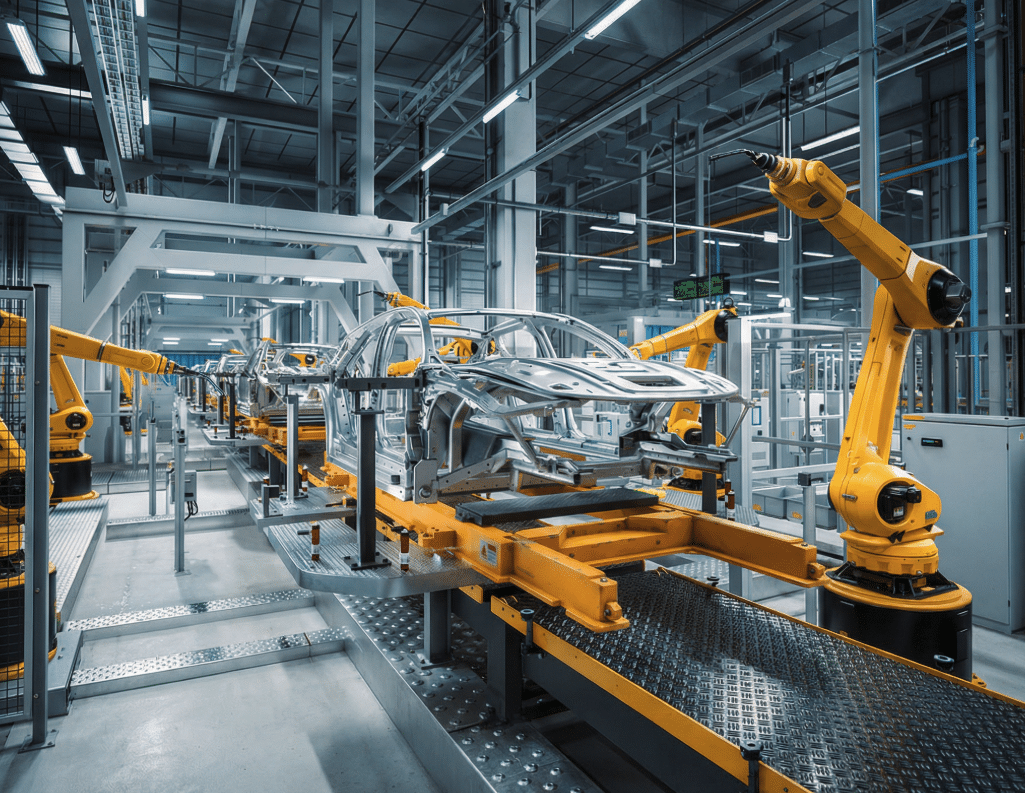
The Industry 4.0 revolution is no longer just an option in the manufacturing world; it is a survival strategy. In modern production facilities, speed alone is not enough; it must be accompanied by precision and continuity. Traditional production methods have reached their limits due to human-dependent variables, especially in mass production. This is where Robotic Welding Services stand as the “gold standard” from automotive to machinery manufacturing. By eliminating the fatigue, distraction, and physical limitations of manual welding, robotic systems offer businesses not just speed, but also measurable quality and sustainable cost advantages.
Repeatability in Robotic Welding: Reducing Error Margins to Zero
The greatest strength of robotic systems is their repeatability. In manual welding, micro-deviations can occur in the weld seam depending on the time of day or the experience of the welder. However, robotic arms operate at the same angle, the same travel speed, and with the exact millimetrically calculated wire feed rate every single time.
In complex Steel Fabrication projects or Gear Fabrication processes requiring high strength, the uniformity of weld depth and penetration at every point is vital. Robotic cells never deviate from programmed parameters, guaranteeing structural integrity. This not only improves product quality but also dramatically reduces the time spent on quality control and the rate of rejected parts (scrap).
Seamless Preparation in the Production Flow: Laser Cutting and CNC Integration
Robotic welding is not a miracle on its own; it is the junction point of perfectly prepared parts. For a robot to operate with high precision, the tolerances of the parts must be extremely low.
- The Laser Cutting Advantage: For a flawless weld, parts must be prepared with high precision using our Sheet Metal Laser Cutting or Profile & Pipe Laser Cutting services beforehand. A cut with zero millimetric deviation ensures the robot follows the welding path with pinpoint accuracy.
- CNC Machining Compatibility: Having surfaces processed with Cnc Milling Service or Cnc Turning Service minimizes the assembly gaps between parts. This integration increases arc stability and nearly eliminates the need for post-weld slag cleaning.
Precisely machined surfaces and correctly cut profiles can increase the efficiency of robotic welding by up to 40% because the robot does not have to pause due to part misalignment.

Form Giving and Flow Management in Large-Scale Projects
In large-scale industrial projects, the production flow rate is directly related to how ready the parts are when they arrive at the robotic cell. For projects involving cylindrical structures, conical forms, or bent profiles, the part preparation stage is a critical threshold.
Passing parts through Plate Rolling Service or Profile and Pipe Bending Service stages to reach their ideal form before robotic welding prevents bottlenecks in the production line. A correctly formed body fits perfectly into the robotic fixture. This harmony allows the robotic arm to move uninterrupted over complex geometries, shortening delivery times by up to 50% in large-scale tank manufacturing or infrastructure projects.
Comparison: Robotic Welding vs. Manual Welding
To facilitate the decision-making process for production managers and procurement professionals, this comparison table clearly demonstrates why robotic investment is essential:
Feature | Manual Welding | Robotic Welding |
Speed & Efficiency | Medium (Affected by fatigue) | Very High (24/7 continuous operation) |
Repeatability | Variable (Depends on skill level) | Constant (Every part is identical) |
Error & Scrap Rate | High Risk | Minimum (Near zero) |
Health & Safety | Risky (Fumes and radiation) | Safe (Enclosed cell system) |
Long-Term Cost | Increasing labor/error costs | Low unit cost and high ROI |
Sectoral Solutions: Chassis, Machine Frames, and Automotive
The unwavering strength offered by robotic welding proves itself especially in areas where structural durability is non-negotiable.
- Metal Chassis Manufacturing: Chassis produced for heavy-duty machinery or transport vehicles pass the toughest vibration tests thanks to robotic welding.
- Machine Frame Manufacturing: The skeletons of industrial machines gain micron-level squareness precision when joined with robotic welding, ensuring long life and quiet operation.
Automotive Spare Parts: In the automotive industry, safety is everything. Robotic technology is a necessity to meet international safety standards in the production of suspension parts, exhaust systems, and body elements.
Cost Analysis: How to Achieve Long-Term Profitability
For many factory managers, the initial setup cost of robotic welding systems may seem high. However, from a professional SEO and cost analysis perspective, the opposite is true. The Return on Investment (ROI) of robotics is based on three main pillars:
- Reduction in Unit Time: A welding process that takes 1 hour manually drops to 15-20 minutes with a robotic system.
- Elimination of Scrap Costs: Costs associated with wasted materials due to incorrect welding and re-work are eliminated.
- Consumable Savings: The robot uses only the required amount of gas and wire, preventing waste.
In conclusion, in terms of Total Cost of Ownership (TCO), robotic welding is a much more profitable solution per unit part in mass production projects compared to manual welding.
Finishing and Aesthetics: End-to-End Solutions from Weld to Coating
Welding is not the end of production; it is the beginning of durability. The clean and smooth seams produced by robotic welding increase the quality of final surface treatments.
To ensure parts gain full resistance against corrosion and an aesthetic appearance, we direct products to our Hot Dip Galvanizing facility after the welding stage. If a more decorative or technical coating is required, we provide an ultra-hard and aesthetic surface with our PVD Coating service. This integrated approach provides logistical ease while maximizing the product’s lifespan.