
Automotive spare parts manufacturing requires a high level of precision, consistency and production control. Whether the part is used in a vehicle body, mechanical system, support structure, bracket, enclosure or technical assembly, every detail can affect performance, durability and safety.
Unlike many standard metal products, automotive components often need to meet strict dimensional, functional and material expectations. A small measurement error, weak weld, poor surface finish or inconsistent production process can create problems during assembly or long-term use. This is why automotive spare parts manufacturing must be planned carefully from technical drawing to final quality control.
For buyers, the most important factors are usually precision, quality, repeatability and reliability. A part should not only be produced correctly once; it should also be produced consistently in future orders when the same design is required again.
Why Precision Matters in Automotive Spare Parts
Precision is one of the most important requirements in automotive spare parts manufacturing. Many components must fit into existing systems, connect with other parts or perform under mechanical load. If the part is too large, too small, misaligned or poorly formed, it may cause assembly issues or reduce product performance.
Precision starts with technical drawings. Dimensions, tolerances, material thickness, hole positions, bending angles and surface requirements should be clearly defined before production begins. When the manufacturer understands which dimensions are critical, the production process can be planned more accurately.
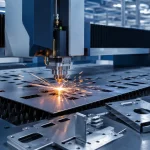
Processes such as laser cutting, CNC machining, bending and welding all play an important role in achieving the required precision. For example, laser cutting can provide accurate profiles and clean edges, while CNC machining can be used for tighter tolerances, holes, threads or critical surfaces. You can review related production capabilities through manufacturing services.

Material Selection for Automotive Components
The correct material choice depends on how the spare part will be used. Some automotive parts require strength and impact resistance, while others need corrosion resistance, low weight or a clean surface finish. Choosing the wrong material can affect both cost and long-term reliability.
Steel is often preferred for strong and durable components. Stainless steel can be suitable for parts that require corrosion resistance or a cleaner visual appearance. Aluminum is useful when lightweight design is important. Galvanized sheet metal may be selected when additional surface protection is needed.
Material thickness also matters. A thicker material may improve strength but can increase weight and production cost. A thinner material may reduce weight but may not provide enough rigidity for the application. The best material decision should consider function, environment, production method and expected service life together.
Common Automotive Spare Parts Produced with Metal Fabrication
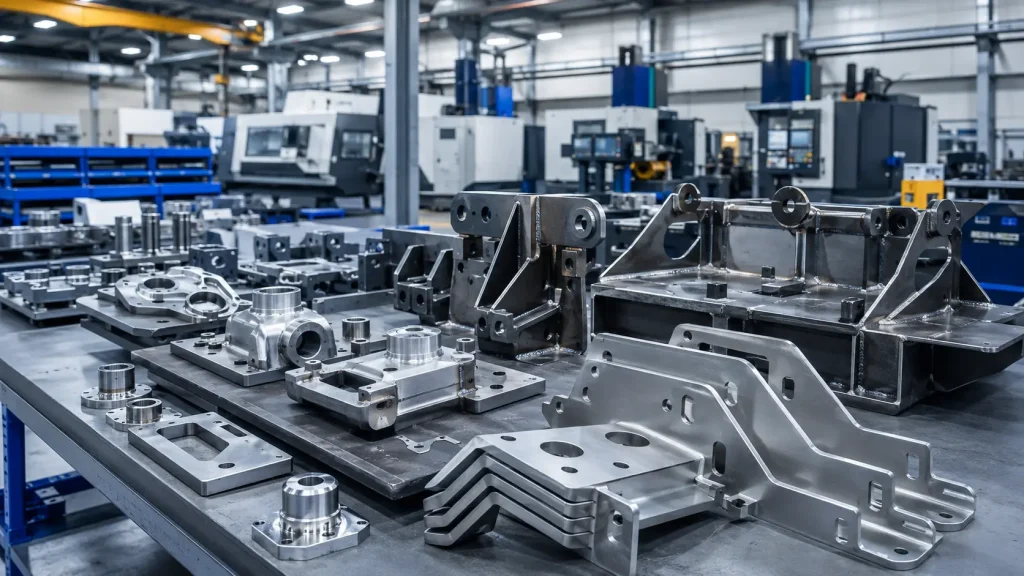
Automotive spare parts can vary widely depending on the vehicle type, system and application. Some parts are simple brackets or covers, while others are more complex assemblies requiring cutting, bending, welding, machining and coating.
Part Type | Common Production Needs | Key Priority |
Brackets and Supports | Cutting, bending, hole positioning | Dimensional accuracy |
Body and Chassis Components | Sheet metal forming, welding, coating | Strength and durability |
Covers and Panels | Laser cutting, bending, surface finishing | Fit and appearance |
Mounting Plates | Cutting, drilling, CNC machining | Assembly compatibility |
Protective Housings | Sheet metal fabrication, coating | Protection and long-term use |
Custom Assemblies | Welding, machining, inspection | Repeatability and reliability |
This table is a general guide. The final production process should always be based on the technical drawing, material requirement and real usage conditions of the part.
Production Methods Used in Automotive Spare Parts Manufacturing
Automotive spare parts manufacturing can involve multiple metal fabrication processes. A single component may start with sheet metal laser cutting, continue with bending, then move into welding, machining, coating and quality inspection.
Laser cutting is commonly used for accurate profiles, holes and complex shapes. Press brake bending helps form sheet metal into brackets, covers, panels and structural components. CNC turning and milling are used when tighter tolerances, precise holes, threads or machined surfaces are required.
Welding is often necessary for assemblies, frames and reinforced components. In some cases, spot welding may be preferred for sheet metal parts, especially when repeatability and production efficiency are important. For stronger joining requirements, welding services can be part of the complete manufacturing process.
Surface treatment is also important in automotive applications. Parts exposed to moisture, road conditions, chemicals or outdoor environments may require powder coating, wet painting, galvanizing or another protective finish. A suitable coating service can help improve corrosion resistance and product appearance.

Quality Control and Repeatability
Quality control is critical in automotive spare parts manufacturing because the same part may be needed repeatedly over time. A buyer may order a prototype first and then request larger production quantities later. In this case, the process must be repeatable.
Quality control should not only happen at the end of production. It should begin with drawing review and continue through material selection, cutting, forming, welding, machining and finishing. Each stage affects the final part.
Dimensional inspection, hole position checks, bending angle control, weld quality review and surface finish inspection can help reduce production errors. If the part will be assembled with other components, fit and function should also be considered.
For automotive projects, consistency is just as important as first-piece quality. A part that is correct in the first order should remain consistent in future batches. This requires controlled production planning, accurate documentation and reliable manufacturing methods.
Surface Finish and Corrosion Resistance
Automotive spare parts may be exposed to different environmental conditions depending on where they are used. Some parts remain inside the vehicle or equipment system, while others may face moisture, dust, temperature changes, vibration or outdoor exposure.
Surface finish helps protect the part and improve long-term performance. Powder coating can provide a durable and uniform surface for many metal components. Wet painting may be preferred when custom color or specific visual requirements are needed. Galvanized finishes can help improve corrosion resistance for certain steel parts.
The finish should be selected according to the real working environment. A decorative cover, a support bracket and a structural assembly may all need different finishing decisions. Surface protection should be discussed before production begins because it can affect both lead time and cost.
What Buyers Should Share Before Ordering
A successful automotive spare parts project starts with clear information. The manufacturer needs to understand the part’s dimensions, material, tolerance requirements and final application.
A 2D technical drawing is important for critical dimensions and tolerances, while a 3D model can help explain the geometry more clearly. Buyers should also share the required quantity, surface finish expectation, assembly details and whether the part will be used indoors, outdoors or under mechanical stress.
If the part is replacing an existing component, it is useful to define which dimensions are critical for fit and function. This helps the production team focus on the most important features during manufacturing and inspection.
Cost Factors in Automotive Spare Parts Manufacturing
The cost of automotive spare parts manufacturing depends on the complexity of the part and the production process required. A simple laser-cut bracket will usually have a different cost structure than a welded, machined and coated assembly.
Material type, sheet thickness, cutting time, number of bends, machining requirements, welding process, surface finish and production quantity all affect cost. Tight tolerances can also increase production time because they may require additional inspection or secondary machining operations.
Instead of choosing only the lowest price, buyers should consider the total value of the part. A low-cost component that does not fit properly, wears too quickly or creates assembly problems can become more expensive in the long run.
Reliability in Long-Term Production
Reliability is one of the most important expectations in automotive spare parts manufacturing. Buyers often need parts that can be produced again with the same dimensions, same material and same quality level.
This is especially important for repeat orders, spare part programs and long-term supply relationships. Once the correct production method is established, future orders can become more predictable and efficient.
Good documentation helps support this reliability. Technical drawings, material records, production notes, quality control results and surface finish details should be managed carefully. This allows the same part to be manufactured consistently when needed again.