
Metal Turning: Where Precision and Efficiency Meet
Metal turning is one of the most widely used machining methods in industrial production. It uses cutting tools to remove material from a rotating workpiece. this process plays a major role in the production of precision and complex geometry parts. Production of metal parts used in automotive, aerospace, medical, energy and many other industries is an indispensable method for metal turning.
In this article, we will cover in more detail the basics of metal turning, turning techniques for different types of metals, their applications and the problems encountered.
Metal Turning Process and Principles
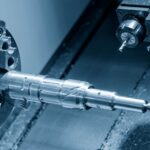
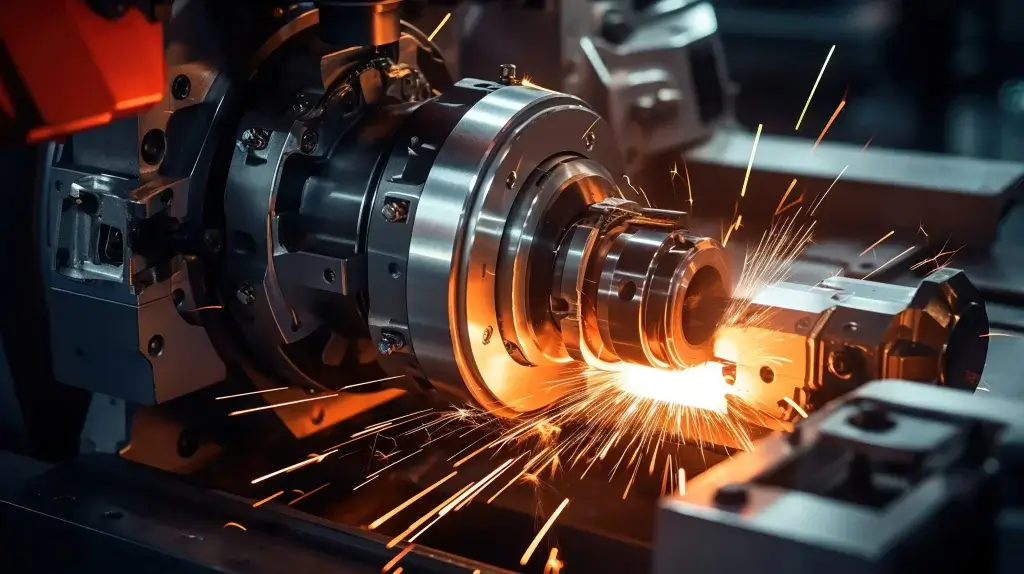
Metal turning is based on the principle of contacting a rotating workpiece with a cutting tool and removing material. The workpiece is connected to the chuck of the lathe and rotated at high speed. The cutting tool is advanced towards the workpiece and the desired cuts the material to create the geometry.
Different turning techniques are available:
- External turning: Used to shape the outer surface of the workpiece. Cylindrical, conical or profiled surfaces can be created.
- Internal turning: Used for machining holes. Operations such as enlarging the hole diameter, increasing the hole depth or threading the hole can be performed.
- Grooving: Used to cut grooves on the workpiece. Different types of grooves can be made, such as O-ring grooves, oil grooves or key slots.
- Threading: Used to cut threads on the workpiece. Metric, inch or special thread profiles can be turned.
- Profile turning: Used for machining profiles with complex geometries. This is process can be performed more easily and precisely with CNC lathes.can be realized.
Metal Turning Tools and Materials
Metal turning tools consist of an insert and a tool holder. Inserts are the part that removes material from the workpiece and are usually made of materials with high hardness and wear resistance.
The most common insert materials are:
Carbide: An economical material with high hardness and wear resistance. It is used for turning many metals such as steel, cast iron and stainless steel.
Ceramic: Harder and more wear resistant than carbide. At high speeds
Suitable for turning and machining of hard materials.
Diamond: The hardest insert material. Suitable for machining very hard materials and ideal for applications requiring high precision.
Toolholders connect the insert to the machine tool and must withstand the cutting forces. Different types of tool holders are available and depend on the type of insert, the type of machine and the workpiece is selected according to its size.
Metal Turning Parameters and Optimization
In metal turning, parameters such as cutting speed, feed rate and depth of cut affect the metal removal rate, surface finish and tool life. Optimization of these parameters is important to increase productivity, reduce costs and produce quality parts.
- Cutting speed: This is the rotational speed of the workpiece and is usually expressed in meters per minute (m/min). The cutting speed is selected according to the material of the workpiece, the insert material and the desired surface quality.
- Feed rate: This is the speed at which the cutting tool moves towards the workpiece and is usually expressed in millimeters/revolution (mm/rev). Feed rate affects chip thickness and surface roughness.
- Depth of cut: The amount of material that the cutting tool removes from the workpiece in each pass. Depth of cut affects the metal removal rate and surface quality.
Metal Turning Machines
Metal turning can be performed using CNC lathes or conventional lathes.
- CNC lathes: They are computer-controlled and enable precise machining of parts with complex geometries. They are programmable and operate automatically, resulting in high productivity and repeatability.
- Conventional lathes: Manually controlled and suitable for simpler operations. Operator skill and experience affect part quality.
Turning in Different Metals
Turning different types of metal presents different challenges and requirements.
- Turning steel: One of the most common turning applications. Different inserts and cutting parameters are used for different types of steel such as carbon steel, alloy steel, tool steel.
- Aluminum turning: Aluminum alloys are prone to chip sticking due to their low melting point and soft structure. Therefore, special inserts and coolants must be used.
- Stainless steel turning: Stainless steel types are a more demanding process due to their high hardness and machinability. Wear-resistant inserts and low cutting speeds are required.
- Turning other metals: Turning of metals such as brass, copper, titanium is also possible. Since each metal has its own characteristics, appropriate inserts and cutting parameters must be selected.

Precision Metal Turning
Precision metal turning is used to produce parts that require tight tolerances and high surface quality. Such turning operations are usually performed using CNC lathes and specialized inserts. Precision turning is widely used in industries such as aerospace, medical and automotive.
Large Diameter Metal Turning
Large diameter metal turning is used for machining large parts such as shafts, spindles, cylinders. This type of turning usually requires large and powerful lathes. Large diameter turning is widely used in industries such as energy, mining and construction.
Multi-axis Metal Turning
Multi-axis metal turning is used to produce parts with complex geometries. This type of turning requires CNC lathes that can turn the workpiece in multiple axes. Multi-axis turning is widely used in industries such as aerospace, medical and molding.
Turning Services by Nova Fabrication
Nova Fabrication offers high precision and customized solutions to your metal turning needs. Our experienced engineers and technicians will work with you using CNC turning technologies to produce even the most complex parts with high accuracy.
Advantages of CNC Turning Technology
CNC (Computer Numerical Control) turning has revolutionized the metalworking industry. At Nova Fabrication, we utilize this advanced technology to provide our customers with fast, repeatable and economical solutions. Our CNC turning machines make it possible to produce parts with complex shapes and tight tolerances, enabling us to achieve results far superior to manual machining methods.
Customized Turning Solutions
Every project is unique and every customer’s needs are different. Nova Fabrication’s team of experts is here to understand the specific requirements of your project and provide you with the most suitable solution. Our CNC turning centers are ideal for any industrial application, with the ability to work on a wide range of materials.
Quality Control and Precision
At Nova Fabrication, each turning process is subject to strict quality control. Our production processes are carried out in accordance with ISO standards and every part undergoes detailed inspections to meet our customers’ expectations.
For more information about our CNC turning services or to request a quote for your project, please contact us. Nova Fabrication is ready to be your reliable and innovative solution for metal turning in Turkey.