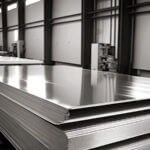


Machining Parts: Secrets of Precision Parts Production
As the backbone of modern industry, machining parts enables the production of precise and complex parts used in various sectors. In this article, we will take an in-depth look at the concept of “machining parts” and discuss the different machining methods, sectoral applications, important considerations and recent technological developments.
What is Machining? Machining Parts Methods and Applications
Machining is the process of producing parts of the desired shape and size by cutting material using cutting tools. This process can be applied on metals, plastics, composites and other materials. Machining is used in a wide range of industries, from prototyping to mass production, and plays a vital role in automotive, aerospace, medical, energy and many more. plays a role.
Machining processes are basically divided into two categories:
-
- Machining: It is the process of removing chips by cutting the material. Operations such as turning, milling, grinding and drilling are machining methods.
- Chipless manufacturing: It is the process of shaping the material without cutting. Laser cutting, water
processes such as jet cutting and electro erosion are chipless manufacturing methods.
CNC Machining: Computer Aided Precision Part Production
CNC (Computer Numerical Control) machining, controlled by computer software
is the process of machining parts using automated machine tools. This technology is characterized by high precision, repeatability and efficiency. CNC machines can produce parts with complex geometries and minimize human error.
The advantages of CNC machining are:
-
- High precision and repeatability: CNC machines can precisely manufacture parts within specified tolerances.
- Production of complex geometries: CNC machines can produce parts with complex geometries that are difficult to produce with conventional methods.
- High productivity: CNC machines provide high productivity because they operate automatically.
- Flexibility: CNC machines can easily be used to produce different part designs.
programmable.
Machining in Different Materials: Metal, Plastics and Composites
Machining processes can be adapted to different material properties. Each material has its own machinability characteristics.
-
- Metals: Metals such as steel, aluminum, titanium and brass are often used in applications that require high strength and durability.
- Plastics: Plastics such as ABS, nylon, polycarbonate and PTFE are preferred for their light weight and low cost.
- Composite materials: Composite materials such as carbon fiber, fiberglass and Kevlar offer advantages such as high strength-to-weight ratio and corrosion resistance.
Machining Tolerances: Importance of Precision and Measurement Methods
In machining processes, parts must be produced within certain tolerances. Tolerances determine the acceptable dimensional and geometric variations of the part. Precision measuring instruments are used to check that parts conform to tolerances.
Commonly used measuring instruments are:
- Micrometer: Used to measure the outside diameter of parts.
- Caliper: Used to measure inside and outside diameters, depths and lengths of parts.
- Profile projector: Used to view and measure the profile of parts in magnified form.
- Coordinate measuring machine (CMM): To make three-dimensional measurements of parts
used for.
Lathe Machining: Production of Rotationally Symmetric Parts
Lathes are used to create cylindrical or conical shapes by cutting a rotating workpiece. This process is widely used in the production of shafts, bushings, gears and other rotationally symmetrical parts.
The turning process can involve different operations, such as the following:
- Roughing: Used to quickly remove large amounts of material from the workpiece.
- Finishing stock removal: Used to improve surface quality and perform precise dimensioning.
- Threading: Used to drill threads into the workpiece.
- Hole drilling: Used to drill holes in the workpiece.
Milling Machining: Creating Complex Geometries
Milling machines are used to create flat or curved surfaces, pockets, slots and other complex geometries using rotating cutting tools. Milling is used in the production of molds, fixtures and other special parts.
The milling process can involve different operations, such as:
- Face milling: Used to create flat or curved surfaces.
- Pocket milling: Used to create pockets or slots in the workpiece.
- Profile milling: Used to create complex profiles.
Grinding Machining: Improving Surface Quality and Precise Dimensioning
The grinding process is used to improve surface quality and precise dimensioning by abrading the material using an abrasive wheel. This process ensures high precision for the finishing of parts that require grinding.
The grinding process can include different types, as follows:
- Surface grinding: Used for grinding flat or curved surfaces.
- Cylindrical grinding: Used for grinding cylindrical parts.
Centerless grinding: Used for grinding parts that are not rotationally symmetrical.
Drilling and Machining: Drilling and Expanding Techniques
Drilling and machining operations are used to drill and enlarge holes using tools such as drills, reamers and taps. These operations are used to create mounting holes, threaded holes and other special holes.
Hole drilling and machining operations can include different types, as follows:
- Drilling: The most commonly used method for making holes.
- Reaming: Used to increase the size and surface finish of holes.
- Tapping: Used for threading the workpiece.
Machining in the Aerospace Industry: High Performance Parts
The aerospace industry requires parts with properties such as high strength-to-weight ratio, corrosion resistance and resistance to high temperatures. Machining is used to manufacture turbine blades, landing gear and other critical components used in this industry.
Common materials used in the aerospace industry include:
- Aluminum alloys: Lightweight and corrosion resistant.
- Titanium alloys: High strength-to-weight ratio and resistant to high temperatures.
- Nickel alloys: Resistant to high temperatures and corrosion.
Machining in the Automotive Industry: Engine and Transmission Parts
In the automotive industry, parts such as engine blocks, cylinder heads, pistons, crankshafts and transmission gears are produced by machining. These parts require high strength, wear resistance and precise tolerances.
Common materials used in the automotive industry include:
- Steel: Provides high strength and durability.
- Aluminum alloys: Lightweight and corrosion resistant.
- Cast iron: Provides wear resistance and vibration damping properties.
Machining in Medical Device Manufacturing: Precision and Sterile Parts
Medical device manufacturing requires precise and sterile parts such as implants, prostheses and surgical instruments. Machining can be applied on titanium, stainless steel and other biocompatible materials used in the production of these parts.
Common materials used in medical device manufacturing include:
- Titanium: Biocompatible, corrosion resistant and has a high strength-to-weight ratio.
- Stainless steel: Biocompatible, corrosion resistant and suitable for sterilization.
- Cobalt-chromium alloys: Provides high strength and wear resistance.
Machining in the Energy Sector: Turbine and Pump Parts
Machining turbine blades, pump housings and other critical components in the energy sector are produced with. These parts must be resistant to high temperatures, pressure and corrosion.
Common materials used in the energy sector are:
- Stainless steel: Resistant to high temperatures and corrosion.
- Nickel alloys: Resistant to high temperatures and corrosion.
- Titanium alloys: High strength-to-weight ratio and resistant to high temperatures.
Factors Affecting Machining Costs
Machining costs vary depending on factors such as part geometry, material selection, machining time, tolerances and quantity. Complex geometries, difficult-to-machine materials and tight tolerances increase costs.
Quality Control in Machining Processes
Quality control in machining processes is important to ensure that parts conform to specified tolerances and specifications. Measuring instruments, visual inspection and other test methods are used for quality control.
Quality control methods are as follows:
- Visual inspection: Used to check the surface quality of parts and visible defects.
- Dimensional measurement: Used to check the dimensions of parts and conformity to tolerances.
- Material testing: Check material properties and conformity to standards
to make the most of it.
Latest Developments in Machining Technologies
- Multi-axis machining: Machines with five axes or more allow parts with complex geometries to be machined in a single setup.
- High-speed machining: Cutting tools operating at high speeds reduce machining time and improve surface quality.
- Laser machining: The process of cutting or engraving material using a laser beam. It is used to produce precise and complex geometries.
- Additive manufacturing (3D printing): The process of producing parts by adding material layer by layer. It is used for prototyping and the production of customized parts.
Things to Consider When Getting Machining Service Company Experience and Expertise
At Nova Fabrication, we have years of experience and deep expertise in your industry. We put this experience at the forefront of our machining services to best meet the needs of our customers.
Technological Infrastructure
With our modern and advanced machine tools, we have the technological infrastructure to meet even your most complex machining needs. Nova Fabrication closely follows the technological developments in the sector with its constantly renewed machine park.
Quality Control Processes
Our stringent quality control processes ensure that products are flawless from start to finish. At Nova Fabrication, every part is quality assured to the highest standards.
References
We would be proud to share our achievements in similar projects with you. Nova Fabrication will be happy to provide you with references of our past successful projects upon request.
Nova Fabrication is the right choice for custom metalworking and stainless steel machining services in Turkey. You can be sure that you will find the confidence and quality you are looking for when you are looking for machining services.