
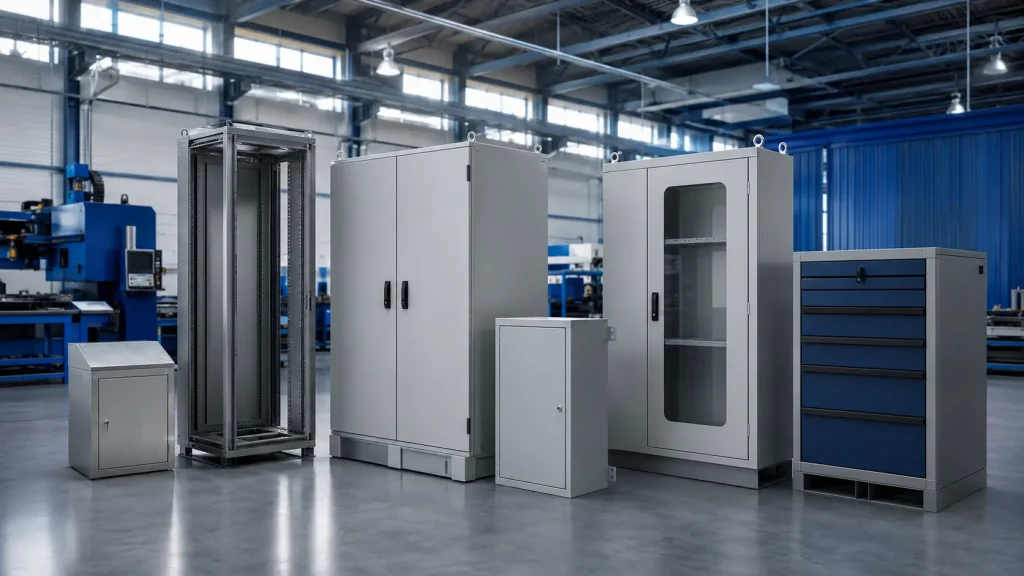
Metal cabinets are widely used in industrial and commercial environments because they provide protection, organization and long-term durability. From electrical control panels to server cabinets, storage units, outdoor enclosures and retail equipment, metal cabinets help protect valuable components while keeping working areas safer and more organized.
Unlike standard furniture or basic storage products, industrial and commercial metal cabinets must be designed according to real usage conditions. A cabinet used in a factory may need stronger construction, ventilation and corrosion protection. A cabinet used in a retail or office environment may need a cleaner appearance, smooth finish and custom dimensions. This is why metal cabinet manufacturing requires both technical planning and careful production.
A well-designed metal cabinet should not only look good. It should protect the equipment inside, support daily operation, fit the available space and remain durable over time.
What Is Metal Cabinet Manufacturing?
Metal cabinet manufacturing is the process of producing custom or standard cabinets from materials such as steel, stainless steel, aluminum or galvanized sheet metal. The process usually includes technical drawing review, material selection, sheet metal cutting, bending, welding, assembly, surface finishing and quality control.
The final cabinet may be used for storage, electrical systems, industrial equipment, batteries, servers, tools, documents or commercial products. Because each application has different requirements, cabinet design should be planned before production begins.
For example, a control panel cabinet must protect electrical components and allow safe access for maintenance. A server cabinet must support airflow and cable management. An outdoor cabinet must resist rain, dust, sunlight and corrosion. A commercial storage cabinet may need a clean finish, lockable doors and a design that fits the interior environment.
Why Metal Cabinets Are Preferred
Metal cabinets are preferred because they offer strength, stability and long service life. In industrial environments, cabinets may be exposed to dust, vibration, moisture, impact, heat or heavy daily use. Metal provides a more durable structure compared to many alternative materials.
In commercial environments, metal cabinets can also provide a professional and modern appearance. With the right surface finish, they can be used in offices, retail stores, showrooms, service areas and technical rooms without looking too industrial.
Another important advantage is customization. Metal cabinets can be manufactured in different sizes, door types, ventilation layouts, shelf structures, mounting options and surface finishes. This allows the cabinet to match both functional requirements and visual expectations.
Industrial Metal Cabinets
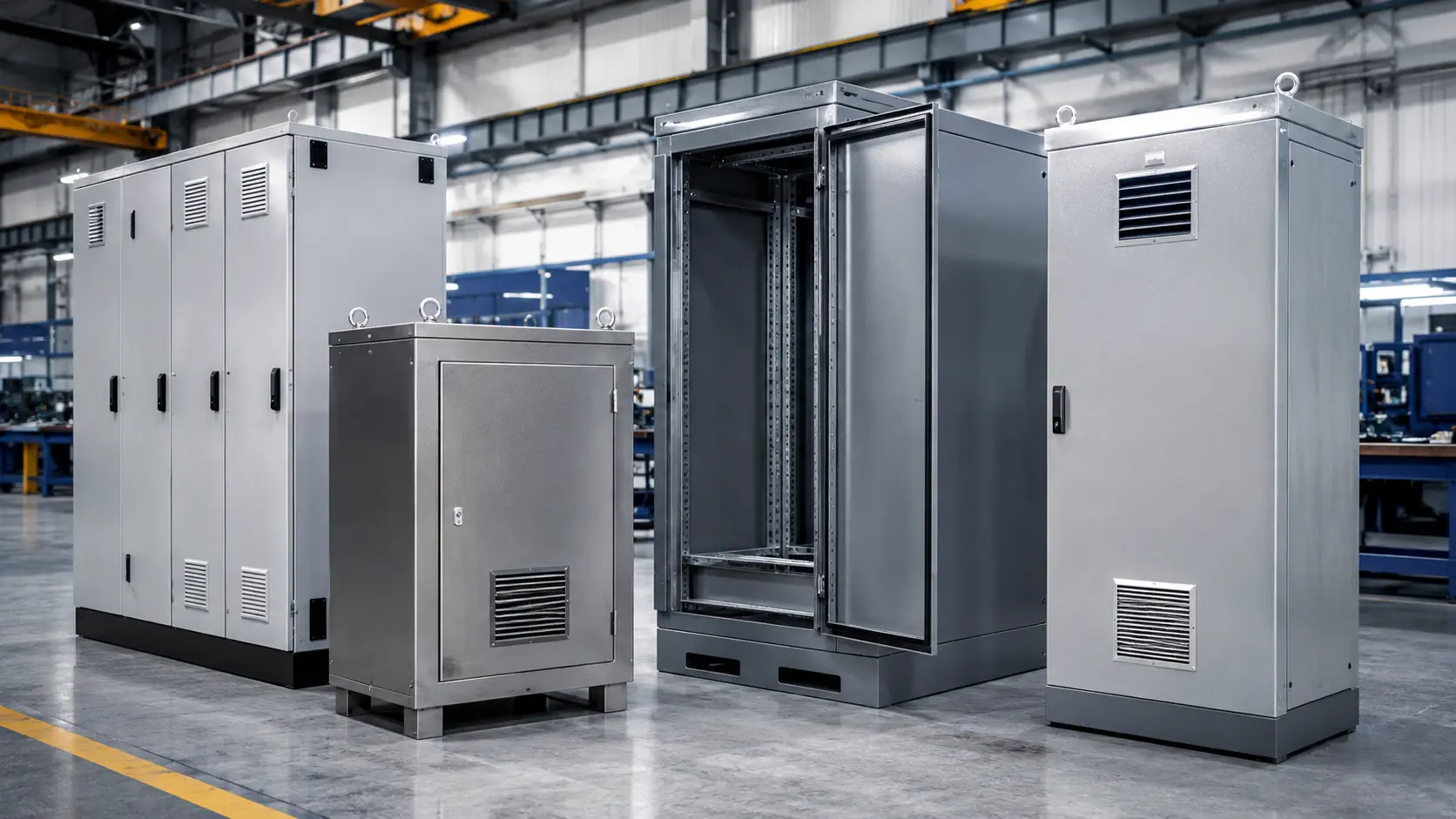
Industrial metal cabinets are designed for demanding working environments. They are commonly used in factories, production facilities, warehouses, energy systems, automation lines and maintenance areas.
In these applications, strength and safety are the main priorities. The cabinet may need to protect electrical devices, control systems, machine components, tools or sensitive equipment. The structure must be stable enough to handle daily use, and the doors, hinges, locks and mounting points must be suitable for the working environment.
Material thickness, welding quality, bending accuracy and surface protection all affect the cabinet’s long-term performance. If the cabinet will be used outdoors or in a humid environment, coating and corrosion resistance become even more important.
Commercial Metal Cabinets
Commercial metal cabinets are often used in offices, retail stores, showrooms, service centers, hospitals, kitchens and public spaces. In these environments, function is important, but appearance also matters.
A commercial cabinet may be used for storage, product display, equipment protection or organization. It should be durable enough for daily use while also fitting the design language of the space. Smooth surfaces, clean edges, consistent coating and practical access details can improve both usability and visual quality.
For commercial use, cabinets may include shelves, drawers, lockable doors, glass panels, ventilation openings or custom color finishes. The design should match the purpose of the cabinet. A cabinet used in a retail environment may focus more on appearance, while a cabinet used in a technical room may focus more on access, airflow and safety.
Common Types of Metal Cabinets
Different industries require different cabinet types. The table below gives a simple overview of common metal cabinet applications.
Cabinet Type | Common Use | Key Design Priority |
Electrical Cabinet | Electrical components and control systems | Safety, access and protection |
Server Cabinet | IT and network equipment | Ventilation, cable management and security |
Outdoor Cabinet | Outdoor equipment and technical systems | Weather resistance and corrosion protection |
Battery Cabinet | Battery storage and energy systems | Safety, ventilation and structural strength |
Stainless Steel Cabinet | Hygienic or corrosion-sensitive areas | Clean surface and corrosion resistance |
Industrial Storage Cabinet | Tools, parts and workshop equipment | Load capacity and daily durability |
Commercial Cabinet | Offices, retail and service areas | Appearance, usability and organization |
This table is only a general guide. In custom cabinet manufacturing, the final design should always be based on the project’s real environment, equipment dimensions and usage expectations.
Material Selection for Metal Cabinets
Material selection is one of the most important decisions in cabinet manufacturing. Steel is commonly used because it is strong, cost-effective and suitable for many industrial applications. Stainless steel is preferred when corrosion resistance, hygiene or premium appearance is required. Aluminum can be a good option when lightweight construction is important.
Galvanized sheet metal may be selected for cabinets that need additional corrosion protection. For outdoor applications, the material and coating system should be evaluated together because weather exposure can affect the cabinet’s service life.
The wrong material choice can increase maintenance needs or reduce product life. A cabinet used in a dry indoor office does not need the same material structure as a cabinet used outdoors near moisture, dust or temperature changes. This is why the working environment should be clearly defined before production starts.
Design Details That Affect Performance
A metal cabinet may look simple from the outside, but many design details affect its performance. Door structure, hinges, locks, ventilation openings, cable entries, mounting holes, internal shelves and gasket areas should be planned according to the cabinet’s purpose.
Ventilation is especially important for cabinets that contain electrical devices, servers, batteries or heat-generating equipment. Poor airflow can shorten equipment life and create operational problems. Cable management is also important for electrical and IT cabinets because clean internal organization makes maintenance easier.
For outdoor or technical cabinets, IP rating expectations should be discussed early. IP rating refers to the level of protection against dust and water ingress. Not every cabinet needs a high IP rating, but cabinets used in outdoor or harsh environments may require stronger sealing and better protection.
Surface Finish and Coating
Surface finish affects both appearance and durability. For indoor commercial cabinets, a smooth powder coated or painted finish can provide a clean and professional look. For industrial or outdoor cabinets, coating becomes more than a visual detail; it helps protect the metal surface against corrosion and daily wear.
Powder coating is commonly preferred for metal cabinets because it creates a durable and uniform surface. Wet painting can be useful when custom color matching or special visual requirements are needed. Stainless steel surfaces may be brushed or polished depending on the application.
The finish should be selected according to where the cabinet will be used. A cabinet placed in a retail environment may need a premium visual finish, while a cabinet used in a factory may need stronger scratch and corrosion resistance.
Manufacturing Process
The metal cabinet manufacturing process usually starts with the technical drawing. Dimensions, material type, door layout, internal structure, ventilation, cutouts, mounting points and surface finish expectations should be clarified before production begins.
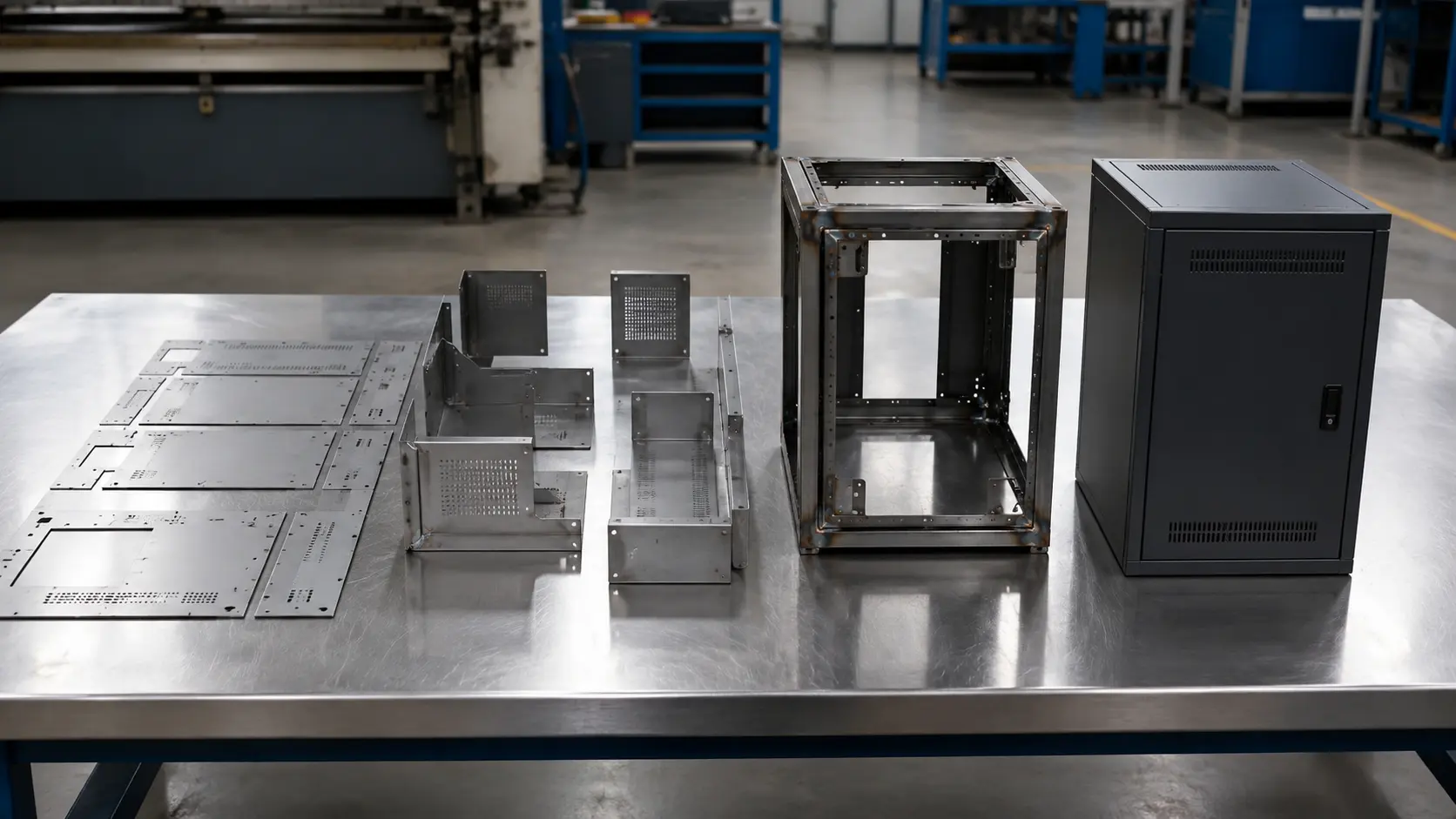
After the design is reviewed, the sheet metal parts are cut, bent and prepared for assembly. Depending on the cabinet type, welding, spot welding, fastening or additional machining may be used. Once the body is formed, the cabinet moves to surface finishing and final quality control.
Quality control is important because cabinet performance depends on both dimensions and assembly details. Door alignment, hinge movement, lock position, surface finish, ventilation openings and mounting points should all be checked before delivery.
What Buyers Should Clarify Before Ordering
Before ordering a custom metal cabinet, buyers should define how the cabinet will be used. The manufacturer needs to understand the cabinet’s environment, load requirements, equipment dimensions and access needs.
It is helpful to clarify whether the cabinet will be used indoors or outdoors, whether it will contain electrical equipment, whether ventilation is required and whether the cabinet needs a specific coating or color. If the cabinet must meet a specific IP rating, this should also be mentioned before production starts.
Clear technical information makes quotation and production easier. It also helps avoid revisions during manufacturing and ensures that the final cabinet matches the actual application.