
Dear metal industry professionals, today we’re going to have an in-depth conversation about PVD coating technology, which is like a magic wand in the metal world. PVD coating, or Physical Vapor Deposition, is a method that essentially gives your metals superpowers. In this article, we’ll cover everything from what PVD coating is, how it’s applied, its advantages, to its areas of application.
For those of us working in the metal industry, the quality and durability of our products have always been paramount. We’re constantly seeking new methods and technologies to meet and exceed our customers’ expectations. This is where PVD coating technology comes in, offering us tremendous opportunities.
In this article, we’ll unravel the secrets of PVD coating. We’ll explore how it works, why it’s so effective, and how it can add value to your business. If you’re ready, let’s dive into the depths of this technology that’s revolutionizing the metal industry!
What is PVD Coating?
PVD coating, or Physical Vapor Deposition in full, is an advanced coating method used to protect and enhance your metals. In this method, the coating material is vaporized or atomized and then deposited onto the target surface as a thin film layer. Imagine you’re putting an invisible armor on your metal – that’s exactly what PVD coating does!
The PVD coating process, as the name suggests, is a physical process rather than a chemical one. This means it doesn’t involve chemical reactions to form the coating, which is one of the reasons why PVD is considered more environmentally friendly than many other coating methods.
How Does PVD Coating Work?
The PVD coating process typically involves four main steps:
Evaporation: The coating material (usually a metal) is vaporized using various methods such as electron beam evaporation, sputtering, or cathodic arc deposition.
Transportation: The vaporized material is transported through a vacuum or low-pressure plasma environment.
Reaction: In some cases, the vapor is reacted with different gases to create compounds (e.g., titanium nitride).
Deposition: The vaporized material condenses on the substrate, forming a thin, highly adhesive coating.
This process takes place in a specially designed vacuum chamber, ensuring a high-purity environment for the coating process.
Types of PVD Coating Processes
There are several methods of PVD coating, each with its own advantages:
Cathodic Arc Deposition: Known for high ionization rates and fast deposition.
Sputtering: Offers excellent control over the coating composition.
Electron Beam Evaporation: Provides high deposition rates and can coat large areas.
Ion Plating: Offers excellent adhesion and can coat complex shapes.
Advantages of PVD Coating
PVD coating offers numerous benefits, which is why it’s become so popular across various industries:
Increased Hardness and Wear Resistance:
PVD coatings can significantly increase the surface hardness of materials. For example, a titanium nitride (TiN) coating can increase the surface hardness of steel from about 30 HRC to over 80 HRC.
Corrosion Resistance:
PVD coatings like chromium nitride (CrN) provide excellent protection against corrosion, extending the life of parts exposed to harsh environments.
Thin and Uniform Coating:
PVD coatings are typically very thin (1-5 micrometers), allowing for coating of precision parts without changing their dimensions significantly.
Environmentally Friendly:
Unlike some traditional coating methods, PVD doesn’t use harmful chemicals or produce hazardous waste.
Wide Range of Materials:
PVD can be used to deposit a wide range of materials, including metals, alloys, and ceramics.
High Temperature Resistance:
Some PVD coatings, like titanium aluminum nitride (TiAlN), can withstand temperatures up to 800°C.
Low Friction:
Many PVD coatings have very low coefficients of friction, reducing wear and energy consumption in moving parts.
Aesthetic Appeal:
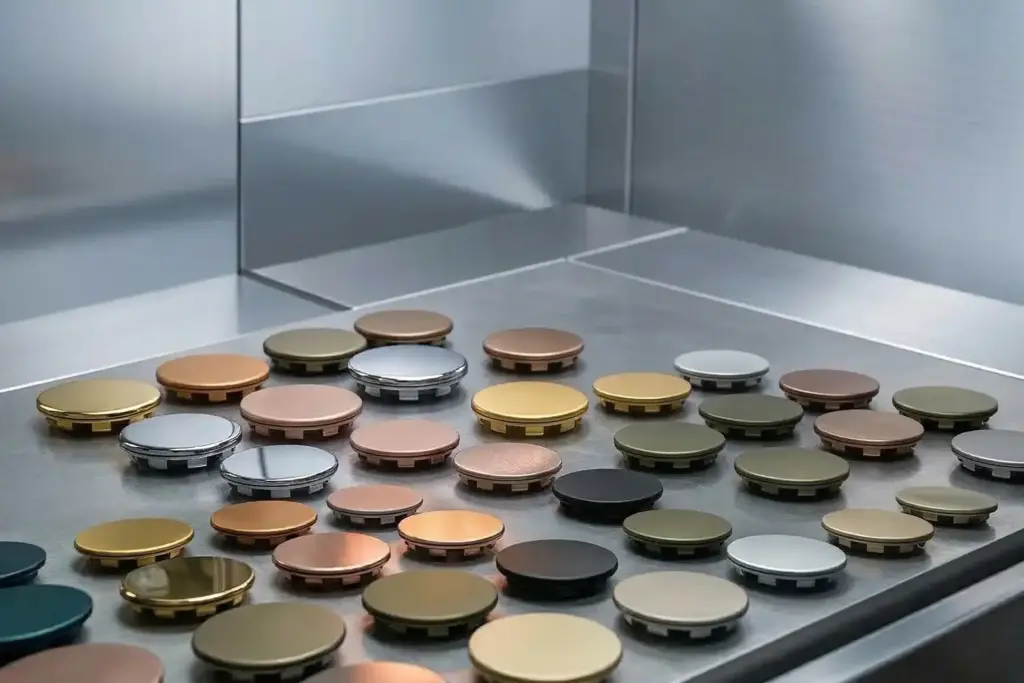
PVD can produce a range of attractive colors and finishes, making it popular for decorative applications.
PVD coating is used across a wide range of industries:
PVD coating is used across a wide range of industries:
Cutting Tools: Increases tool life and allows for higher cutting speeds.
Automotive: Used on engine components to reduce friction and wear.
Aerospace: Provides thermal and oxidation resistance for turbine blades.
Medical Devices: Improves biocompatibility and wear resistance of implants.
Decorative: Used in jewelry, watches, and architectural fittings.
Electronics: Provides wear resistance and conductivity for connectors.
Optics: Creates anti-reflective and scratch-resistant coatings.
Solar Panels: Improves efficiency and durability of solar cells.
Choosing the Right PVD Coating
Selecting the appropriate PVD coating depends on several factors:
Application Requirements: Consider the specific needs of your application (e.g., wear resistance, corrosion protection, low friction).
Substrate Material: The base material affects coating adhesion and performance.
Operating Environment: Consider factors like temperature, chemical exposure, and mechanical stresses.
Cost Considerations: Balance performance needs with budget constraints.