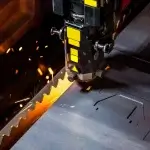


Precision and Efficiency in CNC Turning and Milling Operations
CNC (Computer Numerical Control) turning and milling operations, essential elements of modern manufacturing processes, form the cornerstones of precision and efficiency in industrial production. In this blog post, we will delve into the details of CNC turning and milling technologies, how these processes contribute to precision and efficiency, and their importance in industrial applications.
Overview of CNC Technology
CNC technology has revolutionized metal processing with the use of computer-controlled machines. This technology allows for the production of complex parts with high precision and repeatability.
Key advantages of CNC include:
- High precision and accuracy
- Repeatability
- Ability to machine complex shapes
- Reduced production time
- Lower labor costs
Visit Nova Fabrication's CNC services page to learn more about our offerings.
CNC Turning Operations
CNC turning operations are a fundamental technique used in the production of cylindrical parts. This process involves rotating the workpiece around its axis while a stationary cutting tool removes material.
Features of CNC Turning:
- Speed Control: The rotation speed of the workpiece can be precisely controlled.
- Multi-Axis Machining: Modern CNC turning centers can machine complex parts with multiple axes in a single setup.
- Automatic Tool Changing: Tools can be automatically changed for different operations.
CNC turning is widely used in the automotive, aerospace, and medical device industries.
CNC Milling Operations
CNC milling operations are used for creating flat surfaces, contours, and complex 3D shapes. In milling, a rotating cutting tool moves over a stationary workpiece to remove material.
- Versatility: Can machine a wide range of shapes from flat surfaces to complex 3D forms.
- High Precision: Parts can be produced with micron-level accuracy.
- Rapid Prototyping: Allows for quick prototyping of complex parts.
CNC milling is critical in mold making, electronics, and aerospace industries.
Precision in CNC turning and milling operations is achieved through a combination of several factors:
- Machine Calibration: Regular calibration maintains the machine's precision.
- Tool Selection: Choosing the right tool directly affects machining quality.
- Material Properties: The characteristics of the material to be machined are important in determining appropriate parameters.
- Environmental Control: Environmental factors such as temperature and humidity must be controlled.
- Operator Skill: Well-trained operators maximize the machine's potential.
Learn more about Nova Fabrication's quality control processes.
Efficiency Enhancement Strategies
Various strategies can be applied to increase efficiency in CNC operations:
- Optimum Cutting Parameters: Selecting the right speed, feed, and cutting depth.
- Tool Path Optimization: Minimizing unnecessary movements.
- Multiple Workpiece Setup: Machining multiple parts in one setup.
- Automatic Loading/Unloading Systems: Increasing efficiency by reducing human intervention.
- Continuous Production: Increasing machine utilization rate with 24/7 production planning.
Implementing these strategies can shorten production time while reducing costs.
Industrial Applications
CNC turning and milling operations have a wide range of applications across various industries:
- Automotive Industry: Engine parts, transmission components.
- Aerospace: Turbine blades, fuselage parts.
- Medical Devices: Implants, surgical instruments.
- Electronics: Precision components, cooling elements.
- Energy Sector: Turbine parts, valve components.
Each industry has its unique precision and efficiency requirements, and CNC technology is continuously evolving to meet these needs.
Future Outlook
The future of CNC turning and milling technologies is being shaped by Industry 4.0 and smart manufacturing concepts. Expected developments include:
- Artificial Intelligence and Machine Learning: Automatic optimization of production processes.
- Internet of Things (IoT): Real-time monitoring and maintenance planning.
- Augmented Reality: Operator training and maintenance support.
- Integration with 3D Printing: Hybrid manufacturing techniques.
These developments will further increase precision and efficiency in CNC operations while opening up new production possibilities.
Conclusion
CNC turning and milling operations are fundamental to the modern manufacturing industry. Precision and efficiency are the driving forces behind the continuous development of these technologies. Businesses should follow and implement the latest developments in CNC technologies to maintain and increase their competitive edge.
Nova Fabrication offers high-precision and efficient production solutions to its customers using the latest CNC technologies. You can contact us for your special projects and get support from our expert team.