
Industrial metal frames and structures are essential components in many manufacturing, construction, logistics and engineering projects. They provide support, stability, protection and load-bearing capacity for machines, platforms, equipment, storage systems and custom industrial assemblies.
A well-designed metal frame is not only about strength. It must also be suitable for the working environment, easy to install, compatible with other components and durable enough for long-term use. Material selection, joint design, welding quality, surface protection and dimensional accuracy all play a major role in the final performance of the structure.
In industrial projects, metal frames are often exposed to load, vibration, impact, moisture, temperature changes or continuous operation. For this reason, design and fabrication should be planned carefully before production begins.
What Are Industrial Metal Frames and Structures?
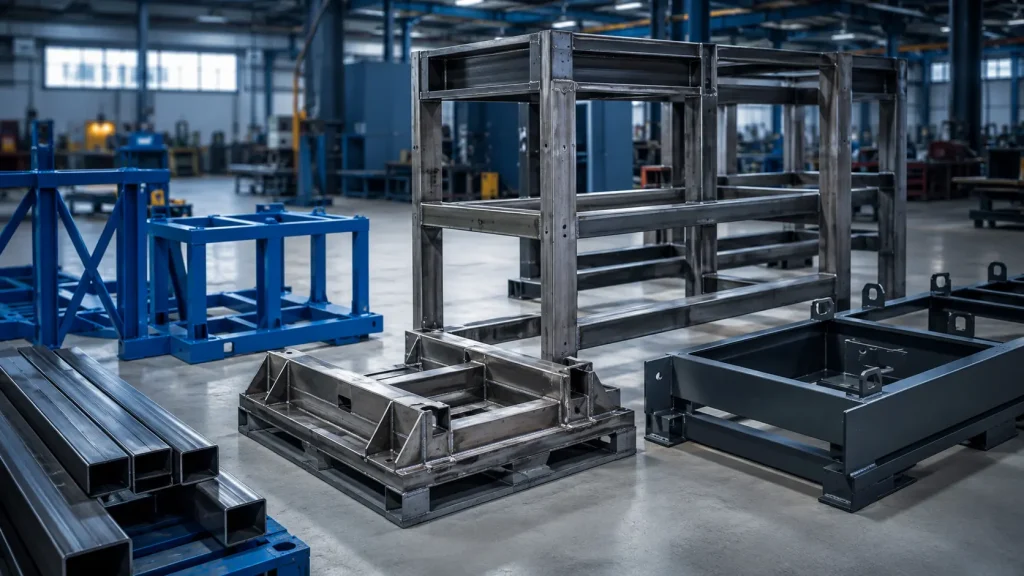
Industrial metal frames are fabricated metal systems designed to support, hold, protect or carry other components. They can be simple welded frames or more complex structural assemblies with brackets, plates, mounting holes, reinforcements, covers and connection points.
These structures are commonly used in machinery, production lines, equipment bases, industrial platforms, storage systems, safety barriers, technical cabinets, conveyor systems and custom manufacturing projects. In some applications, the frame acts as the main support structure. In others, it works as a secondary support or protective element.
Because every project has different requirements, industrial metal frames are often produced according to technical drawings and project-specific dimensions. A standard solution may not always fit the equipment, workspace or load requirement, so custom fabrication becomes important.
Why Design Planning Matters
A strong industrial frame starts with a clear design. Before fabrication begins, the frame’s purpose, load conditions, installation area and connection requirements should be understood. A frame that supports a machine does not have the same design needs as a frame used for a lightweight cover or commercial display structure.
Design planning helps prevent problems during assembly and use. If hole positions, mounting points or dimensions are not planned correctly, the frame may not align with other components. If the material is too thin, the structure may deform under load. If the design is too heavy or complex, production cost and installation difficulty may increase.
Good design balances strength, manufacturability and cost. The goal is not always to use the thickest material or the heaviest profile. The goal is to create a structure that performs correctly in its real working environment.

Material Selection for Industrial Frames
Material selection depends on the frame’s function, load requirement, environment and budget. Steel is commonly used for industrial frames because it provides strength, durability and good fabrication performance. Stainless steel is preferred when corrosion resistance, hygiene or a clean appearance is required. Aluminum can be useful when lightweight construction is important.
Galvanized steel may be selected for environments where moisture or outdoor exposure is a concern. In projects where the frame will be painted or powder coated, the coating system should be considered together with the base material.
The correct material choice affects more than strength. It also influences welding, bending, machining, surface finishing, transport and long-term maintenance. For example, a frame used indoors in a dry production area may not need the same surface protection as a structure installed outdoors or near chemical exposure.
Common Types of Industrial Metal Frames
Industrial frames can be designed in many different forms depending on the application. Some are built for strength and load-bearing performance, while others are designed for organization, equipment protection or assembly support.
Frame or Structure Type | Common Use | Main Design Priority |
Machine Frames | Supporting machinery and production equipment | Stability and vibration resistance |
Equipment Bases | Holding technical systems or components | Load capacity and alignment |
Platform Structures | Industrial access and working areas | Safety and structural strength |
Conveyor Frames | Production and logistics lines | Straightness and assembly accuracy |
Protective Frames | Guarding equipment or sensitive areas | Impact resistance and durability |
Storage Structures | Industrial shelving and material support | Load capacity and space efficiency |
Custom Welded Frames | Project-specific applications | Fit, strength and repeatability |
This table is a general guide. The final design should always be based on the actual load, installation environment, safety expectations and production requirements.
Fabrication Process for Metal Frames
The fabrication process usually starts with technical drawing review. Dimensions, material type, profile size, plate thickness, hole positions, weld areas and surface finish requirements should be checked before production begins.
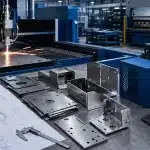
After the design is reviewed, the material is prepared through cutting, drilling, machining or bending depending on the project. Profiles, tubes, plates or sheet metal components may be used together in the same frame. Once the parts are prepared, they are aligned and joined through welding, fastening or mechanical assembly.
Welding is one of the most important stages in industrial frame fabrication. The strength of the final structure depends heavily on proper joint preparation, fit-up, welding method and weld quality. For frames that carry load or face vibration, weld consistency and inspection become especially important. Professional welding services help create stronger and more reliable metal assemblies.
After welding, the frame may need grinding, cleaning, machining, coating or final assembly. The final stage is quality control, where dimensions, alignment, weld areas and surface finish are checked before delivery.
Welding and Joint Design
Joint design directly affects the strength and durability of an industrial metal frame. A weld may look clean from the outside, but the joint must also be suitable for the load direction and working conditions of the structure.
Frames exposed to vibration, repeated use or mechanical stress require careful welding planning. Connection points should be positioned correctly, and reinforcements may be needed in areas that carry higher loads. In some cases, bolted connections can also be used together with welded joints to make installation or maintenance easier.
The welding method should be selected according to the material, thickness and expected finish quality. MIG/MAG welding is widely used for industrial fabrication because it is efficient and suitable for many steel structures. TIG welding may be preferred when cleaner weld appearance or more controlled joining is required.

Dimensional Accuracy and Assembly
Industrial frames often need to connect with machines, panels, covers, motors, bearings, cabinets or other metal parts. For this reason, dimensional accuracy is critical. Even a small misalignment can create installation problems or affect the performance of the equipment.
Hole positions, flatness, squareness and mounting surfaces should be controlled during production. If the frame is part of a larger assembly, tolerance requirements should be defined clearly before fabrication starts.
Accurate fabrication also reduces installation time. A frame that arrives ready to fit saves time on-site and reduces the need for modifications. This is especially important for export projects, production lines and equipment installations where delays can be costly.
Surface Protection and Durability
Industrial metal structures often need surface protection to improve durability. The right finish depends on where the frame will be used and what conditions it will face.
Powder coating can provide a durable and clean surface for many industrial frames. Wet painting may be preferred when custom colors or specific visual requirements are needed. Galvanizing can improve corrosion resistance for steel structures used outdoors or in demanding environments. Stainless steel may be selected when the material itself needs to provide corrosion resistance and a cleaner appearance.
For frames exposed to moisture, chemicals or outdoor conditions, surface protection should be considered early in the design process. Coating services can support projects that require additional corrosion resistance, visual consistency or long-term surface durability.
Quality Control in Frame Fabrication
Quality control is essential in industrial frame manufacturing because the structure must perform correctly after installation. The frame should match the technical drawing, support the required load and align with other components.
Inspection usually includes dimensional checks, weld quality review, hole position control, surface finish inspection and assembly compatibility checks. If the frame is part of a safety-critical or load-bearing system, additional inspection requirements may be needed depending on the project.
A good quality control process helps reduce rework, installation problems and long-term maintenance issues. It also improves repeatability for future production if the same frame design is ordered again.
What Buyers Should Clarify Before Ordering
Before ordering industrial metal frames or structures, buyers should define the project requirements clearly. The manufacturer needs to understand the purpose of the structure, load expectations, installation environment and connection details.
A 2D technical drawing is important for dimensions and tolerances, while a 3D model can help explain the full geometry. Buyers should also share material expectations, surface finish requirements, production quantity and whether the frame will be used indoors, outdoors or in a demanding industrial environment.
If the frame will support a machine or technical system, it is useful to define which mounting points are critical. If vibration, impact or heavy load is expected, this should also be communicated before production begins.
Custom Fabrication for Industrial Projects
Custom fabrication gives buyers more control over the final structure. Instead of adapting equipment or workspace to standard frames, the frame can be designed around the actual project requirements.
This is especially useful for machinery manufacturers, industrial equipment suppliers, construction projects, storage systems and production facilities. A custom metal frame can include exact dimensions, reinforced areas, special mounting points, coating requirements and assembly details.
Industrial structures often require more than one production process. Cutting, machining, bending, welding, coating and inspection may all be part of the same project. Broader manufacturing services can support projects that need multiple fabrication stages.