
Modular Metal Shelving Design: Adjustability, Expansion and Easy Installation
A shelving system should not become obsolete every time stock levels, product dimensions or workspace layouts change. Modular metal shelving addresses this problem by using standardized frames, uprights, shelves and connection points that can be adjusted or expanded without replacing the complete installation.
This flexibility makes modular shelving suitable for warehouses, workshops, retail stores, archives and light industrial facilities. However, a genuinely modular system requires more than removable shelves. Load capacity, frame stability, connection details and future expansion must be considered from the beginning.
What Makes a Metal Shelving System Modular?
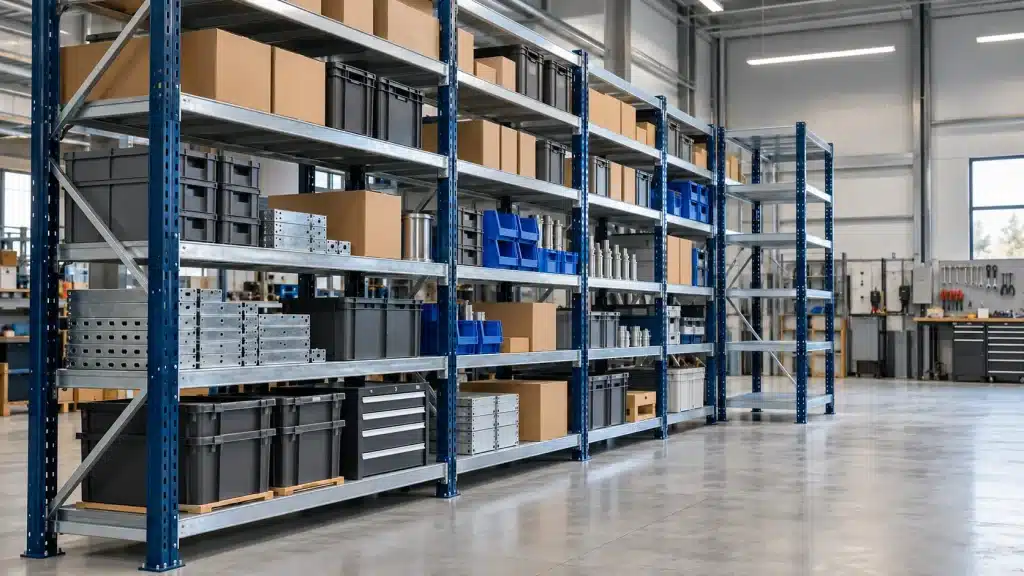
A modular shelving system is built from repeatable components that can be assembled in different combinations. Uprights may use slots or perforations at regular intervals, allowing shelf levels to be repositioned without drilling or welding.
Additional bays can usually be connected to the starting unit by sharing an upright frame or using standardized connectors. This approach allows the system to grow horizontally, while compatible upright heights and shelf formats support changes in storage density.
Nova Fabrication’s Nova Shelf Solutions includes modular and customizable metal storage systems designed around different business and product requirements.
True modularity should also cover accessories. Dividers, back panels, side panels, bins, hanging rails, label holders and reinforcement members should use predictable mounting points. If every accessory requires a custom modification, the system may look modular but will not remain flexible in daily use.
Adjustability Starts with Shelf Pitch
Shelf pitch is the vertical distance between available mounting positions on the upright. A smaller pitch allows shelf levels to be adjusted more precisely, which can reduce unused space above stored products.
However, adding too many slots or perforations may influence upright strength and production cost. The correct pitch should balance adjustment flexibility with structural performance.
A workshop storing tools and spare parts may benefit from closely spaced shelf positions. A warehouse holding large cartons may need fewer adjustment points but stronger beams and wider clear openings.
Shelf depth should also suit the stored items. An excessively deep shelf wastes space and makes products harder to reach. A shallow shelf may create overhang, poor stability or inefficient storage. Modular design works best when a controlled range of shelf depths is available within the same product family.
Expansion Should Be Planned Before Installation
Many businesses purchase shelving for their current needs and consider expansion only when capacity becomes insufficient. By that stage, aisle spacing, wall clearances or floor space may prevent an efficient extension.
A modular shelving layout should reserve logical expansion directions from the start. Future bays should be able to connect without removing large sections of the existing system.
Expansion planning should consider:
- Available floor and wall space
- Aisle widths and access routes
- Product growth and stock variation
- Fire and emergency clearances
- Floor condition and anchor locations
- Future bay and accessory compatibility
The first installation does not need to include every future shelf, but its dimensions and connection system should not block later development.
Nova Fabrication’s customized shelf solutions can be adapted to changing display, storage and layout requirements instead of forcing the project into one fixed configuration.

Easy Installation Requires Controlled Connections
Easy installation does not mean that the structure can ignore stability or load requirements. The best modular systems reduce unnecessary tools and loose fasteners while maintaining reliable connections.
Boltless hooks, tabs and interlocking shelf supports can shorten installation time. Bolted connections may still be preferred in areas requiring additional rigidity, controlled dismantling or specific safety provisions.
Whatever connection method is used, the design should make incorrect assembly difficult. Similar-looking components should not fit in unsafe orientations, and locking features should be visible and accessible.
Clear installation instructions should identify the assembly sequence, anchoring requirements, shelf orientation and allowable configuration. Installers should not have to guess whether a support, brace or locking clip is optional.
For custom systems, metal shelf production can include the manufacturing of uprights, shelf panels, brackets, reinforcements and connection components as one coordinated assembly.
Load Capacity Must Apply to the Complete System
A modular shelf remains safe only when every configuration respects its approved load limits. Moving shelf levels, adding bays or changing accessories can alter how loads travel through the structure.
The shelf plate, supports, beams, uprights, braces, base plates, anchors and floor all participate in the load path. A strong shelf panel does not compensate for an insufficient upright or unstable frame.
The design should distinguish between shelf-level load, bay load, uniformly distributed load and point load. Heavy equipment placed on small feet can create much higher local stress than cartons distributing the same total weight across the shelf.
Nova Fabrication’s guide to warehouse racking load capacity explains why one general kilogram value is not enough to define a safe shelving system.
When shelves are repositioned, users should also confirm that the new arrangement does not overload the uprights. Concentrating several heavily loaded levels in one area may produce a different structural demand from the approved configuration.
Stability, Bracing and Anchoring
Adjustability should not reduce frame stability. Modular shelves may require rear bracing, side frames, back panels, cross members or wall and floor anchors depending on their height, depth and loading.
Tall and narrow shelving is more sensitive to overturning. Drawers, pull-out trays and doors can also shift the center of gravity when opened.
In warehouses and workshops, vehicle impact is another important consideration. Protective barriers or defined handling zones may be required where forklifts, pallet trucks or mobile equipment operate near the shelving.
The installation surface must be suitable for the anchoring method. An anchor is only as reliable as the concrete, floor construction or wall into which it is installed.
Design for Manufacturing and Repeatability
Modular systems rely on component interchangeability. A shelf produced today should fit a compatible frame supplied later without field drilling, grinding or forcing the connection.
This requires controlled tolerances in laser cutting, punching, bending and welding. Slot spacing, hook geometry and frame dimensions must remain consistent across production batches.
The number of unique parts should also be controlled. Using the same bracket, fastener or upright profile across several configurations simplifies manufacturing, assembly and spare-part management.
Early design for manufacturability review can reduce unnecessary tooling, complicated bends and connection details that make modular production expensive.

Select the Appropriate Surface Finish
Anodizing follows the existing surface rather than hiding it. Machining marks, scratches and polishing direction can remain visible after processing.
A heavier Type III coating may also increase surface roughness, particularly on certain alloys or aggressively machined surfaces.
If the component includes sliding or sealing surfaces, the specification should define:
- Maximum permitted roughness
- Whether dimensions apply after anodizing
- Whether final grinding or honing is required
- Lubrication or PTFE-related requirements
- Contact pressure and wear conditions
Decorative components should be inspected before anodizing because surface defects become harder and more expensive to correct after finishing.
Maintenance and Reconfiguration
A modular shelving system should remain easy to inspect after installation. Connections, locking clips, braces and anchors should be visible without dismantling the entire structure.
Damaged parts should be replaceable individually. If one bent shelf or upright requires replacing a complete row, the system is not delivering the expected modular benefit.
After reconfiguration, the installation should be checked for level, plumb, connection engagement and anchoring. Load notices should also be updated if the approved configuration changes.
Information to Include in the RFQ
A clear request for quotation helps the manufacturer develop an expandable system rather than a one-time fixed structure. Include:
- Room or warehouse layout
- Available height and floor area
- Product dimensions and weights
- Required shelf and bay loads
- Preferred shelf adjustment pitch
- Initial number of bays
- Expected future expansion
- Required accessories
- Anchoring and site conditions
- Finish and color
- Installation and documentation scope
Nova Fabrication’s metal manufacturing services can coordinate cutting, forming, welding, surface finishing and assembly requirements for custom shelving components.
Conclusion
Modular metal shelving creates long-term value when it can adapt without sacrificing safety or installation quality. Shelf levels should be easy to reposition, bays should be expandable and replacement parts should remain compatible across the system.
The strongest modular designs combine three qualities: predictable adjustment, planned expansion and connections that are easy to install correctly. Load capacity, bracing and anchoring must remain valid in every approved configuration.
For a project-specific evaluation, submit the storage layout, product dimensions, expected loads and expansion plan through Nova Fabrication’s request a quote page.