

How to Pipe to Pipe Welding?
Welding pipes together is a fundamental skill in various industries, from plumbing and construction to oil and gas. A strong, leak-proof weld is crucial for ensuring the integrity and longevity of piping systems. Achieving a successful pipe to pipe welding requires careful preparation, the right welding technique, and a thorough understanding of the materials involved. This comprehensive guide will walk you through each step of the process, from preparing the pipes to inspecting the final weld.
Preparing the Pipes for Pipe to Pipe Welding

In pipe to pipe welding, proper preparation is essential to achieve strong, reliable joints. The process begins with cleaning the pipes thoroughly to remove any dirt, rust, oil, or other contaminants. Clean, dry surfaces ensure that the welding process is free from issues like porosity, lack of fusion, or weak welds. Our expertise in pipe to pipe welding ensures that surfaces are prepared to the highest standards, using specialized cleaning techniques for optimal results.
Once the surfaces are clean, the pipe edges are beveled to create a V-shaped groove, which is critical for secure and durable pipe to pipe welding. This bevel provides a larger surface area for the weld metal to bond, resulting in a strong connection. The bevel angle is carefully determined based on pipe thickness and industry standards. Our precise fit-up process guarantees accurate alignment, secure clamping, and full penetration, delivering high-quality pipe to pipe welding that meets all safety and performance requirements.
Selecting the Right Welding Technique for Pipe to Pipe Welding
Choosing the appropriate welding technique is crucial for achieving a strong and reliable pipe to pipe welding. The success of pipe to pipe welding depends on selecting a method that suits the material, thickness, and application. Various techniques are available, each with distinct advantages for pipe to pipe welding, depending on the project requirements.
Shielded Metal Arc Welding (SMAW), also known as stick welding, is a versatile and widely used method for pipe to pipe welding, especially in field applications. It is cost-effective and requires minimal equipment, making it suitable for many scenarios. Alternatively, Gas Tungsten Arc Welding (GTAW), or TIG welding, is known for its precision and high-quality results, making it ideal for critical pipe to pipe welding applications in industries like aerospace and nuclear. This method ensures clean, defect-free welds, essential for maintaining the integrity of the welded connection.
Setting Up the Welding Equipment
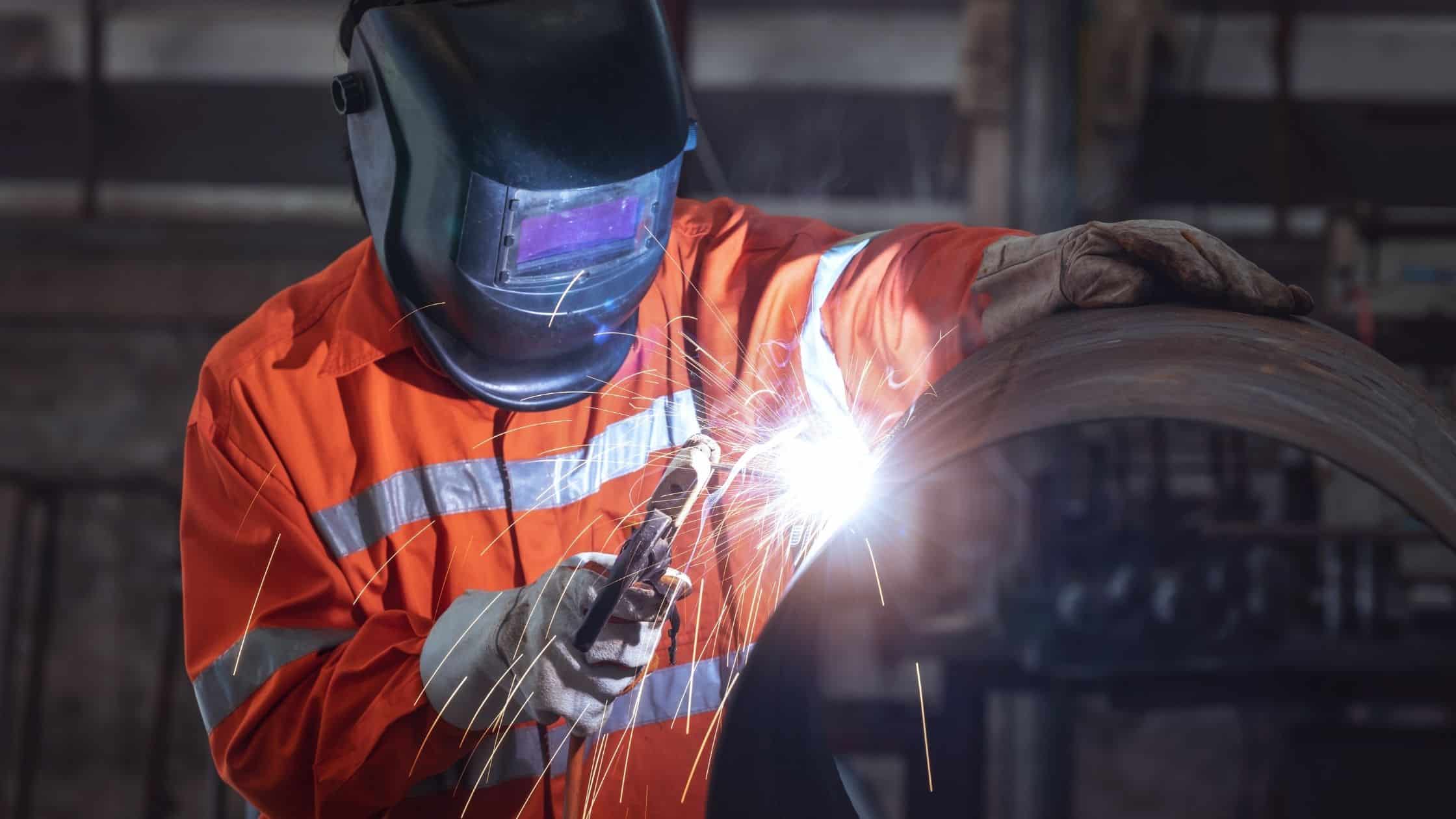
Properly setting up the welding equipment is essential for achieving consistent and high-quality pipe to pipe welding. The process begins with selecting the appropriate welding machine for the specific method, such as SMAW, GTAW, or GMAW. Our team ensures that all equipment is in excellent condition, with secure cables and connections. Welding parameters, including voltage, amperage, and wire feed speed, are carefully adjusted to match the material type, pipe thickness, and the chosen pipe to pipe welding technique. Compliance with the welding procedure specification (WPS) guarantees consistent results in every project.
We also configure the shielding gas as required for pipe to pipe welding, providing protection against atmospheric contamination, which prevents porosity and oxidation. For GTAW in pipe to pipe welding, pure argon is used for aluminum and stainless steel, while a mix of argon and carbon dioxide is ideal for carbon steel. Our team ensures the correct gas flow rate for optimal shielding. Additionally, proper ventilation is maintained to remove harmful fumes, creating a safe and efficient pipe to pipe welding environment.
Performing the Root Pass in Pipe to Pipe Welding
The root pass is the first weld bead applied in pipe to pipe welding and is essential for achieving full penetration and creating a strong, durable joint. Our team begins by selecting a welding technique that provides precise control and reliable penetration. For high-precision pipe to pipe welding, GTAW is often used, while SMAW with a small-diameter electrode is preferred for general applications. Consistent arc length and steady travel speed are maintained to ensure uniform penetration, avoiding defects such as undercut or excessive buildup. A properly executed root pass establishes the foundation of a successful pipe to pipe welding joint.
During the root pass in pipe to pipe welding, welding parameters are carefully monitored and adjusted as needed to achieve optimal penetration. Depending on the project, a weaving technique may be used for larger pipes, while a stringer bead technique is suitable for smaller ones. Complete fusion of the pipe edges is ensured by slightly overlapping each pass. Our team conducts regular inspections of the root pass, checking for defects like porosity, cracks, or incomplete fusion, and promptly addressing any issues. A precisely executed root pass guarantees the overall strength and durability of the pipe to pipe welding connection.
Filling and Capping the Weld

Filling and capping are critical stages in pipe to pipe welding that determine the strength and appearance of the final weld. After completing the root pass, the weld joint is filled with multiple layers of weld metal, known as fill passes. These fill passes build up the weld to the required thickness, ensuring complete fusion between the pipes. Proper overlap between each fill pass is essential to avoid gaps or voids, maintaining the integrity of the pipe to pipe welding joint.
The final step is to apply the cap pass, which provides a smooth, uniform surface finish for the weld. In pipe to pipe welding, the cap pass must be free of defects such as undercut or excessive buildup. Techniques like Gas Tungsten Arc Welding (GTAW) or Shielded Metal Arc Welding (SMAW) are often used for precise control and aesthetics. Regular cleaning between passes ensures that slag or debris does not interfere with the weld quality.
Inspecting the Welded Joint in Pipe to Pipe Welding
Inspecting the welded joint is essential to ensure its integrity in pipe to pipe welding. Our inspection process begins with a visual examination to detect surface defects such as cracks, porosity, or undercut. Advanced tools, including magnifying glasses, allow for a closer view, ensuring that the weld surface is free from any visible flaws that could weaken the joint.
For a more detailed assessment, we use non-destructive testing (NDT) methods, such as radiography, ultrasonic testing, or liquid penetrant testing. These methods detect subsurface defects that may not be visible to the naked eye. In pipe to pipe welding, thorough inspection and testing are essential to ensure that each weld meets strict quality standards.
How Would You Identify a Bad Weld in Pipe to Pipe Welding?
A bad weld in pipe to pipe welding can be identified through visual inspection and testing. Visually, a defective weld may show signs of porosity (small holes), cracks, undercut, or excessive buildup. Discoloration may also indicate improper shielding or excessive heat input, affecting the weld’s integrity.
Non-destructive testing (NDT) methods, such as radiography or ultrasonic testing, can reveal hidden defects within the weld. These techniques ensure that the pipe to pipe welding maintains the required quality standards, providing a secure and reliable connection.
FAQ Abouts Pipe to Pipe Welding
1G pipe welding is a flat position where the pipe is horizontally placed, and the welder performs welding on the top surface of the rotating pipe.
Yes, pipe welders can use MIG (GMAW) for specific applications, but TIG (GTAW) and Stick (SMAW) welding are more common for pipe welding due to better penetration and control.
3G welding is a vertical welding position, while 4G welding is an overhead welding position. Both are used for plate welding, but 3G is vertical, and 4G is horizontal above the welder.
5G pipe welding is a horizontal fixed position where the pipe is stationary, and the welder must move around the pipe to complete the weld.
6G pipe welding is a fixed 45-degree angled position where the pipe is stationary, making it one of the most challenging welding positions.
A 6G welder qualification is a certification that demonstrates a welder’s ability to perform high-skill welding in any position, including the challenging 6G position.
Wire speed for MIG welding determines the rate at which the filler wire is fed into the weld pool. It is measured in inches per minute (IPM) and must be adjusted based on material type and thickness.
4G pipe welding is an overhead position, where the welder must work underneath the pipe or plate, making it challenging due to gravity.
2G pipe welding is a horizontal position where the pipe is placed vertically, but the welding is performed on the side of the pipe.
The four main types of welding are:
1. MIG (GMAW) – Gas Metal Arc Welding
2. TIG (GTAW) – Gas Tungsten Arc Welding
3. Stick (SMAW) – Shielded Metal Arc Welding
4. FCAW – Flux-Cored Arc Welding
Pipes are beveled to prepare the edges for welding, ensuring better penetration, stronger welds, and improved alignment.
Known failure points on a pipeline include weld joints, bends, connections, flanges, and areas exposed to high pressure or corrosive environments.
The three most common welding defects are:
1. Porosity – Tiny holes caused by trapped gas.
2. Cracks – Fractures in the weld due to stress or improper cooling.
3. Incomplete Fusion – Lack of proper bonding between weld metal and base metal.
An angled pipe can be cut using a pipe cutting machine, angle grinder with a cutting disc, or a CNC plasma cutter for precise angles.
The two most commonly welded pipe types are carbon steel and stainless steel due to their wide application in various industries.
The most essential precision in welding is maintaining proper heat control, which ensures consistent penetration and strong welds without distortion.
The standard angle of a pipe bevel is typically 37.5 degrees for a V-groove, but it can vary depending on the welding procedure specification (WPS).