


What is CNC Turning?
CNC turning is a machining process that stands out among modern manufacturing technologies with its high precision and automation capability. In this process, machinable materials such as metal or plastic are rotated while the desired geometry is obtained with the help of a fixed cutting tool. Lathes equipped with CNC (Computer Numerical Control) systems enable parts to be machined reproducibly and free from human error thanks to pre-programmed digital commands.
Compared to traditional turning methods, CNC turning offers less deviation in production, greater efficiency and much shorter cycle times. Thanks to these advantages, it is widely used in industries that require high precision such as aerospace, automotive, medical and defense industries. With the digitalization of production processes, CNC turning not only improves production quality, but also enables important processes such as process traceability, cost control and rapid prototyping.
CNC turning is a key technology in the contemporary manufacturing world, enabling complex parts to be produced economically, quickly and accurately. Understanding and applying this technology correctly is indispensable for businesses that want to gain a sustainable advantage in industrial competition.
What Does CNC Turning Do?

CNC turning is a precision manufacturing method that transforms raw cylindrical materials into detailed components using computer-controlled lathes. The rotating workpiece is shaped by a fixed cutting tool to achieve the desired dimensions and surface quality. CNC turning ensures repeatability, dimensional accuracy, and consistency in industries requiring high performance cylindrical parts.
Produces Cylindrical Parts
CNC turning produces high-precision cylindrical components by rotating the material against a cutting tool. This process enables the production of shafts, rods, bushings, and tubes used in automotive, aerospace, and mechanical systems. CNC turning machines ensure accurate diameters, consistent finishes, and tight tolerances across a range of materials and dimensions.
Creates Threads and Grooves
CNC turning is capable of generating external and internal threads and precisely machined grooves. This includes threading for fasteners and functional grooves for sealing or lubrication purposes. Threading and grooving operations are performed with dedicated cutting tools, and CNC turning enables consistent and repeatable results with high surface quality.
Performs Facing and Tapering
CNC turning can flatten the ends of cylindrical parts through facing operations or create taper angles by varying the cutting path. These properties are important in components that require clean contact surfaces or smooth transitions in diameter. CNC turning supports multiple taper angles and surface finishes without compromising dimensional accuracy.
How Many Types of CNC Turning are There?
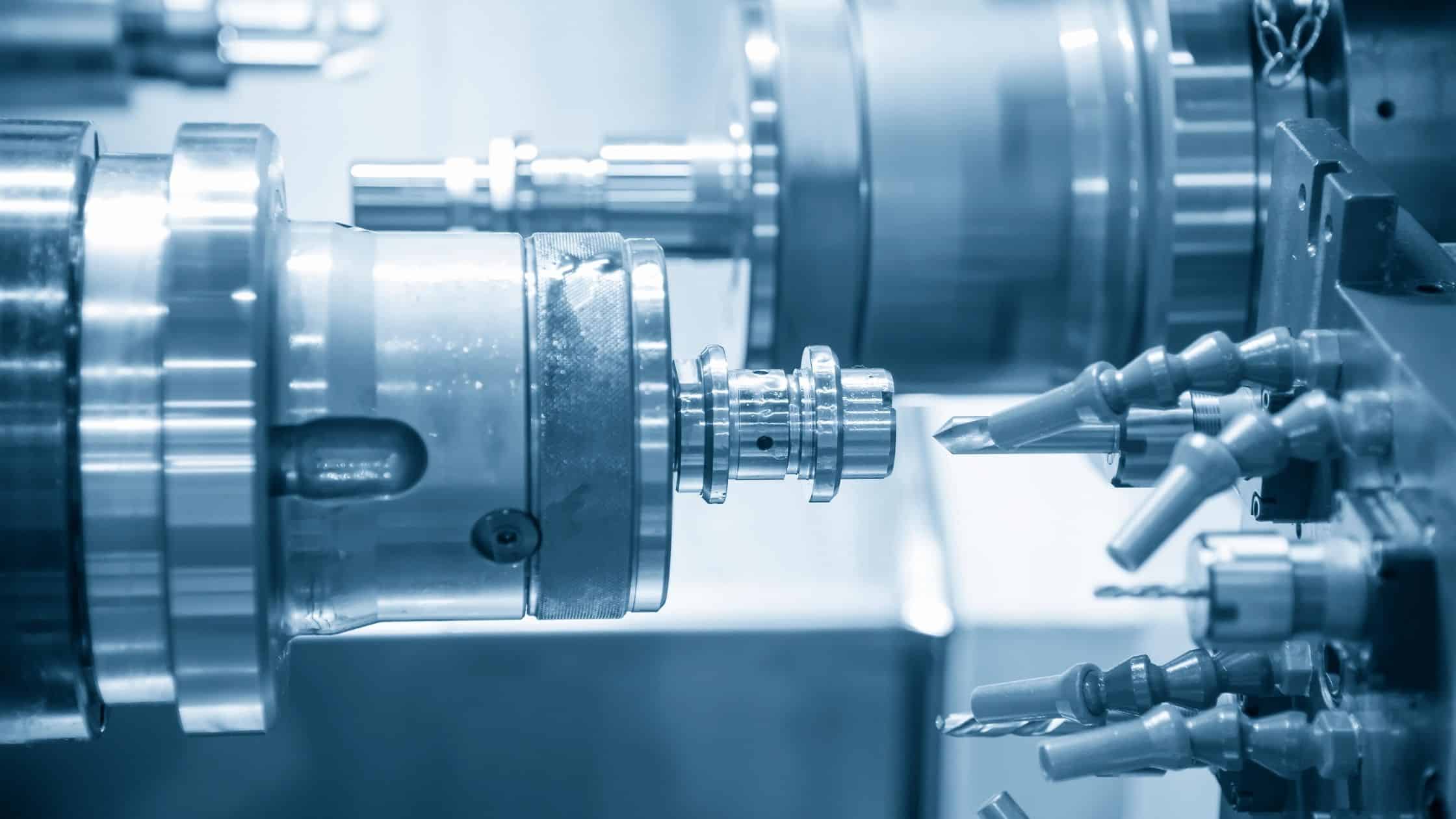
There are three main types of CNC turning machines, classified based on their axis configuration: 2-axis, 3-axis, and multi-axis CNC lathes. Each type offers varying levels of complexity, flexibility, and precision in part production. The selection depends on the shape, tolerance, and production volume of the parts to be manufactured.
2-Axis CNC Lathes
2-axis CNC lathes operate along X and Z axes, ideal for basic cylindrical shapes. They perform turning, facing, and drilling tasks efficiently and cost-effectively. These machines are commonly used for high-volume production of simple parts across various industries, including automotive and general engineering.
3-Axis CNC Lathes
3-axis CNC lathes include an additional C axis, enabling rotation control of the workpiece. This allows operations like milling or slotting on the same setup. 3-axis CNC turning is suitable for components with off-center holes or surface details, reducing repositioning and increasing production speed and accuracy.
Multi-Axis CNC Lathes
Multi-axis CNC lathes (4-axis and above) provide the highest level of machining flexibility. They process complex geometries in a single setup, improving precision and cycle times. These machines are ideal for aerospace, defense, and medical parts that demand high tolerances and intricate detailing.
What are the Types of Turning Operations?
CNC turning involves a wide range of machining operations tailored to different part geometries and surface requirements. The most common turning operations are face machining, flat turning, taper turning, grooving, threading, drilling, boring and parting off. These are performed using special cutting tools that can be changed automatically on CNC turning machines. With CNC turning it is possible to produce parts with high precision and tight tolerances. The right process is selected according to the workpiece material, structural complexity and required surface quality. CNC turning operations are crucial in industries such as automotive, aerospace, medical and energy. Choosing the right operation improves both product quality and production efficiency, making CNC turning an essential process in modern manufacturing environments.
How to Perform CNC Turning?
To perform CNC turning, you first need a CNC lathe, suitable cutting tools and a CNC program. The process starts by connecting the workpiece to the lathe. Then, the CNC program is loaded and the lathe is started. CNC lathes remove material from the workpiece and create the desired shape by moving the cutting tool according to the instructions in the program.
For successful CNC turning, it is important to select the right cutting tool, set the appropriate cutting parameters and write the CNC program correctly. It is also essential that the workpiece is clamped correctly and that the machine is regularly maintained. CNC lathes enable complex parts to be produced with high precision and repeatability, but require proper use and maintenance.
What is the Difference Between CNC Turning and Milling?
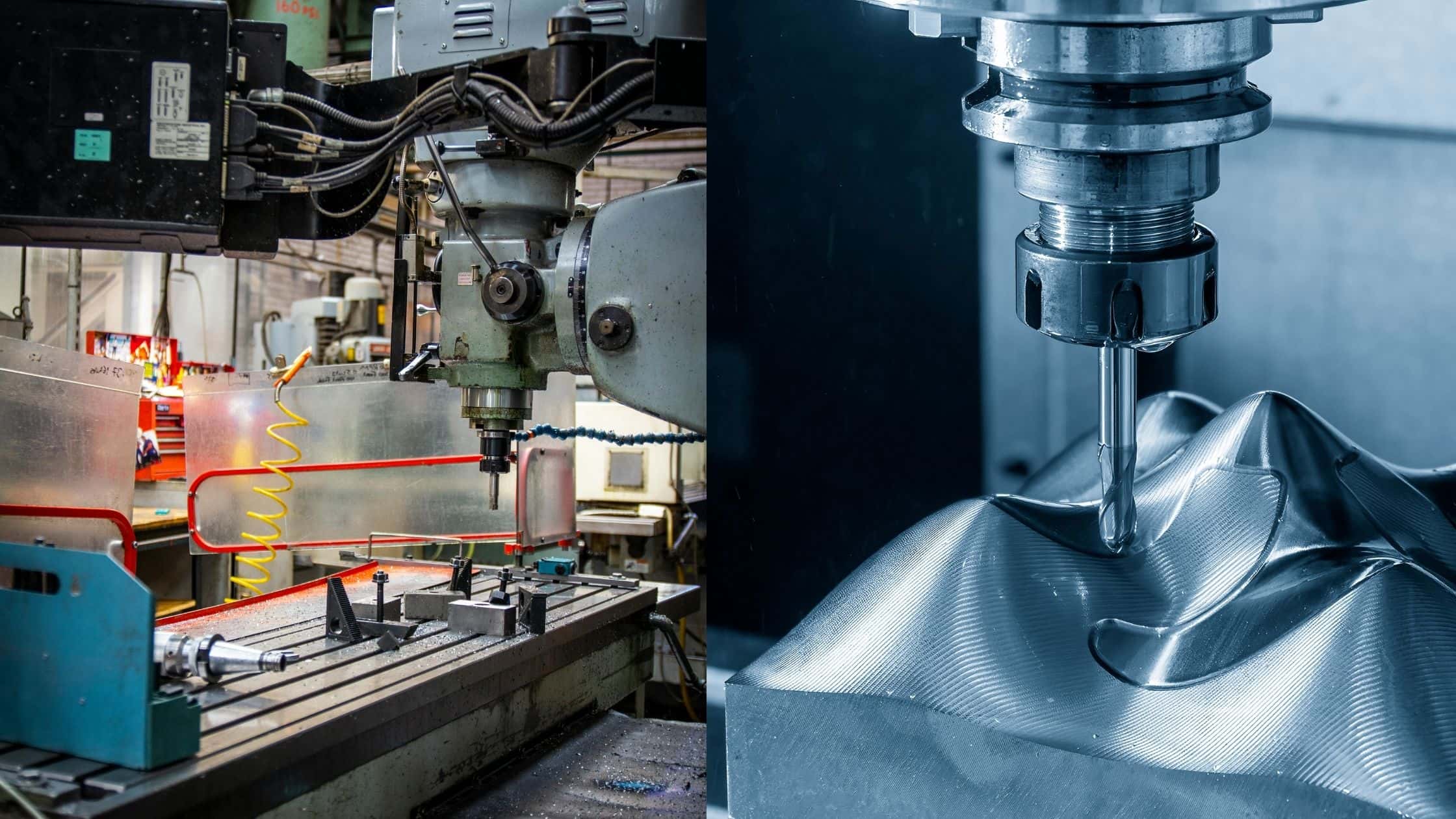
CNC turning and CNC milling are both computer-controlled subtractive manufacturing methods, but they have fundamental differences in how material is removed. In CNC turning, the workpiece rotates while the cutting tool moves linearly to shape the material, making it ideal for cylindrical parts. In contrast, CNC milling involves a rotating cutting tool moving on a stationary workpiece, making it more suitable for flat, angular or complex 3D surfaces. Choosing between the two depends on part geometry, material properties and production volume. CNC turning offers the edge in speed and precision for round components, while CNC milling offers more flexibility for complex designs.
| Feature | CNC Turning | CNC Milling |
| Movement | Rotating workpiece, linear cutting tool | Rotating tool, stationary or positioned workpiece |
| Best for | Cylindrical or symmetrical parts | Prismatic, angled, or complex 3D shapes |
| Axes | X and Z axes (C optional) | X, Y, and Z axes (A, B, C optional for 4- or 5-axis machines) |
| Tool Type | Single-point cutting tools | Multi-fluted milling cutters |
| Applications | Shafts, pins, bushings, threads | Molds, housings, brackets, cavities |
| Precision | High precision in concentricity and smooth cylindrical surfaces | High precision in surface contouring and pocketing |
| Speed | Typically faster for symmetrical parts | Slower but more flexible for complex parts |
What is the Turning Process in Machining?
Turning process in machining is a subtractive manufacturing method where a rotating workpiece is shaped using a stationary or moving cutting tool. Primarily used to produce cylindrical parts, this process offers high precision, repeatability, and efficiency. It is essential in industries such as automotive, aerospace, and medical, where tight tolerances and smooth finishes are required. The turning process in machining covers roughing, finishing, threading, grooving, and other operations, each tailored to specific part designs. With the help of CNC lathes, modern turning processes ensure optimal surface quality, dimensional accuracy, and material performance. Understanding the turning process in machining helps improve production efficiency and product quality.
Setup and Preparation
The turning process in machining begins with clamping the workpiece onto the chuck or collet securely. Proper alignment ensures safety and precision. Tool selection follows, based on material type and desired finish. Lastly, CNC programs are loaded to control tool movement and speeds, ensuring consistency in turning operations.
Roughing and Finishing
Roughing removes large volumes of material at higher depths and speeds, shaping the basic geometry. Finishing follows, using lighter cuts for dimensional accuracy and surface smoothness. In machining turning, the balance between both processes is crucial to achieve cost efficiency without compromising part quality.
Quality Control and Inspection
Once turning is complete, parts undergo quality checks to confirm dimensions and surface quality. Tools like micrometers or profilometers are used. The turning process in machining includes inspection to catch deviations early, reduce scrap, and ensure conformity to tolerances before parts move to final assembly or delivery.