

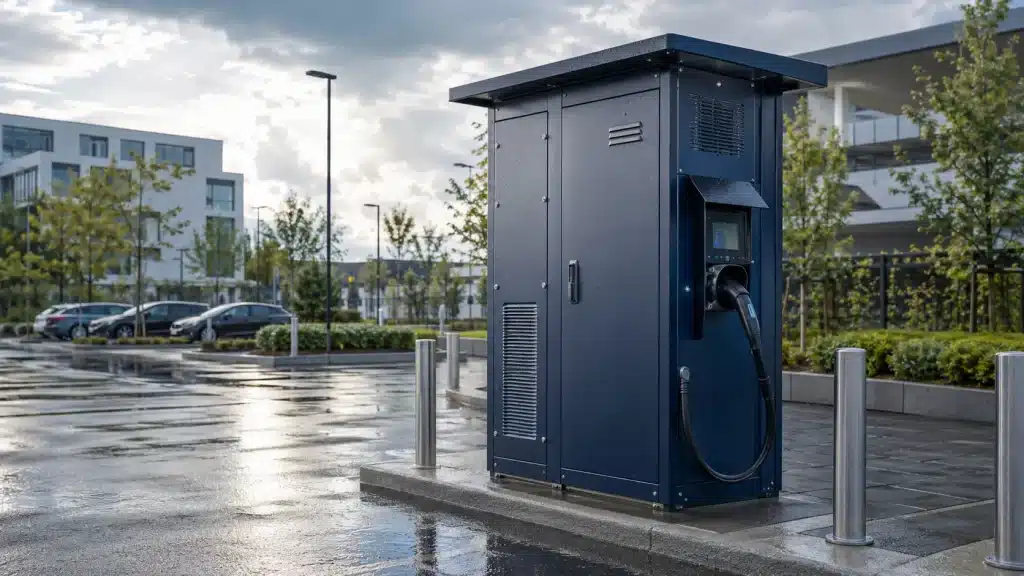
An EV charging station enclosure is part of the product’s safety and availability, not simply a painted metal cover. It must protect energized equipment from rain, dust, sunlight, temperature cycling and condensation while remaining accessible to technicians and resistant to public misuse.
Strong projects begin with a site profile and maintenance plan, then translate both into materials, joints, seals, doors, cable entries and tests. Nova Fabrication’s outdoor cabinet manufacturing and cabinet manufacturing capabilities support discussion of a custom cabinet around real operating conditions.
Start with a Site Profile, Not a Steel Thickness
Before selecting sheet gauge or a lock, document where the charger will operate. A curbside AC unit, a motorway DC charger and a unit in a covered car park face different hazards. Define ambient range, solar exposure, wind-driven rain, dust, salt, flood or splash risk, cleaning, public access, expected impact and maintenance space. Record electrical architecture, heat loss, cable size and installation method at the same time.
This requirements phase is where engineering services add the most value. Assign an owner and verification method to each requirement rather than relying on phrases such as “outdoor suitable” or “vandal proof.” Name the target market because charging, assembly and installation rules vary by jurisdiction.
Weather Protection: Control Every Ingress Path
IEC 60529 classifies protection against access, solid foreign objects and water with the IP Code, while IEC 62262 classifies protection against external mechanical impact with the IK Code. They address different hazards: water resistance does not prove that a display, door or hinge resists attack. North American projects may also specify NEMA/UL enclosure Types; IP and NEMA/UL Type designations are not direct substitutes.
Ingress control depends on the complete assembly: gaps, gaskets, windows, controls, vents, glands and base penetrations. Use replaceable gaskets on flat, stiff sealing lands; keep fasteners outside wet paths; add drip edges; and avoid upward-facing joints. Use downward-facing entries or rated glands with strain relief. Drain incidental water away from electronics without opening a new ingress path.
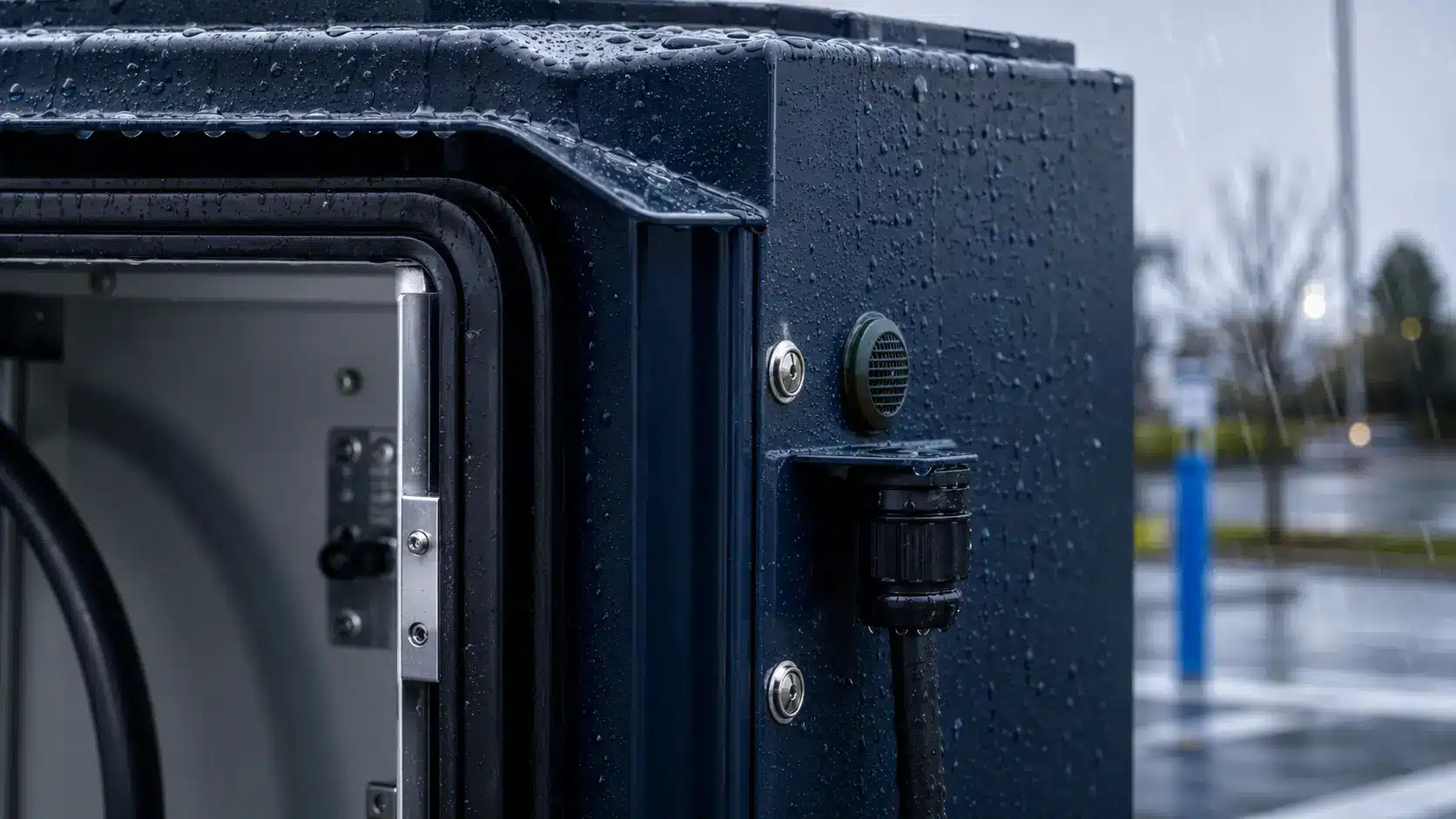
Thermal Management and Condensation
Power electronics, contactors, control boards and displays generate heat. Solar gain can raise skin temperature before charging begins. A sealed box may block rain but shorten component life if internal limits are exceeded. Calculate losses for idle, continuous and peak states, then evaluate realistic ambient and solar conditions.
Passive vents create an ingress route; filter fans add service intervals. Heat exchangers separate internal and external air, while air conditioning adds capacity along with cost and condensate management. Prevent hot-air recirculation, keep exhaust away from users and place sensors at likely hot spots. Select pressure-equalizing vents or heaters as rated parts of the enclosure system, not late additions.
Materials, Corrosion and Finish
Carbon steel with a properly prepared and specified coating system can be economical for many inland sites. Galvanized substrates add sacrificial protection, while stainless steel may suit chlorides, aggressive cleaning or long-life targets. Grade still matters: 304 is not universal for marine exposure, and 316 cannot compensate for poor detailing. Nova’s stainless steel fabrication page supports evaluation of corrosion-resistant options.
Coating performance begins before the color coat. Specify preparation, edge treatment, weld cleanup, pretreatment, film system and acceptance criteria for the exposure and durability target. Avoid water-trapping hems and laps, protect cuts and welds, isolate dissimilar metals where needed, and keep bonding points functional. Nova’s coating services are a relevant route, but the final system must match the project environment.
Vandalism and Vehicle Impact
Vandal resistance comes from geometry and load paths, not thicker sheet alone. Folded returns and stiffeners reduce panel flex; recessed locks, shielded latch rods, small pry gaps and protected hinge pins resist attack. Use special fasteners selectively so service stays practical. Protect screens, readers and controls with reinforced bezels, and transfer cable-pull loads into structure rather than a cosmetic panel.
A charging cabinet should not be expected to absorb a vehicle collision. Site layout, curbs and engineered protective posts should manage that hazard independently. Nova’s bollard solutions are relevant, but spacing, foundation, impact performance and accessibility clearances need project-specific engineering. Keep barriers clear of doors, connectors and accessible approach routes.
Design for Fast, Safe Service
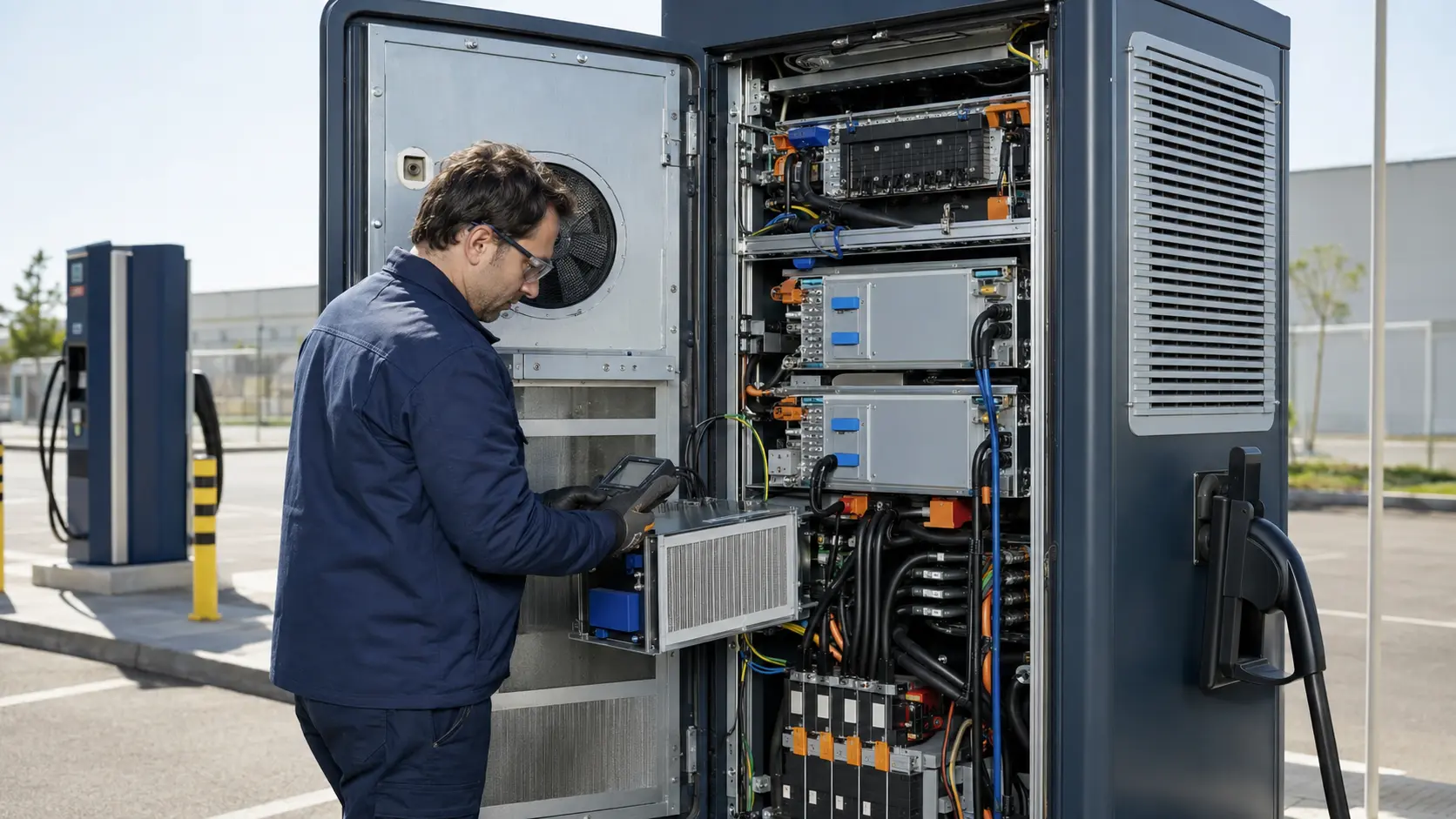
Serviceability affects uptime and operating cost. Decide whether routine work is front-only or needs rear and side access before the foundation is frozen. Doors must allow module removal without striking barriers or adjacent chargers. Provide door stays, lifting features and replaceable hinges or locks; ideally, a damaged skin can be changed without disturbing high-voltage equipment.
Provide a clear isolation point, finger-safe barriers and separation between user and technician zones. Arrange modules, filters, contactors, meters and communications by replacement frequency. Service loops, tool clearance, diagnostic ports, labels and lighting reduce field error. Gaskets, filters and drains must be replaceable so the environmental seal can be restored after intervention.
Internal Zoning and Cable Management
Separate user-interface, communication and payment equipment from high-voltage power conversion as required. Keep clean electronics away from dirty intake zones and hot exhaust. Route AC, DC, control and data cables with suitable segregation, bend radius and strain relief; keep them off removable panels and filter paths. Bond removable metal parts where required and make protective conductors inspectable.
Base design is often the weak point. Coordinate anchors, conduits, drainage, leveling and installation tolerance. The plinth should resist corrosion and keep openings above foreseeable standing water. Use a template and defined sealing method between cabinet, gland plate and foundation so field variation does not invalidate the configuration.
Make the Protection Manufacturable
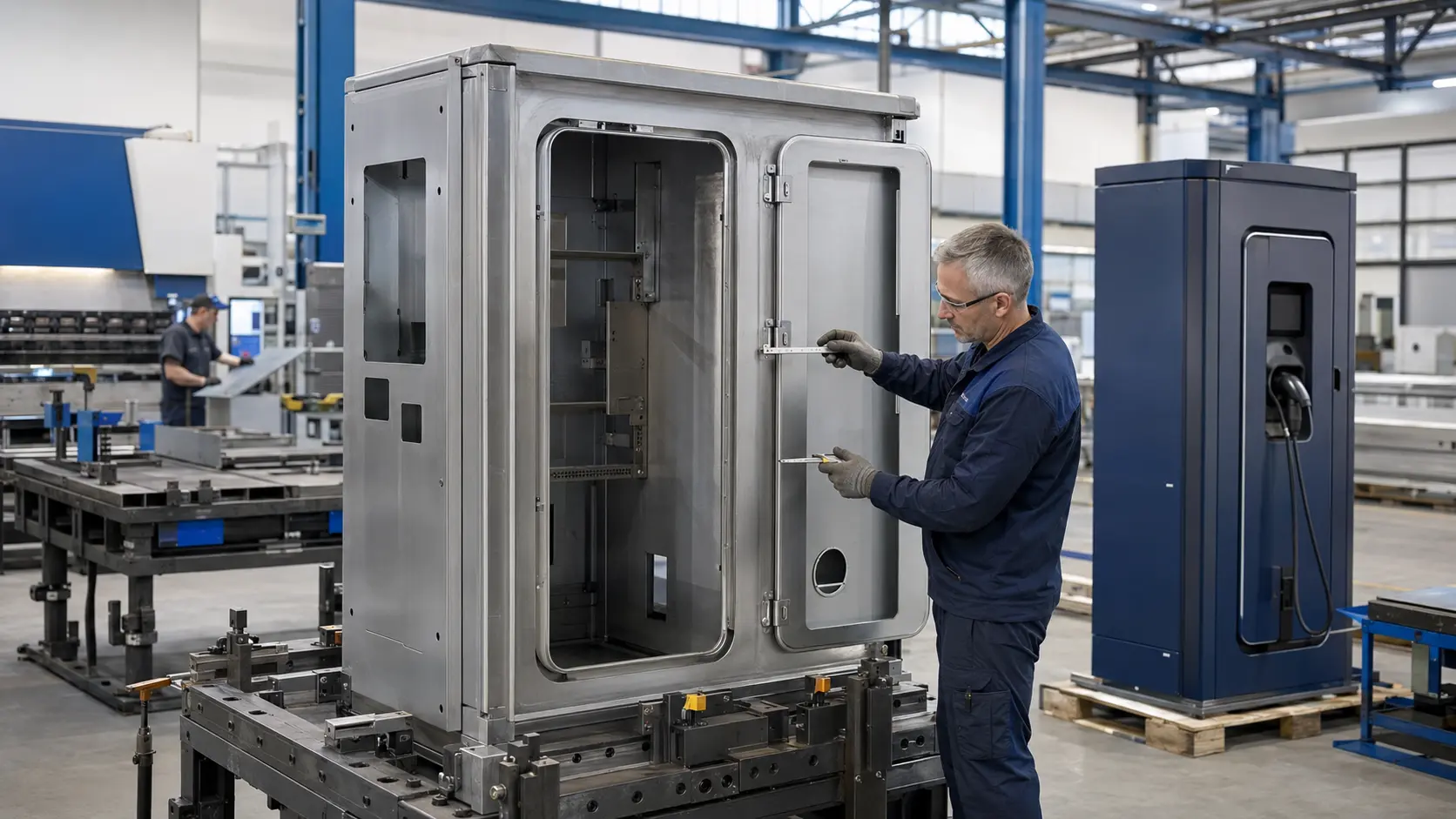
A robust concept must survive production variation. DFM review should simplify panel count, standardize fasteners and keep radii, flanges and hole-to-bend distances compatible with tooling. Nova’s sheet metal laser cutting and metal bending services support accurate openings, folded stiffness and repeatable gasket lands.
Welds can stiffen and seal an enclosure but also distort door openings and gasket lands. Define sequence, fixturing and inspection points, and limit cosmetic grinding to necessary areas. Nova’s welding services complete the chain. Prototype reviews should check door alignment, gasket compression, lock engagement, module removal and access for coating, assembly and inspection.
Verification and Documentation Buyers Should Expect
Tie claims to the representative final assembly and intended standard. Verification may include dimensions, ingress and impact, thermal mapping, humidity cycling, corrosion or coating exposure, door and lock cycles, cable strain, bonding continuity and installation review. Changing a vent, window, gland or gasket after testing may require review or retesting.
Buyer documentation should cover materials, finish, critical dimensions, approved components, assembly, torque, maintenance, lifting, foundations, inspection and tests. IEC 61851-1 addresses general EV supply equipment; IEC 61851-23 covers DC equipment; IEC 61439-7 covers certain low-voltage assemblies including EV charging stations; and IEC 60364-7-722 addresses installation circuits. The project team must confirm applicable editions, regional adoptions and additional requirements.
EV Charging Enclosure RFQ Checklist
- Charging architecture, input/output ratings, heat-loss data and component temperature limits.
- Installation location, ambient range, solar exposure, rain, dust, salt, chemicals, flood and cleaning conditions.
- Target markets, applicable standards, required IP/IK or enclosure Type claims, and certification responsibility.
- Material grade, sheet thickness, finish system, color, corrosion category and expected durability.
- Door quantity and swing, service clearances, module weights, lifting method and routine replacement tasks.
- Screen, reader, emergency control, connector, holster, vent, gland, lock and hinge requirements.
- Cable entry, conduit, bend radius, strain relief, internal segregation, bonding and foundation interfaces.
- Anti-pry features, tamper-resistant hardware, graffiti strategy, bollards and other site protection.
- Prototype, first article, environmental, thermal, mechanical and electrical verification deliverables.
- Drawings, BOM, approved component list, inspection plan, maintenance instructions, packaging and target volume.
Frequently Asked Questions
What IP rating does an outdoor EV charger need?
There is no universal answer. The target must follow the product standard, market and site hazards, including rain direction, dust, cleaning and installation details. The rating applies to a tested configuration, so doors, vents, glands, screens and other interfaces must be included.
Is IK rating the same as vandal resistance?
No. IK classification addresses defined mechanical impact energy. It does not by itself evaluate prying, lock attack, cable theft, graffiti, repeated abuse or vehicle collision. Those risks need additional design requirements and verification.
Should every outdoor charger use stainless steel?
Not necessarily. Coated carbon steel, galvanized material, aluminum or stainless steel can all be appropriate when detailed for the exposure and life-cycle target. Selection should compare corrosion risk, structural needs, appearance, repairability, cost and fabrication method.
Can a sealed enclosure be cooled without outside air?
Yes. Depending on heat load and climate, options include conduction to the cabinet, air-to-air heat exchangers or closed-loop air conditioning. The solution must be sized for worst-case conditions and validated with representative equipment and controls.
Conclusion
A successful EV charging enclosure balances four outcomes: environmental protection, thermal reliability, resistance to misuse and efficient service. That balance comes from a documented site profile, coordinated electrical and mechanical architecture, manufacturable details and evidence-based verification. Buyers who provide those inputs early receive more comparable quotations and reduce costly field revisions.
For a custom project, share the environmental specification, layout, heat-load data, required interfaces, service concept and verification plan through Nova Fabrication’s request a quote page.