
In today’s rapidly evolving industrial landscape, metalworking and forming technologies play a more critical role than ever before. At the very heart of the heavy manufacturing sector lies the highly specialized process of plate rolling. In this comprehensive Industrial Plate Rolling Guide: Techniques and Application Areas, we will dive deep into how flat metal sheets are flawlessly transformed into cylindrical or conical forms, explore the advanced technologies utilized during this process, and identify the key sectors where this vital manufacturing operation is absolutely indispensable.
Metal sheet forming is never simply about applying brute force; rather, it is a sophisticated symphony of mechanical engineering, dimensional precision, and a profound understanding of material chemistry. Whether a facility is constructing massive towers for wind turbines or manufacturing high-pressure industrial boilers, plate rolling machines serve as the undisputed backbone of these monumental projects. A successful rolling and bending operation is directly tied to the correct selection of machinery, thorough analysis of the material’s yield strength, and the undeniable expertise of seasoned operators.
Let us now delve into the foundational principles of this indispensable manufacturing process and explore the dynamic world of industrial plate rolling from a professional, highly technical perspective.
What is Industrial Plate Rolling and How Does It Work?
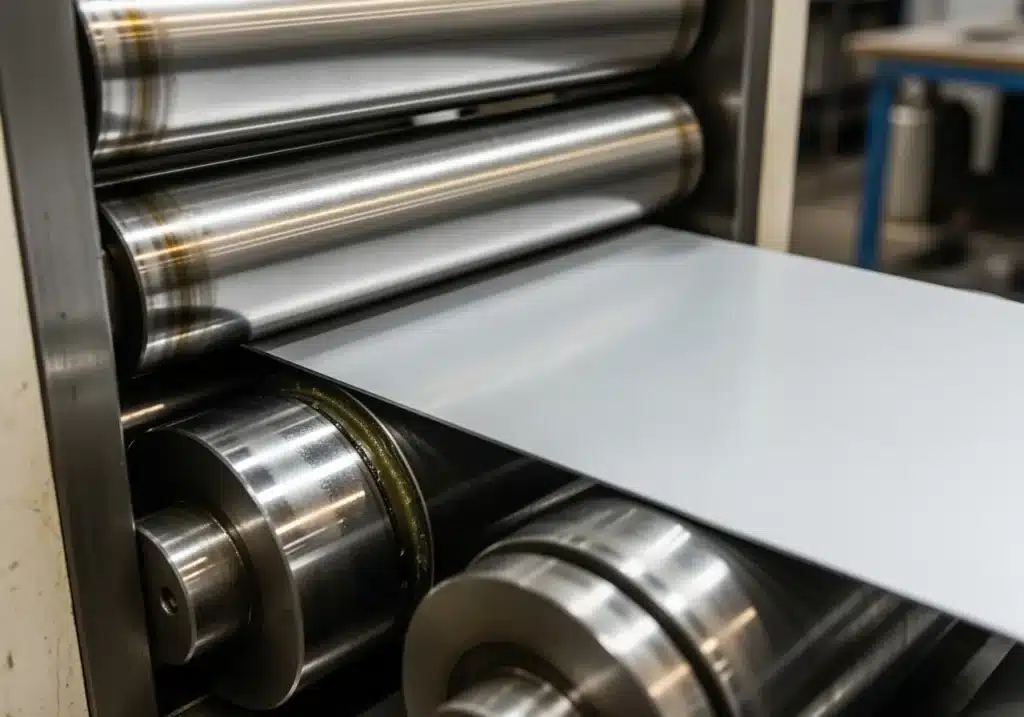
Industrial plate rolling is a precise cold or hot forming process in which a flat sheet of metal (commonly carbon steel, aluminum, or stainless steel) is passed through a series of heavy-duty rollers to acquire a circular, semi-circular, or conical shape. During this high-pressure operation, the material’s yield strength is deliberately exceeded, yet the forces remain well within the limits of its tensile strength. This delicate balance ensures that the metal undergoes permanent plastic deformation without cracking, tearing, or compromising its structural integrity.
The process of rolling cylinders is far more complex than merely bending a piece of metal. Variables such as the thickness of the plate, its overall width, the specific alloy composition, and the targeted final diameter dictate the exact amount of clamping and bending force the machine must apply. In modern manufacturing, the widespread integration of CNC (Computer Numerical Control) systems ensures that these complex calculations are executed with sub-millimeter precision, thereby reducing human error to an absolute minimum.
From a structural engineering standpoint, the physical transformations a metal plate undergoes the moment it enters the rolling machine require meticulous attention. As the plate is bent, its outer surface stretches (experiencing tensile stress), while its inner surface compresses (experiencing compressive stress). The exact center between these two opposing forces, which experiences zero dimensional change, is known as the neutral axis. In professional metal forming, accurately pinpointing the location of this axis is critical for calculating springback and ensuring dimensional accuracy.
An Overview of Plate Rolling Machines and Their Variations
When exploring our Industrial Plate Rolling Guide: Techniques and Application Areas, analyzing the underlying technology is paramount. The global market offers a variety of machine configurations tailored to specific bending needs and material capacities. Selecting the right equipment is a strategic decision directly linked to a facility’s production speed, required precision, and available capital investment.
The primary types of industrial plate rolling machines include:
- 3-Roll Asymmetrical Bending Machines: These are generally preferred for thinner sheets and smaller diameter productions. While they are highly cost-effective, there is a higher probability of leaving unbent flat sections (inadequate pre-bending) at the leading and trailing edges of the plate.
- 3-Roll Symmetrical Bending Machines: These are the robust, traditional workhorses used for bending heavy, thick plates. However, because performing a pre-bend is challenging on these machines, secondary operations using heavy hydraulic presses are often required to curve the flat ends.
- Variable Geometry 3-Roll Machines: Featuring a top roll that moves vertically and side rolls that move horizontally, these highly adaptable models provide maximum flexibility. They are heavily utilized in industries like shipbuilding, where bending massive, exceptionally thick plates with varying radii is a daily requirement.
- 4-Roll Bending Machines: Universally recognized as the absolute pinnacle of industrial standards. The bottom roll firmly clamps the plate while the two side rolls perform the bending action. This design allows for perfect pre-bending without ever needing to remove and flip the plate. They are the fastest, most precise machines on the market and are exceptionally well-suited for advanced CNC automation.
The choice between mechanical and hydraulic actuation is another crucial criterion. For large-scale industrial operations that demand massive tonnage and consistent pressure, hydraulic systems are universally preferred over their mechanical counterparts.

Core Techniques in the Plate Rolling Process
Executing a flawless plate rolling process requires applying the correct technique based on the metallurgical structure of the material and the desired final geometry. Selecting the appropriate method is essential for minimizing material waste, saving time, and reducing overall production costs.
The most prominent techniques utilized in the industry include:
- Pre-Bending: This is arguably the most critical step in the entire cylinder rolling process. It involves bending the two extreme edges of the flat plate to the target radius before the main rolling cycle begins. If pre-bending is skipped or executed poorly, the resulting cylinder will feature an unbent, flat seam, which drastically ruins the quality of the subsequent welding process and compromises the vessel’s structural integrity.
- Step Bending: When dealing with exceptionally thick materials or high-tensile alloys that cannot be formed in a single pass, operators use this iterative technique. The machine’s rolls are adjusted incrementally, allowing the plate to take shape gradually through multiple passes. This method safely protects the machine’s hydraulic and structural components from catastrophic overloading.
- Cone Rolling: Instead of a perfect cylinder, this technique is used to produce funnel or cone shapes. During this specialized operation, the machine’s side rollers are tilted at specific angles, forcing one edge of the plate to travel at a different speed than the other. Achieving a perfect cone requires extensive operator experience or the use of highly sophisticated CNC software equipped with cone-rolling packages.
Hot Rolling: When a metal plate is simply too thick (often exceeding 100 mm) or incredibly hard (such as specialized armor-grade steels) to be formed at room temperature, it is heated to its recrystallization temperature. Hot rolling dramatically lowers the material’s resistance, making it significantly easier to shape while preventing micro-fractures.

Factors Affecting Bending Quality and Common Challenges
Achieving absolute perfection on an industrial production line is rarely a simple task. There are numerous internal and external variables that directly impact bending quality. As an SEO specialist and industry researcher, I must emphasize that the majority of material waste and production bottlenecks stem from ignoring these vital factors.
The elements that most significantly affect final product quality are:
- Springback: All metals possess natural elasticity. Once the rolling pressure is released, the formed metal naturally attempts to return to its original flat state. Operators and CNC algorithms must intentionally over-bend the material to a slightly tighter radius to compensate for this phenomenon. Higher carbon content in steel directly correlates with a higher degree of springback.
- Crowning (Deflection): Under extreme pressure, the heavy steel rollers of the machine may slightly bow or deflect in the center. This deflection results in a barrel-shaped cylinder where the middle is wider than the ends. To counteract this, manufacturers machine a slight convex shape (a crown) into the rollers, or utilize advanced CNC-controlled hydraulic support systems.
- Material Inconsistencies and Surface Defects: Variations in the plate’s thickness from the steel mill, inconsistent hardness across the sheet, or heavy surface rust can drastically throw off machine settings, resulting in an asymmetrical roll. Therefore, strict surface preparation and quality control prior to rolling are absolute necessities.
Rolling Direction (Grain Direction): Metals develop a distinct grain structure during the initial flat-rolling process at the steel mill. Whether a plate is bent parallel or perpendicular to this grain direction significantly affects its cracking risk and springback behavior. Industry best practices highly recommend bending the material perpendicularly to its rolling grain to ensure maximum structural strength.
Major Application Areas of Industrial Plate Rolling
In this comprehensive Industrial Plate Rolling Guide: Techniques and Application Areas, we now arrive at perhaps the most fascinating segment: Where exactly is this technology utilized? The existence of modern global infrastructure and colossal industrial facilities relies entirely on this forming capability.
The application areas cover a vast and critical spectrum:
- Renewable Energy (Wind Turbines): The towering, massive steel columns that support wind turbines are manufactured by precisely rolling ultra-thick steel plates into conical and cylindrical sections, predominantly using heavy-duty 4-roll CNC machines.
- Pressure Vessels and Storage Tanks: The safe storage and transport of petroleum, natural gas, and hazardous chemicals rely on flawlessly rolled tanks, industrial boilers, and chemical reactors. In this sector, achieving perfect circularity and precise weld-edge preparation is the ultimate rule for ensuring safety under extreme pressure.
- Shipbuilding and Maritime Industry (Shipyards): The curved hulls of modern cargo ships, the intricate internal pressure hulls of submarines, and massive exhaust funnels are all brought to life by forming steel and aluminum plates using massive, variable geometry 3-roll bending machines.
- Aerospace and Aviation: Aircraft fuselages, jet engine cowlings, and rocket booster segments require the bending of highly specialized, lightweight, and incredibly strong alloys (such as titanium and aerospace-grade aluminum) with microscopic tolerances. Advanced, ultra-precise CNC rolling is mandatory in this field.
General Construction and Architecture: The sweeping roof structures of modern sports stadiums, heavy structural supports for suspension bridges, cylindrical tunnel reinforcements, and highly decorative architectural facades all blend aesthetic beauty with structural durability through advanced plate rolling applications.
Pro Tips for Optimizing the Production Process
Ultimately, establishing a high-quality production line requires much more than simply purchasing the most expensive machine available on the market. The technical knowledge of the operating crew and the management of facility processes are the true keys to long-term success.
To drastically reduce operational costs and maximize efficiency, facilities should adhere to these golden rules:
First and foremost, comprehensive operator training is absolutely vital. Despite the incredible advancements in artificial intelligence and CNC controls, the nuanced intuition of an experienced operator—someone who understands the metallurgy, can interpret the groans of the hydraulic system, and visually gauge the material’s yield—has not yet been fully replaced by algorithms. Facilities must invest heavily in continuous education regarding material science and machine dynamics.
Secondly, implementing proactive predictive maintenance is non-negotiable. Plate rollers are hydraulic behemoths operating under thousands of tons of stress. Contaminated hydraulic fluid, worn bearings, or misaligned electronic sensors can cause millimeter deviations in the final product, leading to devastating financial losses. Strict adherence to maintenance schedules prevents catastrophic unplanned downtime.
Finally, utilizing seamless software integration within production planning is crucial. Today, the direct communication pipeline between CAD (Computer-Aided Design) software and the machine’s CNC control unit allows complex 3D models to be translated into precise machine code in seconds. This digital integration virtually eliminates the trial-and-error phase (which produces scrap metal), guaranteeing an accurate bend on the very first attempt.
As the industry moves deeper into the era of Industry 4.0, it is highly anticipated that plate rolling machines will become fully autonomous, utilizing AI to analyze springback in real-time and adjust pressures dynamically. The techniques and applications detailed in this Industrial Plate Rolling Guide: Techniques and Application Areas form the very foundation that will dictate the future of the metal fabrication industry. Companies that aggressively adapt to these innovations while maintaining strict quality controls will undoubtedly dominate the global competitive landscape.