
Type II vs Type III Anodizing: Choosing the Right Finish for Aluminum Parts
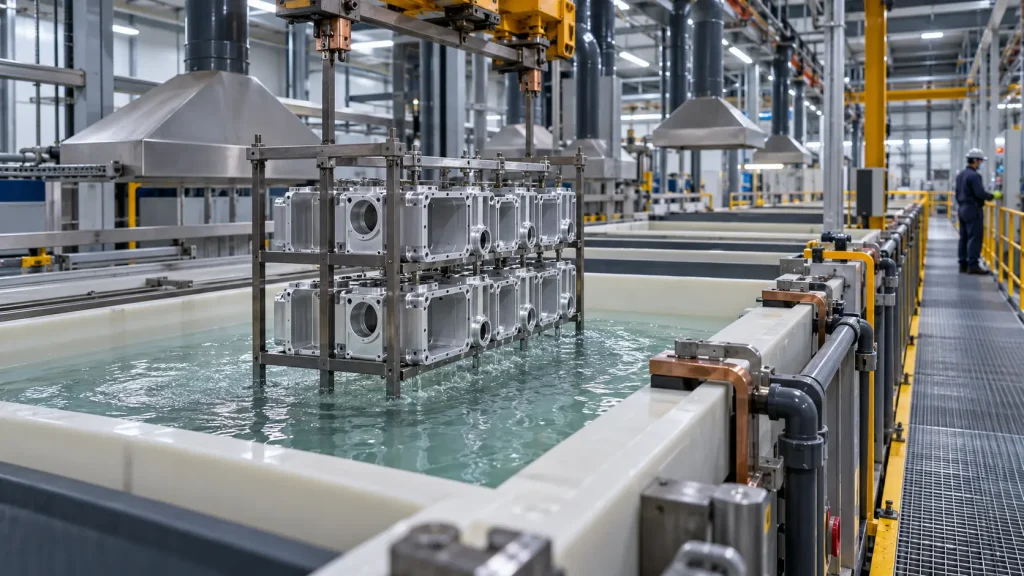
Anodizing is an electrochemical process that converts the surface of aluminum into a controlled aluminum oxide layer. Unlike paint or powder coating, the anodized layer develops from the aluminum surface itself. It therefore does not peel away in the same manner as an applied organic coating.
Type II and Type III are two commonly specified anodizing categories. Both can improve corrosion resistance and surface durability, but they are intended for different priorities.
Type II anodizing is commonly selected for general corrosion protection, color and decorative appearance. Type III, often called hardcoat anodizing, is designed for greater wear resistance and more demanding functional applications.
Choosing between them requires more than asking which one is “stronger.”
What Is Type II Anodizing?
Type II is conventional sulfuric-acid anodizing. It produces a controlled oxide layer that can improve corrosion resistance, electrical insulation and appearance.
It is widely used for:
- Electronic enclosures
- Architectural components
- Consumer products
- Control panels
- Aluminum brackets
- Covers and housings
- Decorative machine components
Type II anodizing can be supplied in a natural finish or dyed in different colors. The porous anodized layer absorbs dye before it is sealed.
This makes Type II suitable when both protection and visual consistency are important. Nova Fabrication’s anodized coating service can be incorporated into a complete aluminum manufacturing and finishing route.
What Is Type III Anodizing?
Type III anodizing creates a thicker and denser oxide layer under more tightly controlled processing conditions. It is generally referred to as hardcoat or hard anodizing.
It is selected primarily for functional performance, including:
- Abrasion resistance
- Sliding wear resistance
- Surface hardness
- Electrical insulation
- Improved durability in demanding environments
Typical applications include:
- Pistons and cylinders
- Machine components
- Aerospace hardware
- Automation equipment
- Valve bodies
- Guides and wear surfaces
- Industrial tooling
Type III is not automatically the correct choice for every aluminum part. Its greater thickness affects dimensions, color, surface finish and cost.
Type II vs Type III: Main Differences
Factor | Type II Anodizing | Type III Anodizing |
Primary purpose | Corrosion protection and appearance | Wear resistance and functional durability |
Coating thickness | Relatively thin | Significantly thicker |
Color options | Broad dyeing possibilities | More limited and less predictable |
Natural appearance | Clear, silver, bronze or dyed | Gray, dark gray or alloy-dependent |
Dimensional effect | Lower | More significant |
Wear resistance | Good for general use | Higher for demanding contact surfaces |
Surface finish | More decorative | More functional |
Processing cost | Generally lower | Generally higher |
Typical use | Enclosures, panels and decorative parts | Machine, hydraulic and wear components |
Exact results depend on the alloy, coating specification, surface preparation and sealing method.
Coating Thickness and Dimensional Tolerances
One of the most important differences between Type II and Type III is thickness.
Type II generally creates a thinner oxide layer and has a smaller effect on dimensions. Type III creates a heavier layer, making dimensional planning more important.
Part of the anodized layer grows into the aluminum, while another portion grows outward from the original surface. The exact ratio depends on the process and alloy.
For precision components, the drawing should clarify:
- Whether dimensions apply before or after anodizing
- Which surfaces require coating
- Which surfaces must be masked
- Acceptable coating build-up
- Final bore and shaft dimensions
- Thread requirements
- Mating-part clearances
If a precision bore is machined to its final size before hard anodizing, the finished opening may become too small. A shaft or external feature may become larger.
Critical fits should therefore be reviewed before machining tolerances are finalized. Nova Fabrication’s aluminum fabrication services can combine component design, manufacturing and finish requirements within the same production review.

Corrosion Resistance
Both Type II and Type III can improve the corrosion resistance of aluminum, but thickness is not the only factor.
Performance also depends on:
- Aluminum alloy
- Surface preparation
- Coating continuity
- Sealing method
- Pores and machining defects
- Chemical exposure
- Contact with dissimilar metals
- Handling and installation damage
Sealing closes or reduces the pores created during anodizing. It is particularly important for dyed finishes and components where corrosion resistance is a priority.
In some wear applications, an unsealed or specially treated Type III surface may be preferred because sealing can influence friction and surface behavior. This decision should be based on the component’s function rather than a universal rule.
For a broader view of available protective finishes, see the guide to surface coatings for metal products.
Appearance and Color
Type II is usually the better option for parts where appearance and color selection are major requirements.
It can provide:
- Natural clear anodizing
- Black anodizing
- Bronze tones
- Various decorative dyed colors
- Satin or brushed appearances
- Consistent architectural finishes
However, color can vary between alloys, batches and surface conditions. Welds may also anodize differently from the surrounding aluminum because the weld filler and base material can have different compositions.
Type III tends to produce darker natural tones. The final color may range from gray to dark gray, brownish gray or nearly black depending on:
- Aluminum alloy
- Coating thickness
- Process conditions
- Surface preparation
- Whether dye is used
If a precise decorative color is required, Type III may not offer the same predictability as Type II.
For architectural and highly visible products, Nova Fabrication’s comparison of decorative metal finishes can help buyers evaluate anodizing against powder coating, PVD and polishing.
Wear Resistance and Surface Hardness
Type III is selected when the surface must withstand repeated mechanical contact, sliding or abrasion.
The hard anodized layer can improve the service life of aluminum components used in:
- Moving assemblies
- High-cycle mechanisms
- Guides and tracks
- Pneumatic equipment
- Production machinery
- Tooling and fixtures
However, the oxide layer can also be relatively brittle. Sharp edges and very thin sections may require special attention.
The base aluminum alloy still supports the anodized layer. Hard anodizing cannot compensate for an alloy that is too soft or mechanically unsuitable for the application.
Surface Roughness
Anodizing follows the existing surface rather than hiding it. Machining marks, scratches and polishing direction can remain visible after processing.
A heavier Type III coating may also increase surface roughness, particularly on certain alloys or aggressively machined surfaces.
If the component includes sliding or sealing surfaces, the specification should define:
- Maximum permitted roughness
- Whether dimensions apply after anodizing
- Whether final grinding or honing is required
- Lubrication or PTFE-related requirements
- Contact pressure and wear conditions
Decorative components should be inspected before anodizing because surface defects become harder and more expensive to correct after finishing.
Alloy Selection Matters
Not every aluminum alloy anodizes in the same way.
Different alloying elements influence:
- Natural color
- Dye response
- Surface hardness
- Coating uniformity
- Corrosion performance
- Risk of burning or surface defects
Wrought aluminum alloys commonly used for machined and fabricated components often produce more predictable results than some high-silicon cast alloys.
The drawing should identify the exact alloy rather than stating only “aluminum.” This is particularly important for components requiring consistent color across several parts.
Nova Fabrication’s aluminum cabinet manufacturing capabilities can be used for projects combining lightweight construction, fabricated geometry and protective surface treatment.
Cost Considerations
Type III usually costs more than Type II because it requires:
- Longer processing time
- More controlled bath conditions
- Higher energy consumption
- Greater thickness control
- More masking and dimensional planning
- Additional inspection
- Lower processing flexibility for some geometries
Cost is also influenced by:
- Component dimensions
- Total surface area
- Alloy
- Quantity
- Required color
- Masking complexity
- Racking points
- Required certificates
- Inspection and testing
Specifying Type III for a decorative cover that does not experience wear may increase cost without producing a meaningful functional benefit.
When Should You Choose Type II?
Type II is normally the more practical choice when the project requires:
- General corrosion resistance
- Decorative appearance
- Specific dyed colors
- Lower dimensional impact
- Electrical insulation
- Indoor or moderate outdoor service
- Cost-effective production
When Should You Choose Type III?
Type III should be considered when the part requires:
- High abrasion resistance
- Repeated sliding contact
- Greater surface hardness
- Functional rather than decorative performance
- A thicker protective oxide layer
- Improved life in demanding mechanical service
Anodizing RFQ Checklist
Include the following information when requesting a quotation:
- Aluminum alloy and temper
- Type II or Type III requirement
- Target or minimum coating thickness
- Natural or dyed finish
- Required color
- Sealed or unsealed condition
- Critical dimensions after anodizing
- Masked surfaces
- Thread requirements
- Surface roughness
- Cosmetic acceptance level
- Required corrosion or wear tests
- Inspection method
- Required certificates
- Production quantity
Conclusion
Type II anodizing is generally selected for corrosion protection, appearance and color flexibility. Type III is intended for components requiring greater hardness and wear resistance.
The correct choice depends on:
- Functional environment
- Mechanical contact and wear
- Required appearance
- Dimensional tolerances
- Aluminum alloy
- Sealing requirements
- Project cost
Type III is not automatically better simply because it is thicker. For many enclosures, panels and decorative products, Type II provides the better balance of appearance, protection and cost.
For a project-specific review, send your alloy information, drawings, finish requirements and production quantity through Nova Fabrication’s request a quote page.