
Paint Isn’t Just About Color!
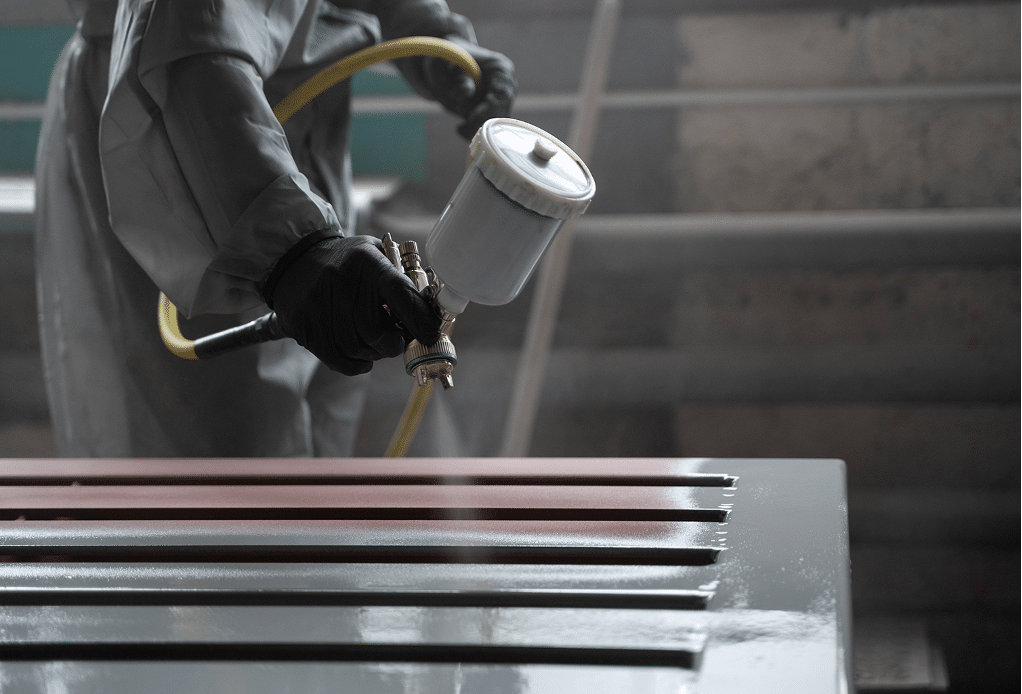
When it comes to coating metal surfaces, paint is often the first solution that comes to mind. However, the world of Wet Painting offers much more than just color options. The chemical composition of the paint used directly determines how well your product will withstand environmental conditions (moisture, chemicals, UV rays, abrasion), how long it will maintain its aesthetic appearance, and even the application cost. Choosing the wrong paint can quickly lead to problems like peeling, rusting, and color fading, which not only degrades the product quality but also creates additional maintenance and repair costs.
So, how do you choose the most suitable one for your project from the dozens of different industrial wet paint types available on the market? Is Epoxy more durable, or does Polyurethane offer better protection against UV rays? How can you strike the right balance between cost and performance?
This guide will delve into the primary types of wet paints frequently encountered in Nova Fabrication‘s Wet Painting services (such as Alkyd, Epoxy, Polyurethane), explaining the advantages, disadvantages, and ideal application areas of each to facilitate your decision-making process.
Section 1: The Basic Components of Wet Paint: What Determines Performance?
To understand the performance of a wet paint, it’s important to know its fundamental chemical components:
- Resin (Binder): This is the “backbone” of the paint. It’s the polymeric structure that holds the pigments and fillers together, ensures adhesion to the surface, and determines the paint’s basic physical and chemical properties (hardness, flexibility, chemical resistance, etc.). Paint types (Epoxy, Alkyd, Polyurethane) are actually classified based on the type of resin used.
- Pigments: These are finely ground solid particles that give the paint its color and opacity (hiding power). Some pigments (e.g., zinc phosphate) also add anti-corrosive properties.
- Fillers/Extenders: These are inert solid materials added to increase the volume of the paint, adjust gloss levels (matte/glossy), and reduce cost (e.g., calcite, talc).
- Solvents (Carrier Liquid): These are volatile liquids that dissolve the resin and give the paint a workable viscosity (fluidity) for application. They evaporate from the surface as the paint dries. Their selection is important due to environmental impact (VOC content).
- Additives: Special chemicals added in very small amounts to improve the paint’s performance (e.g., driers, flow agents, UV stabilizers, anti-bacterial agents).
The specific resin, pigment, and additives a paint contains determine which application it is ideal for.
Common Industrial Wet Paint Types and Their Characteristics
Let’s examine the most frequently used industrial wet paint resins and their properties:
2.1. Alkyd Paints (Alkyd Enamels)
- Chemical Structure: Polyester resins modified with vegetable oils (usually soybean or linseed oil). They dry by oxidation (reacting with air).
- Advantages:
- Economical: Generally the most cost-effective industrial paint option.
- Ease of Application: Can be easily applied by brush, roller, or spray. Spreads well and leaves a smooth surface.
- Good Adhesion: Adheres well to clean metal surfaces and primers.
- Single-Component: Usually ready to use, requiring no mixing or special preparation.
- Disadvantages:
- Low Chemical Resistance: Weak resistance to solvents, strong chemicals, and alkalis.
- Moderate Durability: Hardness and abrasion resistance are lower compared to epoxies or polyurethanes. Can scratch easily.
- Color Fading (Chalking): Tends to fade and develop a powdery appearance (chalking) over time when exposed to UV rays, especially outdoors.
- Slow Drying: Since it dries by air oxidation, it can take a long time to reach full hardness (depending on ambient temperature and humidity).
- Typical Uses: General-purpose metal fabrications, indoor machinery parts, agricultural equipment, metal furniture, low-cost protective coatings. Suitable where cost is a primary concern and environmental conditions are not overly harsh.
2.2. Epoxy Paints (Epoxy Coatings)
- Chemical Structure: Two-component systems consisting of an epoxy resin and a hardener (catalyst). When mixed, these two components cure through a chemical reaction (cross-linking) to form a very hard and durable film.
- Advantages:
- Excellent Adhesion: Exhibits outstanding adhesion to metal surfaces (especially well-prepared ones). Often forms an excellent primer layer.
- High Chemical Resistance: Very resistant to solvents, acids, alkalis, and many other aggressive chemicals.
- Superior Hardness and Abrasion Resistance: Forms a very hard surface upon curing, providing excellent protection against impacts and abrasion.
- Good Corrosion Resistance: Zinc-rich epoxy primers, in particular, offer excellent barrier protection against corrosion.
- Disadvantages:
- Poor UV Resistance: Tends to fade and chalk over time when exposed to direct sunlight. Therefore, they are generally not preferred as a topcoat for outdoor applications; they are either used indoors or top-coated with a UV-resistant finish (usually Polyurethane).
- Two-Component: Requires accurate mixing of resin and hardener before application. The mixture has a limited “pot life,” after which it gels and becomes unusable. Application requires more care.
- Less Flexible: Being very hard, they can be prone to cracking if the underlying metal flexes (compared to alkyds).
- Typical Uses: Industrial floor coatings, anti-corrosive primers for steel structures, internal and external coatings for chemical tanks, marine applications (underwater primers), machinery bodies, pipelines. Ideal where durability and chemical resistance are priorities.
2.3. Polyurethane Paints (Polyurethane Coatings – PU)
- Chemical Structure: Usually two-component systems (isocyanate and polyol resin), although single-component versions exist. They cure by chemical reaction to form a tough yet flexible film.
- Advantages:
- Excellent UV Resistance and Color Retention: One of their most significant advantages. They maintain their color and gloss for a very long time when exposed to sunlight. They do not chalk.
- Good Abrasion and Scratch Resistance: Offer a hard and durable surface.
- Flexibility: More flexible than epoxies, allowing them to better accommodate movements of the substrate, reducing the risk of cracking.
- Good Chemical Resistance: Resistant to many chemicals, solvents, and weathering (though generally not as resistant to aggressive chemicals as epoxies).
- Aesthetic Appearance: Can be applied in gloss, semi-gloss, or matte finishes, providing a smooth, decorative surface.
- Disadvantages:
- Cost: Generally more expensive than Alkyd and Epoxy paints.
- Two-Component (Usually): Application requires care and accurate mixing ratios, similar to epoxies. The isocyanate component requires careful handling due to health concerns.
- Adhesion: Generally adheres well but performs best when applied over a suitable primer (often an epoxy primer).
- Typical Uses: Exterior metal coatings, automotive topcoats, topcoats for industrial machinery, bridges, wind turbines, any exterior metal application where UV resistance and aesthetics are important. Often used as a topcoat over an epoxy primer.
2.4. Other Specialty Paint Types
In addition to the above, other resin types exist for specific needs:
- Acrylic Paints: Offer fast drying and good color retention but generally lack the industrial durability of alkyds, epoxies, or polyurethanes. Water-based versions are environmentally friendly.
- Silicone-Based Paints: Used for applications requiring resistance to high temperatures (e.g., up to 600°C / 1100°F) such as exhausts, ovens, and chimneys.
- Vinyl Ester Coatings: Used for specialized tank linings requiring outstanding chemical resistance (especially to acids).

Criteria for Selecting the Right Wet Paint for Your Project
Choosing the right paint requires a careful analysis of your project’s specific requirements. Here are the key factors to consider when making your decision:
Factor | Evaluation Questions | Relevant Paint Types (General Guidance) |
1. Service Environment | Will the part be used indoors or outdoors? Will it be exposed to sunlight (UV)? Will it encounter moisture, saltwater, or chemical fumes? | Outdoor/UV: Polyurethane (topcoat), Acrylic. Chemical Environment: Epoxy (primer/topcoat), Vinyl Ester. Indoor/Mild Conditions: Alkyd, Epoxy. |
2. Corrosion Risk | How corrosive is the environment (C1 to C5-M)? Is only aesthetic protection needed, or structural protection? | High Corrosion: Zinc-rich Epoxy primer + Polyurethane topcoat. Medium Corrosion: Epoxy primer + Epoxy or Polyurethane topcoat. Low Corrosion: Alkyd primer + Alkyd topcoat. |
3. Mechanical Durability Need | How much impact, scratching, or abrasion will the part be subjected to? | High Abrasion/Hardness: Epoxy, Polyurethane. Moderate Abrasion: Alkyd. |
4. Aesthetic Expectations | How important is long-term color retention? What gloss level (gloss, matte) is desired? Is surface smoothness critical? | Color Retention/UV: Polyurethane.<brGloss/Smoothness: Polyurethane, Alkyd (initially). High Hiding Power: Epoxy (as primer). |
5. Budget | What is the allowable share of paint cost in the project’s total cost? Are long-term maintenance costs or initial application costs more important? | Most Economical: Alkyd. Mid-Cost/High Performance: Epoxy. High Cost/Best Outdoor Performance: Polyurethane. |
6. Application Conditions & Time | How will it be applied (brush, spray)? How critical is the drying time? Is the equipment and personnel suitable for handling two-component paints? | Easy Application/Single Component: Alkyd. Fast Drying: Acrylic (some types). Requires Two Components: Epoxy, Polyurethane (professional application). |
Conclusion: Informed Choice, Long-Lasting Quality
As you can see, “wet paint” is not a single product but a broad family based on different chemical foundations. Alkyds are economical and easy to apply, while Epoxies are unmatched in chemical resistance and adhesion. Polyurethanes excel in outdoor durability and aesthetic appearance.
At Nova Fabrication, within our Wet Painting services, we analyze all these critical requirements for your project (intended use, environment, budget, aesthetic expectations) to recommend the most suitable paint system (primer and topcoat combination). Choosing the right paint not only ensures your product looks great but also provides years of performance and protection, adding long-term value.
Contact our expert team to find the optimal coating solution for your metal products. Discover our durable and aesthetic solutions tailored to your project’s needs.