
When buyers order custom metal parts, approving a drawing is only the beginning. The first manufactured parts must show that the supplier has understood the material, dimensions, tolerances, finish and process requirements. A First Article Inspection, usually shortened to FAI, provides documented evidence before routine production moves forward.
For projects involving custom metal manufacturing, a well-defined FAI can prevent expensive surprises such as misplaced holes, incorrect materials, distorted welded assemblies or finishes that do not match the approved specification. It also creates a shared quality baseline for the buyer and manufacturer.
What Is a First Article Inspection?
A First Article Inspection is a documented examination of a production-representative part or assembly against the approved engineering requirements. The word “first” refers to the first formal validation of the production method; it does not always mean the very first piece removed from a machine. The selected part should represent the intended material, tooling, programs, operators, subcontracted processes and manufacturing sequence.
Depending on the agreed scope, the inspection may cover every drawing dimension, geometric tolerance, note, material requirement, coating, weld requirement, surface condition and functional feature. A successful FAI establishes a baseline, but it does not replace in-process control or final inspection for later production parts.
When Buyers Commonly Request an FAI
FAI is most valuable when the commercial or technical risk of an incorrect part is higher than the cost of verification. Typical triggers include:
- a new part number, supplier or production route;
- a drawing revision that changes fit, function, material or finish;
- new tooling, CNC programs, fixtures or a production-location change;
- a significant production interruption or quality concern; and
- a customer, regulatory or industry-specific contractual requirement.
A full inspection may not be necessary after every change. A partial or delta FAI can be appropriate when only defined characteristics are affected, provided the buyer accepts the scope and the unchanged evidence remains traceable.
Agree the Inspection Scope Before Production
The most common FAI delays start with an incomplete request. Before production, the buyer should provide a revision-controlled drawing, 3D model when relevant, material specification, finish requirements, quantity and acceptance criteria. Critical or key characteristics should be clearly identified rather than left for the manufacturer to guess.
The parties should also agree whether the deliverable is a simplified dimensional report, a customer template or a formal standard-based FAIR. Early review through fabrication and engineering support helps resolve ambiguous datums, missing tolerances, inaccessible measurement features and conflicts between the drawing and CAD model.
What Happens During the FAI Process?
1. Requirement and Drawing Review
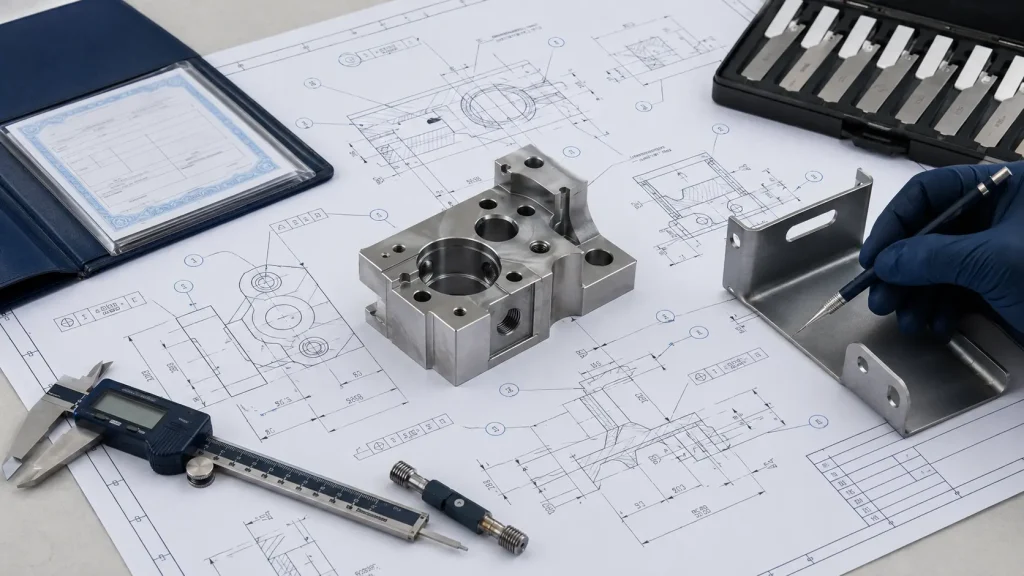
The manufacturer reviews the purchase order, drawing revision, specifications and process requirements. Each inspectable characteristic is normally assigned a unique number on a ballooned drawing so the buyer can connect every requirement to a recorded result.
2. Production-Representative Manufacturing
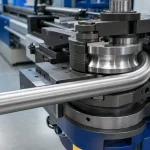
The sample is produced using the planned route. That may involve CNC machining, sheet metal laser cutting, metal bending or welding services. Temporary hand methods that will not be used in production should be disclosed, because they reduce the value of the FAI as proof of repeatability.
3. Measurement and Verification
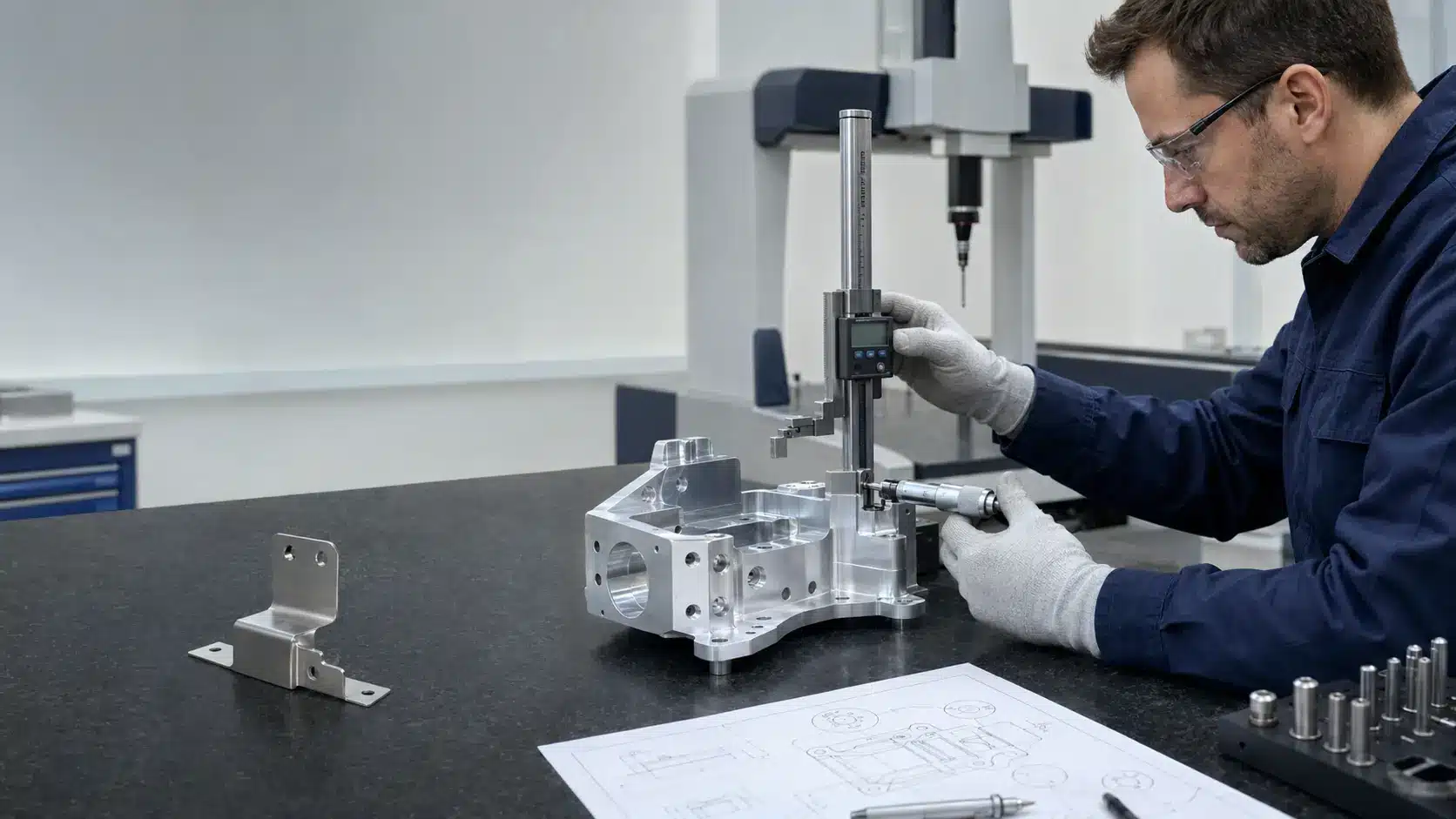
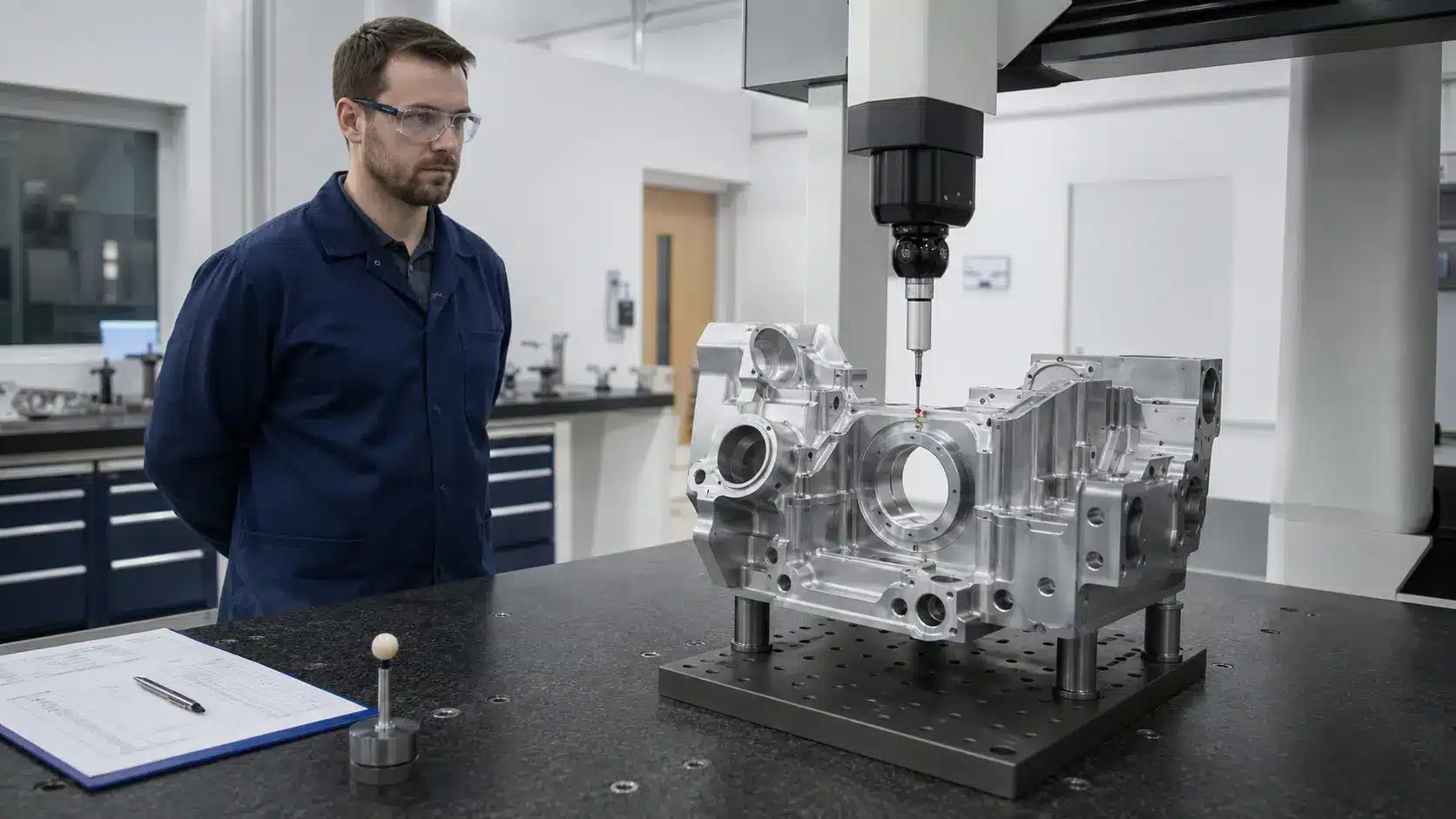
The inspector uses equipment suited to the tolerance and geometry: calipers, micrometers, height gauges, thread gauges, surface roughness instruments or a coordinate measuring machine may be required. Results should be recorded against the nominal value and tolerance. Material certificates, heat or batch traceability and subcontracted process certificates are checked when specified.
4. Report Compilation and Approval
The supplier compiles the inspection evidence and submits it for review. Unless the purchase order says otherwise, serial production should not be assumed approved merely because a report has been sent. The buyer should confirm the approval status and any conditions in writing.
What Should Be Included in an FAI Package?
The exact package depends on the project, but buyers can normally expect a combination of the following:
- part number, revision, purchase order and sample traceability information;
- a ballooned drawing or equivalent characteristic-accountability record;
- measured values, tolerances, pass/fail status and measurement method where required;
- material certificates and applicable special-process or coating certificates;
- references to inspection equipment or calibration status when contractually required; and
- documented nonconformances, concessions, deviations or corrective actions.
How Buyers Should Review the Report
Start with document control: the part number and revision must match the order. Then check that every ballooned characteristic has a corresponding result and that required certificates match the actual material and process. Pay particular attention to datums, geometric tolerances, threads, mating features, weld notes and finishes because a simple overall dimension may not reveal assembly risk.
If the report states only “pass” where measured values were required, or if a characteristic is marked “not applicable,” ask for the reason. Any out-of-tolerance condition should have a clearly approved disposition. Silence is not approval, and an undocumented rework can break traceability.
What Happens If the First Article Fails?
A failed characteristic does not automatically end the project, but it should stop uncontrolled release. The supplier should identify the cause, agree on rework or remanufacture, and repeat the affected inspection. Depending on the risk and contract, the buyer may request a partial FAI for corrected features or a new full FAI. Production parts should not be shipped as conforming until the deviation or corrective action is formally resolved.
FAI Cost and Lead-Time Expectations
FAI adds work beyond making one part. Drawing ballooning, inspection planning, CMM programming, gauges, fixtures, certificates and report preparation all affect price and schedule. Tight tolerances and complex assemblies increase the effort. The related custom metal fabrication cost, quality and lead-time guide explains why complete technical information produces a more reliable quotation.
FAI Is Not the Same as Routine Inspection or PPAP
Routine final inspection checks production output according to the control plan. FAI validates that the planned process can produce a conforming initial result. PPAP is a broader production-approval framework commonly associated with serial automotive supply. If a buyer requests an AS9102-compliant FAIR, that aerospace-specific requirement should be stated explicitly and confirmed at quotation stage.
A Better FAI Starts with a Better RFQ
The buyer should send the drawing revision, CAD files, material and finish specifications, quantity, critical characteristics, reporting template and required approval date. Nova Fabrication can evaluate the manufacturing route and project-specific inspection expectations. To begin, request a project quote and include the required FAI or buyer-specific quality documentation in the RFQ.
Frequently Asked Questions
Is First Article Inspection only for aerospace parts?
No. Buyers in many industries use first-article verification for custom parts. However, AS9102 is an aviation, space and defense standard, so a general FAI should not be described as AS9102-compliant unless the agreed requirements are met.
Can batch production start before FAI approval?
Only if the buyer and supplier have explicitly accepted that commercial risk. Starting early may save calendar time, but any FAI failure can create rework or scrap across the entire batch.
Does one approved FAI guarantee every later part?
No. It confirms the initial production-representative result. Ongoing conformity still depends on process controls, calibrated inspection, change management and final acceptance activities.