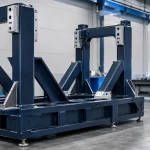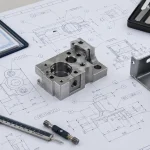

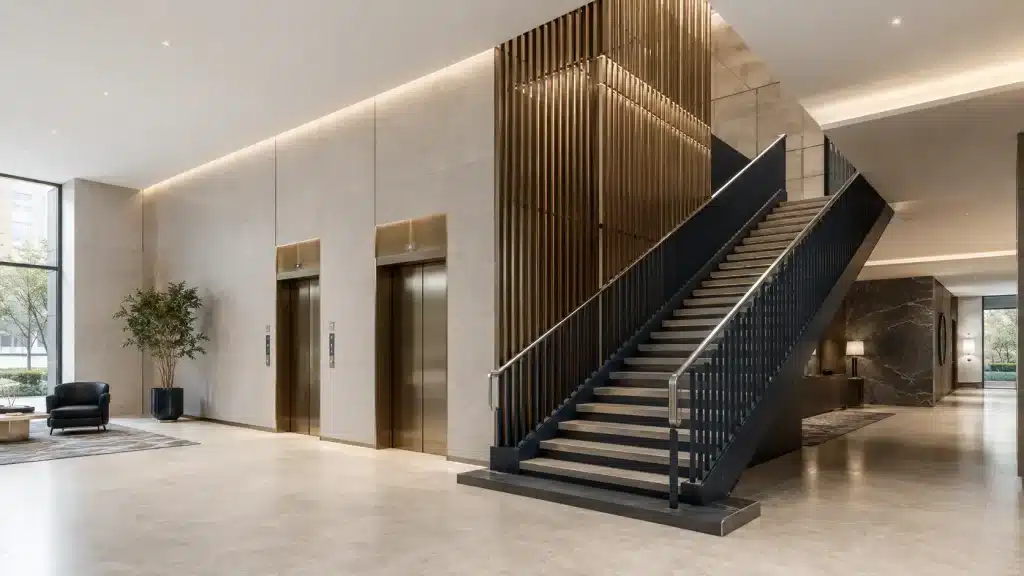
Architectural components are judged under changing light and from different distances. A finish that looks uniform on a small sample may reveal weld shadows, panel distortion or color variation on a full-size assembly. High-touch locations expose fingerprints and scratches, while exterior installations add ultraviolet exposure, rain, pollution and salts.
Finish selection therefore needs a clear performance brief. The design team should identify which surfaces are primary, what degree of variation is acceptable, whether damaged areas must be repairable on site and how replacement pieces will be matched later. These decisions often matter more than choosing between two similar color codes.
PVD Coating: Premium Metallic Color with a Thin Surface Layer
Physical Vapor Deposition, or PVD, applies a very thin decorative and functional layer in a controlled vacuum process. In architectural work it is commonly associated with stainless steel in tones such as champagne, bronze, gold, black and copper. Because the layer follows the texture below it, a brushed substrate remains directional and a mirror-polished substrate remains reflective.
PVD is attractive when designers want a refined metallic appearance without the visual thickness of paint. It can suit lift panels, reception features, trim, signage, door furniture and selected interior cladding. A carefully specified PVD coating service can also offer better wear and color stability than a basic decorative plated finish, although performance still depends on the exact coating system, substrate preparation and exposure.
The substrate must be consistent before coating because PVD will not hide grinding marks, dents, weld transitions or uneven polishing. Forming, welding and corrective work should be completed first. Designers should confirm whether the selected system is approved for the intended exterior, coastal or high-contact environment.
Anodizing: An Integrated Finish for Aluminium
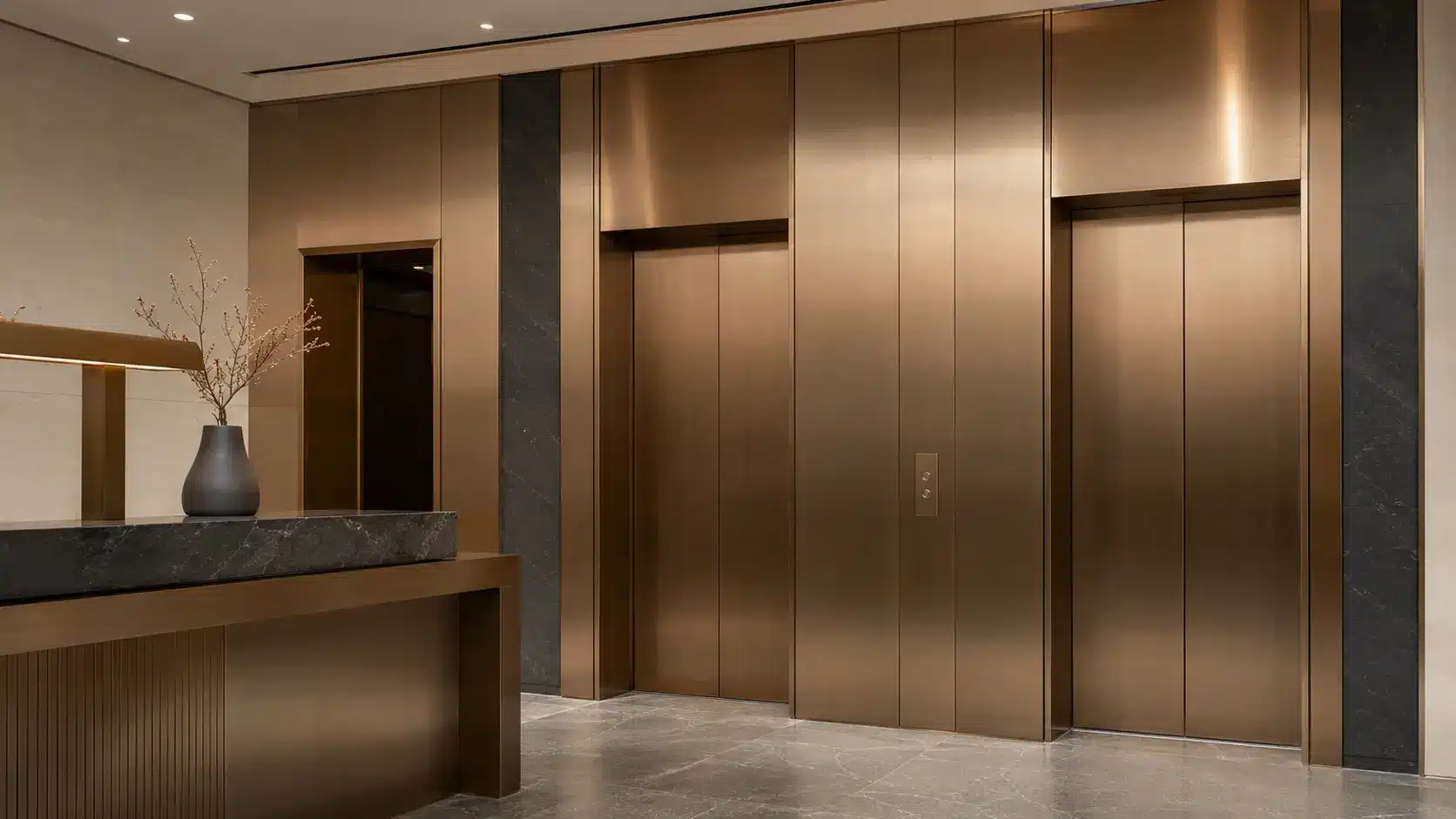
Anodizing is an electrochemical process that develops a controlled oxide layer on aluminium. Unlike paint, the finish becomes part of the metal surface. It can provide a clean metallic appearance, improved surface durability and a range of natural, bronze, black or dyed colors while retaining the visual character of aluminium.
This makes anodized coating a strong option for aluminium facade components, screens, profiles, trims, window-related elements and interior details. It is especially effective where designers want a lightweight material and a metallic, non-painted look.
Alloy, temper, extrusion history, welding and surface preparation can influence the final color. Different batches may not anodize identically, and welded areas may remain visible. Specifications should define alloy compatibility, pretreatment, finish direction, color range and viewing criteria. Samples should use the actual production materials.
Powder Coating: Versatile Color and Durable Coverage
Powder coating applies electrically charged dry powder to a prepared metal surface and then cures it with heat. The result is a continuous polymer coating available in a broad range of colors, gloss levels and textures. It is widely used on steel and aluminium components because it combines design flexibility with practical protection.
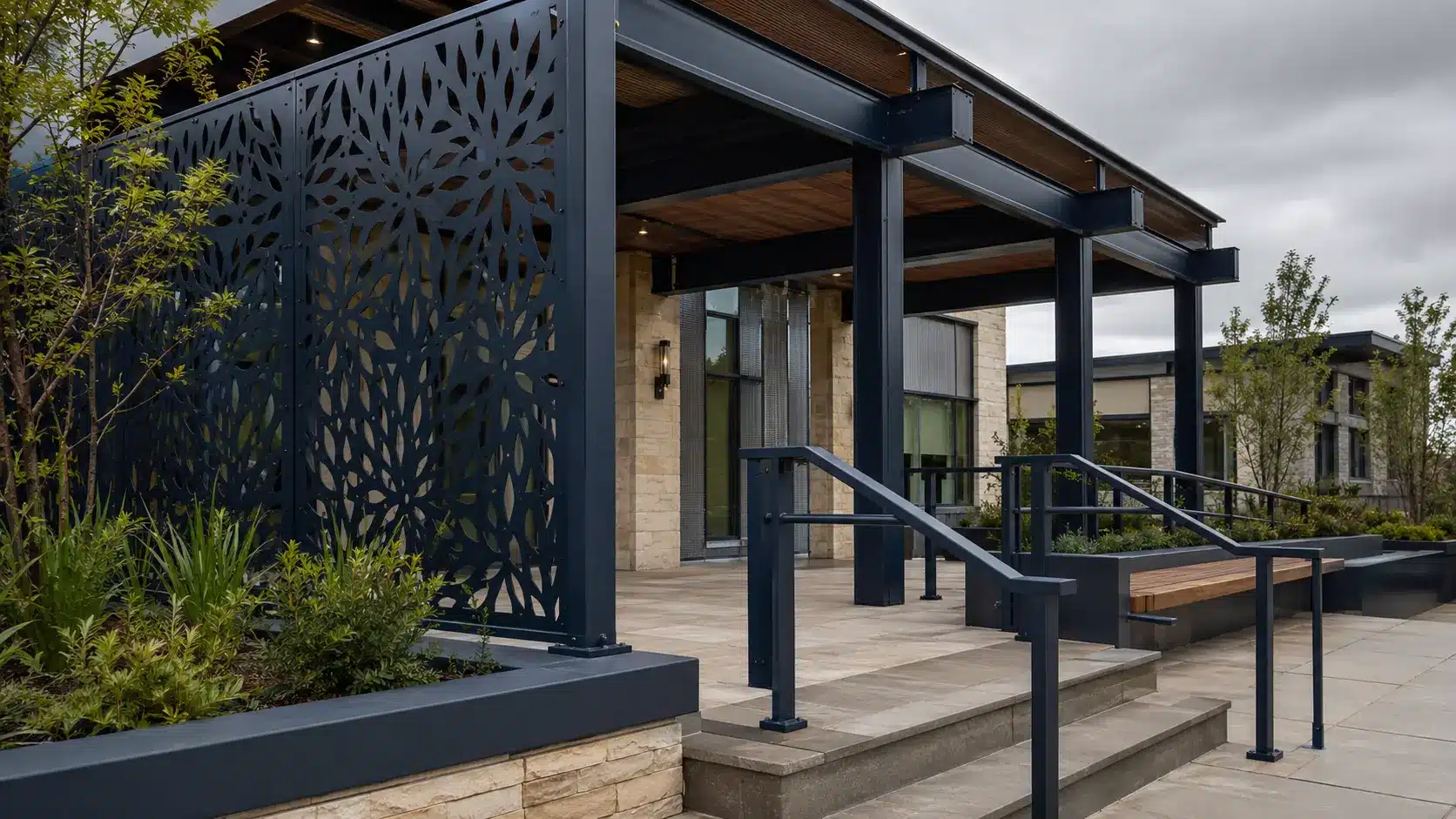
For architectural screens, railings, canopies, frames, cabinets and exterior furniture, electrostatic powder coating can provide repeatable color and good resistance to everyday handling and weathering when the pretreatment and powder grade suit the environment. Texture can also help reduce the visibility of small substrate variations, although it cannot correct poor fabrication.
Designers must account for coating thickness at joints, threads, hinges and mating surfaces. Drainage, venting, hanging points and edge coverage should be planned before fabrication. If the decision is between liquid paint and powder, the related wet painting vs powder coating guide explains the practical differences in durability, repairability and production.
Polishing: Revealing and Refining the Metal Itself
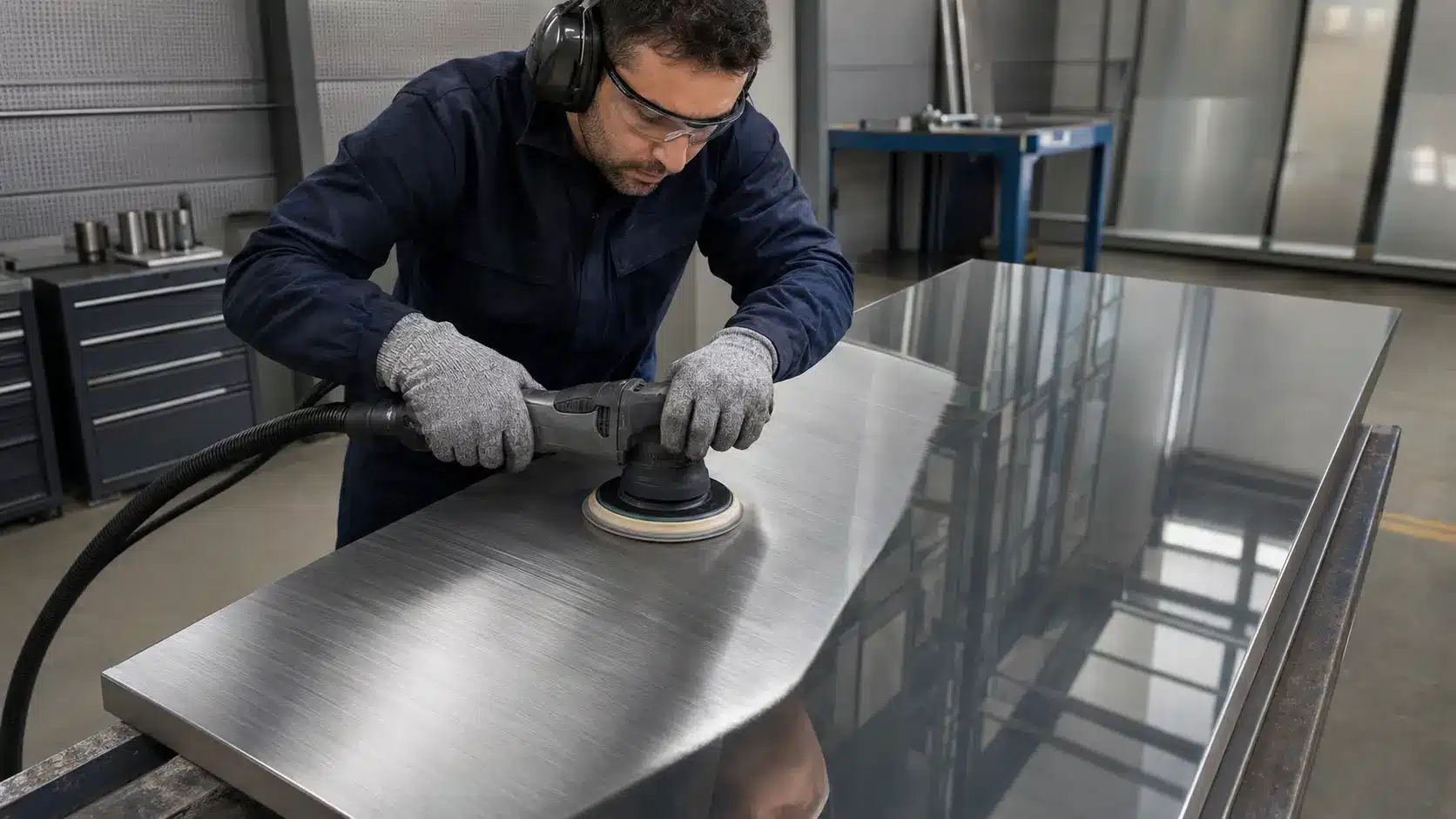
Polishing is a mechanical finishing process rather than an added coating. Abrasive stages remove or refine the existing surface to produce anything from a directional satin grain to a high-gloss mirror finish. Stainless steel is the most familiar architectural substrate, but aluminium, brass and other metals can also be polished with appropriate methods.
A brushed or satin finish is often easier to maintain than a mirror surface because it controls reflections and makes light handling marks less prominent. Mirror polishing creates a striking result for feature pieces, but it also reveals distortion, waviness and fingerprints. On large panels, flatness and polishing direction become critical visual requirements.
For visible stainless steel fabrication, welds, corner transitions and grain direction should be planned together. Carbon-steel tools must not contaminate stainless surfaces, and cleaning or passivation may be required. A reference sample should define the accepted grain, reflectivity and treatment of edges and weld zones.
PVD vs Anodizing vs Powder Coating vs Polishing
The following comparison is a practical starting point. Final selection should still be verified against the specific alloy, exposure class, geometry and supplier’s tested coating system.
Finish | Typical substrate | Best suited to | Main design consideration |
PVD | Stainless steel | Premium metallic colors and high-visibility details | Replicates the substrate; surface preparation must be excellent |
Anodizing | Aluminium | Facades, profiles and lightweight metallic components | Alloy and batch differences can affect color |
Powder coating | Steel and aluminium | Broad color choice, outdoor parts and repeat production | Pretreatment, curing and edge coverage determine performance |
Polishing | Stainless steel and selected non-ferrous metals | Brushed, satin or mirror architectural surfaces | Grain direction, flatness and weld finishing remain visible |
Match the Finish to the Location
Interior feature surfaces: PVD and polishing provide a premium metallic character for reception areas, lift interiors and retail environments. The decision usually comes down to color, reflectivity, touch frequency and cleaning expectations.
Exterior aluminium elements: Anodizing can preserve a metallic appearance, while architectural-grade powder coating offers a wider color range. Exposure, drainage, local climate and the ability to replace future panels should guide the choice.
Steel screens, frames and railings: Powder coating is often the most practical route when color and corrosion protection are required. The coating system must be paired with suitable pretreatment, and highly aggressive environments may need a more robust multi-layer solution.
High-touch stainless steel: A controlled satin polish is generally forgiving and maintainable. PVD can add a distinctive color, but mock-ups should test fingerprints, cleaning chemicals and wear in the actual use scenario.
Design for the Finish Before Production Starts
Successful decorative metal finishes begin in the CAD model. Drawings should identify visible faces, grain direction, gloss range, acceptable color variation and protected areas. Joints should avoid water traps, while weld locations, fasteners and seams should support the intended appearance.
Part size and geometry must suit the finishing process. Oven dimensions affect powder coating, bath dimensions affect anodizing and chamber capacity affects PVD. Large structures may need modules, but each joint becomes an architectural detail. Early input from engineering services can coordinate tolerances, joining methods, handling points and finish allowances before release.
Cutting, bending, welding, grinding, trial assembly and final finishing should follow a controlled sequence. The custom metal fabrication guide explains how material, geometry, surface requirements and lead time interact.
Samples, Quality Control and Maintenance
A named color is not enough for architectural approval. The project team should review representative samples under the intended lighting and, for critical work, approve a full-size mock-up with real joints, edges and weld transitions. The control sample should be retained so production pieces can be evaluated against the same visual reference.
Inspection may cover color and gloss consistency, coating thickness, adhesion, surface defects, edge coverage, grain direction and repaired areas. The handover package should identify compatible cleaners and prohibited chemicals; the wrong product can quickly damage the intended appearance.
Choosing the Right Decorative Metal Finish
PVD is a strong choice for premium colored stainless steel; anodizing suits aluminium components that should retain a metallic character; powder coating provides versatile color and robust coverage; and polishing develops the appearance of the metal itself. None is universally best. The correct finish is the one that matches the substrate, exposure, geometry, visual benchmark and maintenance plan.
Nova Fabrication can support the fabrication planning needed to turn an architectural concept into a manufacturable metal component and coordinate appropriate finishing requirements. To discuss materials, drawings, quantities and the required visual standard, request a project quote with the relevant specifications and reference samples.
Frequently Asked Questions
Which finish is best for exterior architectural metalwork?
There is no universal answer. Architectural powder coating and anodizing are common exterior choices, while selected PVD systems may be suitable when specifically qualified for the exposure. Substrate, pretreatment, climate, color and maintenance must be reviewed together.
Can PVD hide scratches or weld marks?
No. PVD is thin and follows the existing texture, so surface defects can remain visible. Grinding, brushing or polishing must reach the approved standard before coating.
Is polishing a protective coating?
No. Polishing mechanically refines the base metal. On stainless steel it can support cleanability and appearance, but corrosion performance still depends on grade selection, fabrication quality, contamination control and the service environment.
Why is a project sample necessary?
Small differences in alloy, texture, gloss, lighting and process conditions can change the perceived result. An approved sample gives the architect, fabricator and finisher a common visual benchmark for production and inspection.