

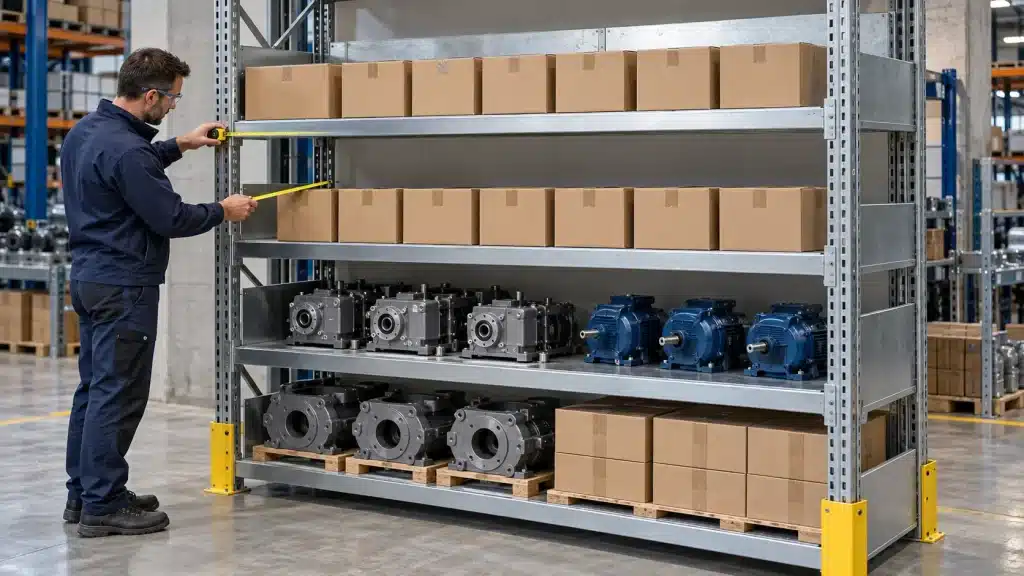
Metal Shelving for Warehouses and Workshops: How to Choose the Right System
Metal shelving can improve storage density, material flow and workplace organization, but only when the system is selected around the actual application. A shelf used for lightweight cartons in a stockroom has very different requirements from one holding machined components, tools, chemical containers or heavy maintenance equipment.
The right decision therefore involves more than choosing a shelf that fits the available wall. Load type, shelf span, access frequency, handling method, aisle width, environmental exposure and future expansion all affect the design.
Businesses evaluating custom metal shelf production should begin by defining what will be stored, how employees will access it and how the storage requirement may change over time. This creates a practical specification that can be translated into shelf dimensions, materials, structural details and surface protection.
Key takeaway: the best shelving system is not necessarily the one with the highest advertised capacity. It is the system that safely accommodates the real products, handling methods, available space and operational workflow without creating unnecessary cost or complexity.
Warehouse Shelving and Workshop Shelving Serve Different Priorities
Warehouses generally prioritize storage density, inventory movement and fast product access. The system may need to support cartons, containers, spare parts, production materials or packaged goods across many bays and levels.
Workshops tend to require a more varied arrangement. Shelves may hold tools, fixtures, replacement components, measuring equipment, consumables and work-in-progress parts. Employees may access the same shelf many times during a shift, making visibility and ergonomics especially important.
The distinction affects the design.
A warehouse shelf may benefit from deeper bays and standardized containers. A workshop shelf may require shallower levels, dividers, removable bins, tool panels or an integrated workbench. Warehouses may use trolleys, pallet trucks or forklifts, while workshop storage is often loaded manually.
Nova Fabrication’s shelf solutions can be customized around these different operating conditions rather than forcing every application into one standard configuration.
Start with an Inventory Profile
Before comparing shelving types, create a basic inventory profile. This is one of the most useful steps because it turns a general request for “heavy-duty shelving” into measurable design information.
Record the following for each main product group:
- Maximum individual item or container weight
- Typical and maximum dimensions
- Quantity stored at one time
- Storage orientation
- Required access frequency
- Manual or mechanical handling method
- Sensitivity to dust, moisture, impact or contamination
- Whether items can be stacked
- Expected future inventory growth
The heaviest item does not always control the design. A shelf containing many smaller components can carry a greater total load than one holding a single large product.
Load distribution also matters. Twenty boxes spread evenly across a shelf create a different structural condition from a heavy motor, die or fixture placed at the center. Buyers should distinguish between uniformly distributed loads and concentrated or point loads.
For a more detailed explanation of shelf, bay and system ratings, see Nova Fabrication’s guide to warehouse racking load capacity.

Choose the Appropriate Shelving Category
There is no single metal shelving system that suits every warehouse or workshop. The right category depends on the stored product, access method and required capacity.
Light-Duty Shelving
Light-duty shelving is suitable for documents, small packaged products, electronic components and lightweight consumables. It is commonly loaded by hand and can be useful in offices, maintenance rooms and small stock areas.
The design should still provide adequate stability and should not be treated as heavy industrial storage simply because it is manufactured from steel.
Medium-Duty Shelving
Medium-duty systems are commonly used for cartons, spare parts, plastic bins, maintenance products and manually handled industrial components. Adjustable shelf levels provide flexibility when product heights change.
This category is often suitable for workshops because it combines reasonable load capacity with accessible shelf heights and modular bays.
Long-Span Shelving
Long-span systems use wider shelf levels and stronger beams to store bulky or heavier manually handled goods. They may be appropriate for large cartons, automotive components, maintenance equipment and irregular products that do not fit efficiently on narrow shelving.
Longer spans can improve access, but they also increase bending and deflection demands. Beam section, deck construction, support spacing and load position must be evaluated together.
Bin and Small-Parts Shelving
Fasteners, electrical parts, fittings, cutting tools and maintenance consumables can become difficult to manage on open shelves. Bin shelving uses removable containers, dividers or compartmented levels to keep small components visible and separated.
The system should allow labels to be changed easily and should provide enough clearance for bins to be removed without striking the shelf above.
Heavy-Duty and Pallet-Compatible Systems
Heavy industrial components or palletized goods may require an engineered racking system rather than conventional shelving. These systems involve frames, beams, connectors, bracing, base plates and anchors working together as a complete load path.
A component thickness or isolated shelf capacity should not be used as proof that the entire system is suitable. Site conditions, slab capacity, loading equipment and governing standards may require project-specific structural review.
Define Shelf Depth from the Stored Product
Shelf depth should be based on the product footprint, not selected only to fill the available floor space.
A shelf that is too shallow may leave products unsupported or vulnerable to falling. A shelf that is unnecessarily deep can waste space and make smaller items difficult to see and retrieve. Deep shelves may also encourage employees to place unrelated products behind one another, reducing inventory visibility.
For manually picked products, the user should be able to identify and reach the stored item safely. Frequently used components should be located within a comfortable working zone, while infrequently accessed products can occupy higher or lower levels.
The specification should identify:
- Product or container depth
- Permitted front or rear overhang
- Required rear stops or retaining panels
- Single-sided or double-sided access
- Clearance for labels and handling
- Space for dividers, bins or trays
If shelving is positioned against a wall, additional clearance may be required for uneven surfaces, building services or installation tolerances.

Select Bay Width with Capacity and Access in Mind
A wider bay reduces the number of uprights and can create clearer access, but increasing the span can also increase shelf and beam deflection.
Shorter bays may provide greater stiffness and more compartmentalization. However, they increase the number of frames, connections and components, which may raise manufacturing and installation costs.
Bay width should therefore be evaluated together with:
- Maximum shelf load
- Load concentration
- Shelf material and thickness
- Folded edges and stiffeners
- Beam or support geometry
- Required deflection limit
- Product width and picking clearance
Custom components manufactured through sheet metal laser cutting can incorporate accurate slots, mounting holes, perforations and accessory interfaces. Consistent metal bending can then create folded edges and formed sections that improve stiffness without relying only on thicker material.
Understand Shelf Load, Bay Load and System Capacity
Load ratings should be connected to a defined configuration. At minimum, the project should distinguish between:
- Shelf or level load: the maximum permissible load on one shelf level
- Bay load: the combined permissible load carried by all levels within one bay
- Item load: the weight of an individual box, component or container
- Point load: a concentrated load applied over a small area
- Uniformly distributed load: weight spread approximately evenly over the shelf
- System capacity: the capacity of the complete installed configuration, including frames, connections and anchorage
These values are related, but they are not interchangeable.
A shelf deck may be capable of carrying a certain load while the beams, uprights, connections or floor anchorage govern the overall rating. Changing shelf elevations or adding more levels can also change the load carried by the frames.
The permitted capacity should be documented for the approved configuration and communicated through durable load notices where required. Employees should not add levels, relocate beams or modify connections without confirming that the revised arrangement remains acceptable.
Material Selection: Carbon Steel, Galvanized Steel or Stainless Steel
Material selection should reflect strength, environment, cleaning requirements and appearance.
Carbon Steel
Carbon steel is widely used for indoor industrial shelving because it offers strength, formability, weldability and cost efficiency. It is typically protected with powder coating or another suitable finish.
Nova Fabrication’s steel fabrication capabilities can support shelves, uprights, brackets, frames and welded accessories manufactured around a project-specific design.
Galvanized Steel
Galvanized material may be suitable where additional corrosion protection is needed, including humid storage areas and some semi-exposed environments. Cut edges, welds and fabricated areas require proper consideration because fabrication can affect the original protective layer.
Stainless Steel
Stainless steel can be appropriate for hygienic, food-related, pharmaceutical, clean or frequently washed environments. Grade selection should consider cleaning chemicals, chlorides and the required surface finish.
Stainless steel should not be specified automatically for every humid environment. A correctly prepared and coated carbon-steel system may offer a more economical solution for many indoor applications.
Bolted, Clip-In or Welded Construction
The connection method affects installation, adjustability, transport and long-term maintenance.
Bolted shelving can provide strong and serviceable connections, but assembly may take longer. Clip-in systems make shelf-level adjustment faster, provided that connectors and locking devices are correctly installed.
Welded subassemblies can improve rigidity and reduce site assembly, but larger welded sections require more transport space and offer less flexibility during future modification.
Controlled welding services are important where welded frames, brackets or reinforcements form part of the structural system. Weld locations and sequences should be planned to control distortion and preserve the geometry required for assembly.
The best solution may combine welded frames with adjustable bolted or clip-in shelf levels.
Surface Finish and Corrosion Protection
The finish should be selected around the operating environment rather than color alone.
Electrostatic powder coating is commonly used for indoor shelving because it provides an attractive, durable and cleanable surface. Performance depends on surface preparation, pretreatment, powder chemistry, film thickness and cure control.
Color can also serve an operational purpose. Different shelf zones may use different colors to identify production areas, inventory categories or quarantine locations. However, color coding should support clear labels rather than replace them.
For humid, outdoor, refrigerated or chemical environments, the specification should address:
- Corrosion category
- Condensation and water retention
- Cleaning chemicals
- Required coating system
- Drainage and ventilation
- Cut-edge and weld protection
- Repair method for damaged areas
- Inspection and maintenance intervals

Workshop Shelving Should Support the Work Process
Workshop storage performs best when it reduces unnecessary movement. Frequently used tools and consumables should be located close to the workstation, while heavy items should be stored between approximately knee and waist height whenever practical.
Small components should use bins or dividers rather than being spread across open shelves. Measuring instruments and sensitive tools may require enclosed cabinets or protected drawers. Oil containers and chemicals may need trays or other containment features.
Useful workshop options can include:
- Integrated work surfaces
- Perforated tool panels
- Drawer modules
- Removable bins
- Vertical dividers
- Lockable compartments
- Cable or hose holders
- Document pockets
- Adjustable feet
- Mobile bases for approved applications
Mobility should be specified carefully. Adding wheels to a stationary shelf changes stability and load behavior. Mobile units require suitable castors, brakes, floor conditions and operating limits.
Plan the Complete Warehouse or Workshop Layout
A good shelf can still create a poor workplace if it is positioned incorrectly.
The layout should consider material arrival, storage, picking, production supply and dispatch as one connected flow. Fast-moving items should be placed where they can be accessed without unnecessary travel or conflict with vehicle routes.
Check the following before approving the layout:
- Pedestrian and equipment aisles
- Emergency exits and evacuation routes
- Fire-protection and sprinkler clearances
- Doors, columns and building services
- Forklift or trolley turning space
- Lighting and visibility
- Loading and unloading areas
- Inspection and maintenance access
- Future bay extensions
- Floor joints, slopes and drainage
Project-specific engineering services can help translate operational requirements into shelf dimensions, material choices, connection details and manufacturing data.
Safety Features and Installation Requirements
Depending on the shelf height, location and loading method, the system may require anchorage, cross-bracing, rear restraints, side panels, toe boards or impact protection.
Tall or narrow shelving can be vulnerable to overturning, particularly when heavy items are stored high or when drawers and sliding components are opened. Back-to-back shelving should not be assumed to provide mutual stability unless it is connected and designed accordingly.
Installation checks may include:
- Frame position and orientation
- Level and plumb condition
- Shelf elevations
- Connector engagement
- Locking devices
- Bracing installation
- Base plates and anchors
- Row spacers
- Floor bearing
- Required safety barriers
- Load notices
The installer should follow the approved drawings and should not drill, weld, cut or modify structural components without authorization.
Design for Expansion and Reconfiguration
Storage requirements rarely remain unchanged. New products, different packaging and production growth can make the original shelf arrangement inefficient.
A modular design may allow shelf levels, dividers and accessories to be adjusted. However, “modular” does not mean every modification is automatically safe. Changing beam levels, shelf spans or bay configuration can alter the structural behavior.
During design, identify:
- Likely future products
- Expected inventory growth
- Additional shelf levels
- Possible bay extensions
- Relocation requirements
- Availability of replacement components
- Compatibility between production batches
- Responsibility for approving changes
Standardized components and controlled manufacturing tolerances make future expansion easier. A coordinated metal manufacturing service can support repeat production when additional bays or replacement parts are required.
What to Include in a Metal Shelving RFQ
A detailed RFQ helps the manufacturer propose the correct system and reduces the risk of pricing assumptions.
Include:
- Facility drawings and available storage area
- Warehouse or workshop application
- Overall shelf height, width and depth
- Number of bays and shelf levels
- Maximum item, shelf and bay loads
- Load distribution and support points
- Product and container dimensions
- Manual or mechanical handling method
- Required adjustability
- Material and surface finish
- Indoor or outdoor environment
- Humidity, chemicals and cleaning conditions
- Wall, floor and anchorage information
- Required accessories and safety features
- Assembly and installation scope
- Applicable standards and local regulations
- Inspection and documentation requirements
- Packaging and delivery sequence
- Forecast quantities and future expansion
Drawings should clearly identify load assumptions and critical dimensions. If the manufacturer is expected to perform structural calculations, testing or installation design, that responsibility should be stated rather than assumed.

Frequently Asked Questions
Is thicker sheet metal always better for shelving?
No. Thickness is only one design input. Material grade, folds, stiffeners, shelf span, support geometry, connections and load position all affect capacity. A well-formed shelf may achieve the required stiffness more efficiently than a flat plate made from thicker material.
Is warehouse shelving suitable for a workshop?
It can be, but workshop use often requires shallower shelves, better visibility, bins, dividers and more ergonomic access. The stored tools and components should determine the configuration.
Can metal shelving be relocated?
Many modular systems can be relocated, but the new floor, anchorage, layout and configuration should be reviewed. Components should be inspected for damage before reinstallation.
Should shelving be anchored to the floor?
The requirement depends on the system geometry, height, loading, environment and governing rules. Tall, narrow or mechanically loaded systems commonly require engineered anchorage. The correct anchor type and installation method must match the approved design and floor conditions.
Is powder coating suitable for warehouse shelves?
Powder coating is widely used for indoor warehouse and workshop shelving. The correct pretreatment and powder system should be chosen according to corrosion exposure, UV conditions, cleaning and expected wear.
Can a standard load rating be used for every bay size?
No. Capacity can change with bay width, shelf span, level position, frame height, number of levels and load distribution. Ratings should refer to the exact approved configuration.
Choose the Shelving System Around the Operation
The correct metal shelving system starts with a clear understanding of the products, loads, access methods and working environment. Warehouse projects generally prioritize storage density and material flow, while workshop systems often prioritize visibility, ergonomics and frequent manual access.
Material thickness alone cannot define safety, and the highest capacity is not always the most economical solution. Shelf geometry, frames, connections, finish, layout and installation must work as one system.
Nova Fabrication can combine design support, cutting, forming, welding, coating and quality control within a coordinated custom production route. To evaluate a new warehouse or workshop shelving project, request a project quotation with your layout, stored-product information, load requirements, quantities and preferred finish.