
In today’s rapidly evolving industrial world, creating innovative and functional products is one of the most fundamental ways to gain a competitive advantage in the market. Whether it is a complex machine spare part, a durable security barrier, or an aesthetic retail shelving system, a meticulously planned production process lies behind every successful metal product. One of the most critical and challenging phases of this process is the transition from the prototype stage—where the idea first takes concrete form—to the mass production stage, which allows the product to reach large audiences.
In custom metal designs, this transition process requires advanced engineering intelligence, an advanced machinery park, and superior quality control capabilities. Working with the right business partners is vital to ensure that products can be scaled without compromising quality. Nova Fabrication, which has carried out numerous successful projects in Turkey and the global market, stands out as a reliable solution partner on the path from prototype to mass production with its ten years of experience and 100% customer satisfaction-oriented approach.
Idea, Concept Development, and Engineering
Every successful custom metal manufacturing starts with a visionary idea. However, for an idea to turn into a manufacturable and cost-effective design, it must be blended with scientific and mathematical engineering principles. During the design phase, the product’s intended use, mechanical requirements, aesthetic expectations, and durability against environmental factors are taken into account.
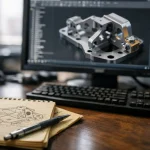
In the engineering and design process, a digital twin of the product is created using CAD (Computer-Aided Design) and CAM (Computer-Aided Manufacturing) software. Since even the smallest tolerance error in metal processing can lead to massive budget losses in mass production, every measurement must be calculated at the micron level. Nova Fabrication experts, who develop solutions that are not only visually impressive but also practical and functional, place the most fundamental steps of the project on a solid foundation.

The First Concrete Step: Prototype Production and Testing Phase
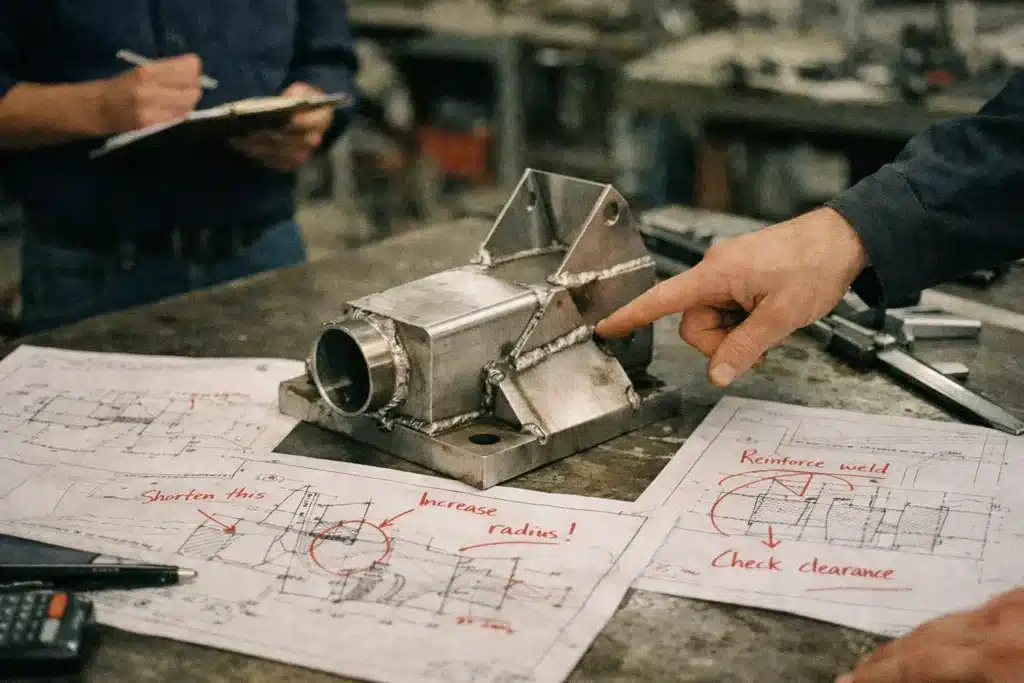
After the digital design is completed, a prototype is produced so that the product can be physically tested. A prototype is the most important tool used to evaluate the product’s ergonomics, ease of assembly, and overall performance in real-world conditions. Especially in custom metal parts, the fit at connection points and the behavior of the material under physical stress can only be observed on a real prototype.
In prototype production, flexible manufacturing methods that provide fast results are generally preferred. At this point, sheet metal laser cutting and profile and tube laser cutting technologies, which provide high precision and speed, come into play. These systems, which allow even complex geometries to be quickly cut and shaped without the need for molds, ensure that the first sample emerges flawlessly.
Design for Manufacturability (DFM) and Process Optimization
After the prototype has been successfully produced and tested, moving directly to the production of hundreds of thousands of units is usually a strategic mistake. To make the design suitable for large-scale production, a process known in the industry as “Design for Manufacturability” (DFM) comes into play. The goal of this phase is to reduce production costs, decrease scrap rates, and speed up the production line.
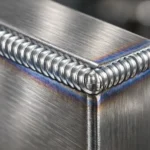
Material selection is reviewed based on feedback from the prototype. It is determined which material—such as stainless steel, aluminum, or carbon steel—will both maintain quality and optimize the budget. At the same time, the assembly phase of the parts is planned. The most robust connection points are designed using advanced TIG (Argon), MIG-MAG (GMAW), spot welding, or robotic welding services. With precise metal bending techniques performed by CNC press brakes, the aim is to shape metal sheets in the most efficient way.
Scaling: Transition to Mass Production and Manufacturing Phase
When all optimization processes are completed, it is time for the most critical step: mass production. Mass production requires the care and precision provided in a laboratory environment during the prototype stage to be repeated in a standardized manner in a factory setting across hundreds or thousands of products.
With its advanced technology CNC machines, Nova Fabrication standardizes micron-level precision by providing CNC turning and milling processing services in a wide range of areas, from automotive spare parts to server cabinets. Thanks to this technological infrastructure that responds quickly to the high volumes demanded by the market in custom metal designs, turnkey projects are delivered. Modern automation solutions in the production process minimize human error while guaranteeing that lead times are safely met.

Surface Treatments, Protection, and Final Touches
Raw metal parts coming out of mass production are not yet ready for final use. In order for the metal to resist corrosion, extend its service life, and reflect the brand’s vision aesthetically, it must be subjected to special processes.
The surface coating services applied at this point vary according to the sector of the product and the environmental conditions it will be exposed to. Options such as electrostatic powder coating, liquid painting, hot-dip galvanizing, anodizing, and PVD coating protect metal surfaces like a shield against external factors. At the same time, these touches bring the visuality of the project to its peak when it comes to special architectural decoration or a stylish store shelf.
Quality Control (QC) Systems and Flawless Delivery
The backbone of the journey from prototype to mass production is sustainable quality. Any slight deviation from standards in high-volume production risks the integrity of the project. Quality control (QC) and quality assurance (QA) processes carried out according to international standards play a vital role in preventing these deviations.
Nova Fabrication, one of the leading companies in the custom metal manufacturing sector, meticulously inspects every stage from raw material entry to final product shipment. After the parts successfully pass the testing processes, they are moved to the professional packaging stage to reach the customer’s location undamaged and on time.