
Stainless steel is selected for corrosion resistance, cleanliness and long service life, but welding temporarily changes the surface that delivers those benefits. Heat tint forms beside the weld, high-temperature oxide grows thicker than the normal passive film, and fabrication can introduce carbon-steel particles or other contamination. A sound weld can therefore be mechanically acceptable while its surrounding surface is not yet ready for service.
For buyers of custom stainless steel fabrication, post-weld surface treatment should be defined as part of the manufacturing and inspection plan. Pickling and passivation are often mentioned together, yet they do different jobs. Understanding the distinction helps purchasing and quality teams specify the right sequence, finish and acceptance evidence without paying for an unsuitable process—or approving an incompletely restored surface.
Key distinction: pickling removes heat tint, oxide scale and a thin affected surface layer; passivation targets free iron and supports formation of a clean, chromium-rich passive film. They are complementary processes, not interchangeable names.
Why Welding Changes a Corrosion-Resistant Surface
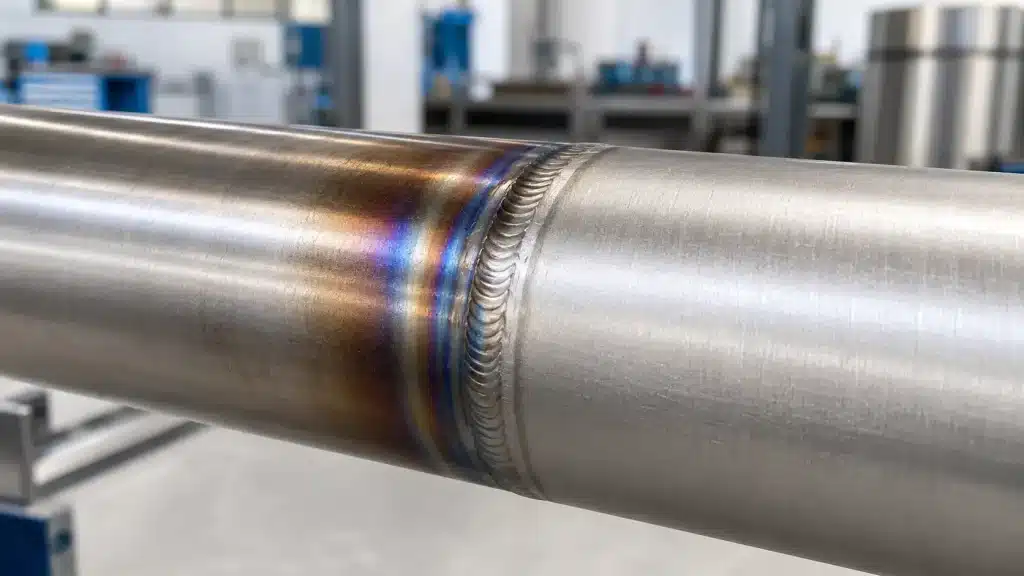
Stainless steel protects itself through a very thin chromium-rich oxide film. When the clean alloy is exposed to oxygen, this passive film forms naturally and can reform after minor damage. Welding creates a much hotter and more complex surface condition. The coloured bands visible around a weld are heat tint: oxide layers whose thickness and colour reflect thermal exposure and shielding conditions.
Beneath significant heat tint, the near-surface metal can be locally depleted in chromium relative to the unaffected base material. That area may be less resistant to localised corrosion, particularly in chloride-bearing, hygienic or chemically aggressive service. The practical goal is therefore not simply to make the weld look bright; it is to remove the altered oxide and prepare a chemically clean surface capable of establishing an effective passive condition.
Contamination is a separate risk. Shared tools, carbon-steel wire brushes, handling equipment, shop dust or embedded particles can leave exogenous iron on stainless steel. Those particles may rust and create staining that is mistaken for failure of the stainless grade. Nova’s overview of stainless steel welding discusses heat tint, cross-contamination and the importance of controlled post-weld treatment in more detail.
Pickling, Passivation and Mechanical Cleaning Compared
Process | Primary purpose | What it addresses | Important limitation |
Pickling | Chemical descaling and controlled surface-metal removal | Weld heat tint, high-temperature oxide and the affected layer beneath it | Can alter appearance and must be fully rinsed; it is not a universal final acceptance test |
Passivation | Chemical cleaning that removes free iron and promotes passive-film formation | Exogenous iron and a chemically clean stainless surface | Does not reliably remove heavy heat tint, weld scale or embedded fabrication defects |
Mechanical cleaning | Physical removal or blending of surface material | Spatter, roughness, visible oxide and local appearance | Tool control is critical; it may smear contamination or leave affected metal behind |
What Pickling Does
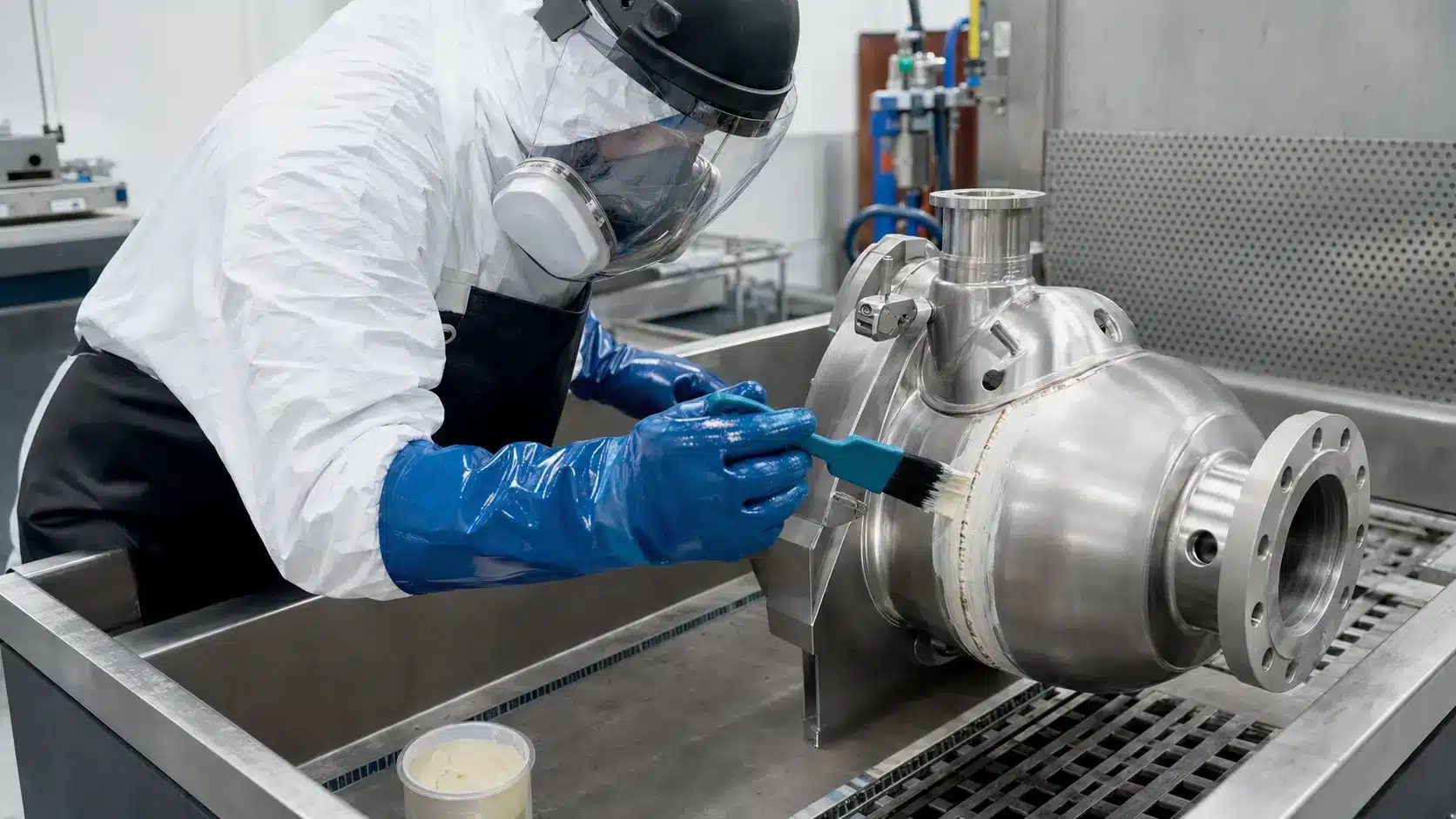
Pickling is a chemical descaling process. A qualified pickling medium dissolves the weld oxide and removes a very thin layer of the underlying stainless surface. This is why pickling can address both visible heat tint and the chromium-depleted zone associated with severe oxidation. Depending on part geometry, production route and approved procedure, treatment may be local or applied to a larger assembly by an appropriate industrial method.
The process is more consequential than cosmetic cleaning. It can change colour, reduce gloss and create a more uniform matte appearance. It may also affect critical dimensions, engraved markings or adjacent materials if the treatment scope is not planned. Areas that trap liquid—lap joints, crevices, blind spaces and poorly drained tubes—need particular attention because residues and insufficient rinsing can create later problems.
Good weld practice can reduce the amount of oxide that must be removed, but it does not eliminate the need to define post-weld acceptance. Controlled shielding, purging and heat input are especially important for corrosion-sensitive work. Nova’s TIG welding service provides relevant context for precision stainless joining, although the required cleaning route must still follow the drawing, service environment and approved procedure.
What Passivation Does
Passivation is a chemical treatment applied to a clean stainless surface to remove free iron and other exogenous matter and to support rapid formation of the passive film. Depending on the governing specification, alloy and application, a qualified nitric- or citric-based treatment may be selected. The term should always be tied to a stated standard, revision, process route and acceptance test rather than used as a vague promise of “corrosion proof” performance.
Passivation is not a substitute for descaling. If dark heat tint or heavy oxide remains, a passivating solution may leave the fundamental weld-surface problem untouched. Likewise, passivation cannot correct weld undercut, porosity, crevices, rough grinding marks or a design that traps process fluid. It works best after fabrication defects, oils, shop soils and oxide have been properly addressed.
A clean, descaled stainless surface can also repassivate naturally in the presence of oxygen. Consequently, not every project requires two completely separate chemical baths. Some specifications call for pickling followed by a distinct passivation step; others accept a qualified sequence in which the pickled surface is thoroughly rinsed and allowed to repassivate. The contract documents should decide the requirement, not an assumption.
Why Both Processes Can Matter on a Weldment
The two-process logic becomes clear when the risks are separated. Pickling deals with the thermal effect of welding: oxide scale, heat tint and the altered surface beneath it. Passivation deals mainly with chemical cleanliness: free iron and the controlled establishment of a passive surface. A weldment exposed to marine air, washdown chemicals, food-contact cleaning or outdoor contamination may benefit from both controls because it carries both types of risk.
However, “pickled and passivated” should not be treated as a universal quality label. The alloy grade, heat tint severity, product geometry, service environment, surface finish, customer standard and later operations all influence the correct route. A decorative surface may demand a controlled visual match; a hygienic tank may prioritise cleanability and crevice control; a dimensional component may need masking or a tightly limited treatment scope.
A Practical Post-Weld Treatment Sequence
The exact chemistry, concentration, temperature and contact time belong in a qualified procedure and chemical supplier’s instructions. At planning level, a typical workflow is:
- Complete and inspect fabrication. Confirm weld profile, penetration where applicable, spatter, arc strikes and surface defects before chemical treatment hides or changes visual evidence.
- Remove gross defects and soils. Use controlled mechanical work where required, followed by degreasing and cleaning so oil does not shield the surface from later treatment.
- Pickle or descale where specified. Treat the required weld zone or assembly using an approved industrial procedure that is compatible with the alloy, finish and geometry.
- Rinse and control residues. Follow the qualified rinsing and neutralisation sequence, paying special attention to crevices, tubes, drainage points and water quality.
- Passivate where the specification requires it. Apply the selected chemical treatment to the clean surface, then complete the required final rinse and drying steps.
- Inspect, document and protect. Perform the agreed visual, cleanliness or free-iron checks, record traceability and protect finished surfaces from recontamination during handling and packing.
Where Mechanical Cleaning Fits
Grinding, brushing and polishing can remove spatter, blend welds and create the specified texture. They may precede pickling, follow local repair or form part of a qualified alternative route. Tools and abrasives must be dedicated to stainless steel; carbon-steel brushes and contaminated media can embed the very iron that passivation is intended to remove.
Mechanical cleaning alone is not automatically equivalent to pickling. Aggressive polishing may smear oxide or contamination across the surface, while insufficient material removal can leave the chromium-depleted zone beneath the visible tint. The selected grinding and finishing process should therefore be coordinated with the final chemical treatment, surface roughness and appearance requirement.
Inspection and Acceptance: What Should Be Verified?
Acceptance should prove that the specified process achieved its intended result. Visual inspection can confirm removal of heat tint, scale, staining and obvious residue, but colour alone cannot prove freedom from exogenous iron or predict service life. Depending on the governing specification, the quality plan may add wipe tests, water-break evaluation, free-iron detection or another agreed test.
- Surface condition: heat tint and scale removed to the stated visual criterion; welds, corners and hidden areas included in the defined scope.
- Cleanliness: no oil, process residue, loose contamination or evidence of incomplete rinsing.
- Free-iron test: method, sampling locations and acceptance criteria selected for the grade and applicable specification.
10.Finish and dimensions: appearance, roughness and critical features checked where treatment could affect the drawing requirement.
11.Process records: part or batch identity, procedure, operator, treatment lot and inspection results retained to the level required by the customer.
A passivation test is evidence of process effectiveness under its stated method; it is not a universal guarantee against every corrosion mechanism. Material grade, weld quality, surface roughness, crevice geometry, chlorides, temperature and maintenance remain important. Nova describes project-specific Inspection and Test Plans, material documentation and controlled surface-treatment records on its quality approach page.
Design the Weldment for Successful Treatment
Surface treatment is easier to control when it is considered during design. Assemblies should drain, rinse and dry without retaining chemistry. Blind cavities, unsealed overlaps and inaccessible backsides make treatment and inspection harder. Mixed-material assemblies may need masking, disassembly or a different sequence, while tight cosmetic zones may require an agreed sample or first article.
Early engineering support can align joint design, weld access, purge strategy, finishing direction, lifting points and drainage with the treatment process. This prevents a common late-stage problem: discovering after welding that a cavity cannot be rinsed or an appearance standard cannot be reproduced consistently.
Safety and Environmental Control Are Part of Quality
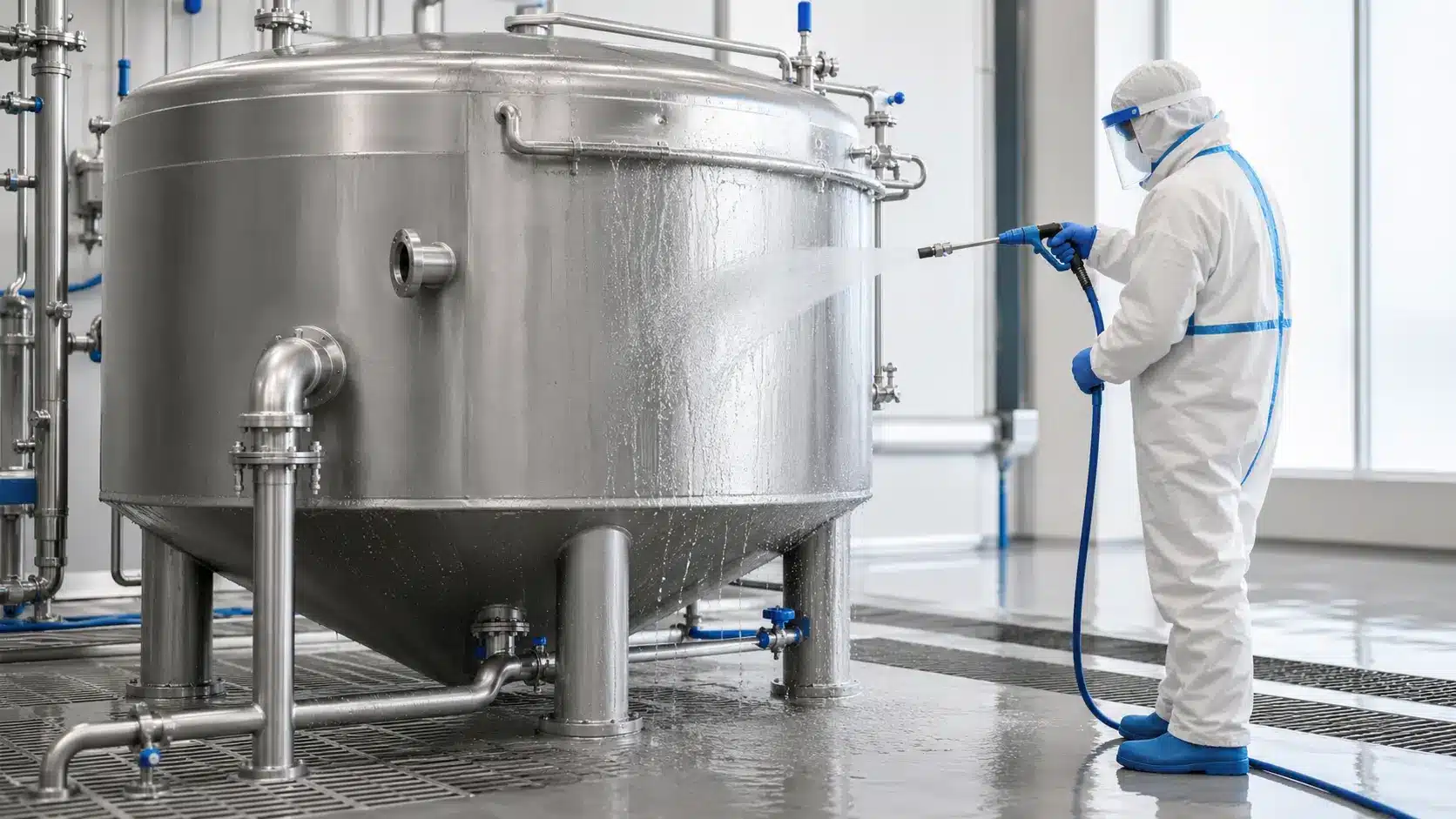
Industrial pickling products may contain highly hazardous acids, including hydrofluoric-acid-containing formulations. Exposure can cause severe injury and some effects may be delayed. These processes require trained personnel, suitable ventilation, chemical-resistant protective equipment, controlled application and containment, emergency arrangements and compliant waste and wastewater handling.
This is not a do-it-yourself finishing operation. The manufacturing plan should identify who is qualified to perform the work, where it will be done, how adjacent surfaces will be protected and how used chemistry and rinse water will be managed. A supplier’s ability to control safety and residues is directly related to the repeatability of the finished surface.
Pickling and Passivation RFQ Checklist
To receive comparable quotations and avoid post-production disputes, include the following with the latest drawing and 3D model:
12.stainless grade and product form, including any low-carbon, duplex or customer-specific material designation;
13.service environment, such as food contact, pharmaceutical cleaning, marine exposure, outdoor use, chloride washdown or chemical duty;
14.welding process, weld class, allowable heat tint and whether internal/root surfaces are included;
15.governing pickling and passivation standard with its exact revision, plus any customer procedure or approved chemical restriction;
16.treatment scope—local weld zone, internal surfaces, full assembly or selected features—and any areas that must be masked;
17.final visual finish, roughness, grain direction and whether a reference sample or first article is required;
18.acceptance tests, test frequency, sampling locations, reporting format, traceability and hold or witness points;
19.packing, protective film and handling controls needed to prevent carbon-steel contamination after final inspection;
Frequently Asked Questions
Can passivation remove weld heat tint?
Not reliably. Passivation is intended for a clean surface and primarily addresses free iron and passive-film formation. Visible heat tint and high-temperature oxide normally require pickling, suitable electrochemical treatment or an approved mechanical-plus-chemical route.
Does pickling automatically passivate stainless steel?
Pickling leaves a clean, descaled surface that can naturally repassivate when exposed to oxygen. Whether a separate chemical passivation step is required depends on the drawing, governing standard, customer specification, contamination risk and service environment.
Is stainless wire brushing enough after welding?
It may be part of an approved finishing route, but brushing does not necessarily remove the affected layer beneath heat tint. Brushes and abrasives must also be dedicated to stainless steel. The acceptable method should be defined by the performance requirement rather than appearance alone.
Will pickling change the appearance?
Often, yes. Pickling can reduce gloss and create a lighter, more matte finish. Local treatment may leave a visible transition. Decorative or architecturally exposed parts should use an agreed finish sample and a clearly defined treatment boundary.
Specify Surface Integrity, Not Just a Process Name
Pickling and passivation protect different parts of the stainless-steel corrosion control strategy. Pickling removes the thermal oxide and affected surface created by welding; passivation removes free iron and supports a clean passive condition. When both are needed, their order, rinse control, inspection and documentation should be engineered as one process—not added as an undefined note at final release.
Nova Fabrication can review material, weld access, finish requirements, treatment scope and quality documentation within a coordinated fabrication and engineering route. To confirm feasibility and available process controls for a specific project, request a project quote with the drawing, service environment and applicable standards.